 Image 1 of 2
 Image 2 of 2
Disclaimer:Nutritional information and listed Health Benefits have not been evaluated by the Food and Drug Administration. This product is not intended to diagnose, treat, cure, or prevent any disease. The information on this website is for educational purposes only and not intended as medical advice.
History:
Watercress is a nutrient-dense, peppery green in the mustard family. It has a 3,000-year history as a revered medicinal herb and food source, originating in Europe and Asia. Ancient civilizations like the Greeks and Romans used it to enhance vigor, treat insanity, and prevent scurvy. It became a popular commercial crop in 19th-century Britain before spreading worldwide.
Flavor Profile:
Bold, spicy, and sharp, peppery flavor similar to mustard greens or horseradish, often with a subtle, sweet, or slightly bitter, refreshing finish. These small, crisp greens provide a pungent kick that quickly dissipates, leaving a clean, fresh taste.
Suggested Uses:
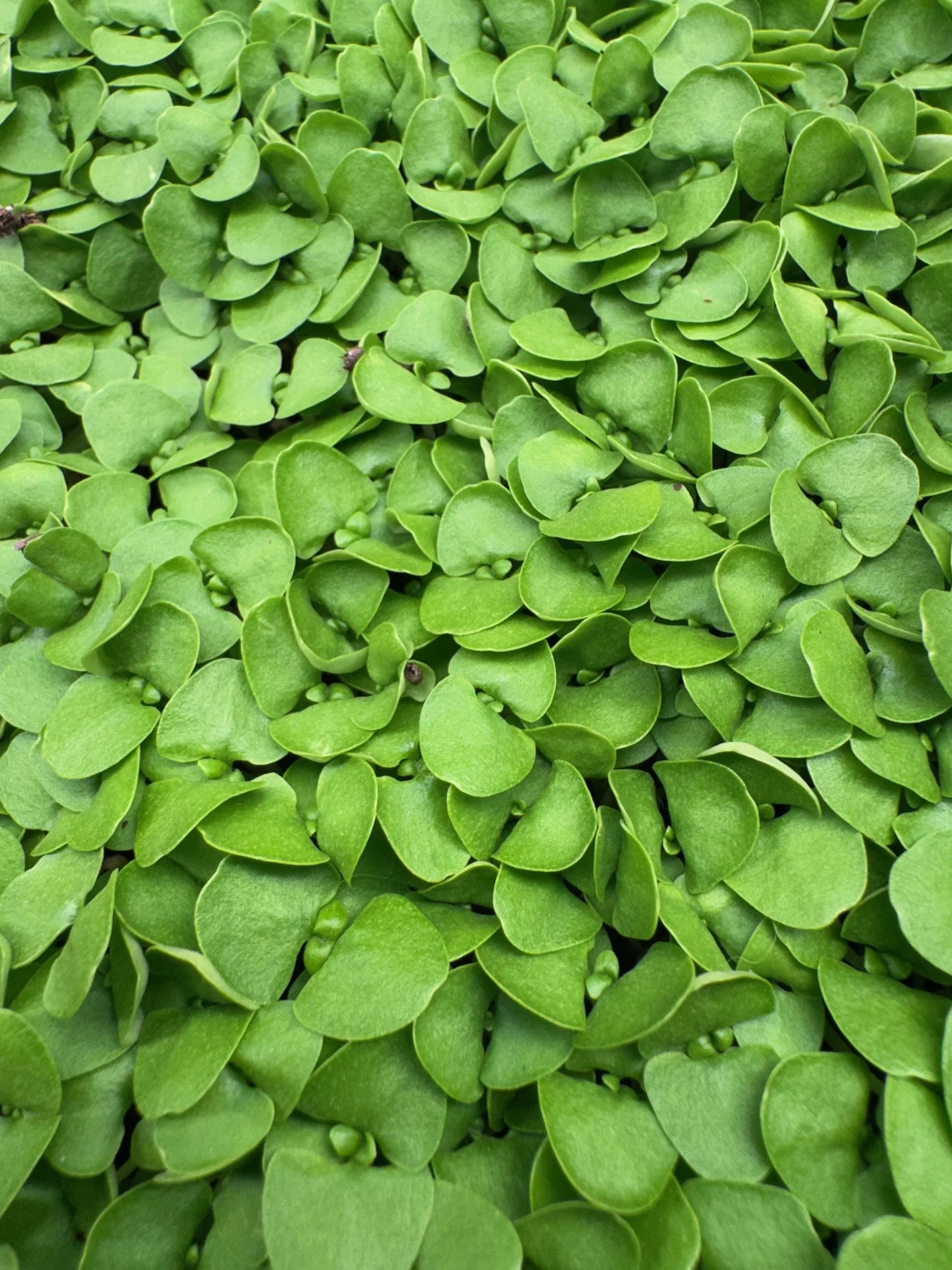
Watercress microgreens are nutrient-dense, and are a potent source of vitamins K, A, and C, they are popular in health-focused diets, smoothies, and as a raw garnish to enhance visual appeal and taste.
Salads & Wraps: Added for a bold, peppery kick.
Garnish: Used on top of soups, pizza, and pasta.
Sandwiches & Burgers: A nutritious, spicy alternative to lettuce.
Pairings: Complements seafood (salmon, crab), cheese (feta, goat), and meat (beef, prosciutto).
Smoothies/Blends: Mixed into dips, sauces, or green smoothies.
Nutrition:*not verified by FDA
Watercress microgreens are considered one of the most nutrient-dense foods available, famously earning a perfect score of 100 on the CDC’s Powerhouse Fruits and Vegetables list. These tiny greens often contain up to 40 times more nutrients than their mature counterparts.
Vitamin K: Extremely high, often exceeding 200% to 500% of the Daily Value (DV), which is essential for bone health and blood clotting.
Vitamin C: Approximately 40% to 80% of the DV, supporting immune function and collagen production.
Vitamin A: Roughly 40% of the DV, critical for vision and skin health.
Minerals: A significant source of calcium, iron, magnesium, and potassium.
Phytochemicals: Rich in glucosinolates (which have anticancer properties), lutein, and zeaxanthin (which protect eye health).
Potential Health Benefits:*not verified by FDA
Watercress microgreens are nutrient-dense superfoods packed with vitamins C and K, antioxidants (beta-carotene, lutein), and dietary nitrates. These compounds boost immune function, enhance bone health, improve heart health by reducing blood pressure and cholesterol, and protect vision. They also aid in fighting inflammation and potentially reducing cancer risk.
Heart Health & Blood Pressure: Watercress contains dietary nitrates that reduce blood vessel stiffness and inflammation, which can lower blood pressure. Its antioxidant content also helps reduce LDL ("bad") cholesterol.
Immune System Boost: Rich in vitamin C and other antioxidants, they help neutralize free radicals, reduce oxidative stress, and support overall immune function.
Bone Health & Osteoporosis Prevention: High levels of vitamin K, calcium, magnesium, and potassium contribute to stronger bones and reduced risk of osteoporosis.
Cancer Fighting Properties: They contain compounds (phenylethyl isothiocyanate) that can inhibit tumor growth and cancer development.
Improved Vision: The high content of lutein and zeaxanthin helps protect the eyes from age-related macular degeneration (AMD) and damage from blue light.
Anti-Inflammatory & Athletic Performance: The nutrients in watercress can help reduce chronic inflammation and, due to the high nitrate content, may enhance athletic performance.
Disclaimer:Nutritional information and listed Health Benefits have not been evaluated by the Food and Drug Administration. This product is not intended to diagnose, treat, cure, or prevent any disease. The information on this website is for educational purposes only and not intended as medical advice.
History:
Watercress is a nutrient-dense, peppery green in the mustard family. It has a 3,000-year history as a revered medicinal herb and food source, originating in Europe and Asia. Ancient civilizations like the Greeks and Romans used it to enhance vigor, treat insanity, and prevent scurvy. It became a popular commercial crop in 19th-century Britain before spreading worldwide.
Flavor Profile:
Bold, spicy, and sharp, peppery flavor similar to mustard greens or horseradish, often with a subtle, sweet, or slightly bitter, refreshing finish. These small, crisp greens provide a pungent kick that quickly dissipates, leaving a clean, fresh taste.
Suggested Uses:
Watercress microgreens are nutrient-dense, and are a potent source of vitamins K, A, and C, they are popular in health-focused diets, smoothies, and as a raw garnish to enhance visual appeal and taste.
Salads & Wraps: Added for a bold, peppery kick.
Garnish: Used on top of soups, pizza, and pasta.
Sandwiches & Burgers: A nutritious, spicy alternative to lettuce.
Pairings: Complements seafood (salmon, crab), cheese (feta, goat), and meat (beef, prosciutto).
Smoothies/Blends: Mixed into dips, sauces, or green smoothies.
Nutrition:*not verified by FDA
Watercress microgreens are considered one of the most nutrient-dense foods available, famously earning a perfect score of 100 on the CDC’s Powerhouse Fruits and Vegetables list. These tiny greens often contain up to 40 times more nutrients than their mature counterparts.
Vitamin K: Extremely high, often exceeding 200% to 500% of the Daily Value (DV), which is essential for bone health and blood clotting.
Vitamin C: Approximately 40% to 80% of the DV, supporting immune function and collagen production.
Vitamin A: Roughly 40% of the DV, critical for vision and skin health.
Minerals: A significant source of calcium, iron, magnesium, and potassium.
Phytochemicals: Rich in glucosinolates (which have anticancer properties), lutein, and zeaxanthin (which protect eye health).
Potential Health Benefits:*not verified by FDA
Watercress microgreens are nutrient-dense superfoods packed with vitamins C and K, antioxidants (beta-carotene, lutein), and dietary nitrates. These compounds boost immune function, enhance bone health, improve heart health by reducing blood pressure and cholesterol, and protect vision. They also aid in fighting inflammation and potentially reducing cancer risk.
Heart Health & Blood Pressure: Watercress contains dietary nitrates that reduce blood vessel stiffness and inflammation, which can lower blood pressure. Its antioxidant content also helps reduce LDL ("bad") cholesterol.
Immune System Boost: Rich in vitamin C and other antioxidants, they help neutralize free radicals, reduce oxidative stress, and support overall immune function.
Bone Health & Osteoporosis Prevention: High levels of vitamin K, calcium, magnesium, and potassium contribute to stronger bones and reduced risk of osteoporosis.
Cancer Fighting Properties: They contain compounds (phenylethyl isothiocyanate) that can inhibit tumor growth and cancer development.
Improved Vision: The high content of lutein and zeaxanthin helps protect the eyes from age-related macular degeneration (AMD) and damage from blue light.
Anti-Inflammatory & Athletic Performance: The nutrients in watercress can help reduce chronic inflammation and, due to the high nitrate content, may enhance athletic performance.