 Image 1 of 1
Disclaimer:Nutritional information and listed Health Benefits have not been evaluated by the Food and Drug Administration. This product is not intended to diagnose, treat, cure, or prevent any disease. The information on this website is for educational purposes only and not intended as medical advice.
History:
Wasabi's history in Japan spans over a millennium, evolving from ancient medicinal use (antibacterial) to a culinary staple, especially with sushi in the Edo period, valued for flavor and perceived health benefits, though today's common green paste is often horseradish/mustard mix, while real wasabi comes from the rare Wasabia japonica plant, a type of mustard green, prized for its delicate, fleeting heat.
Flavor Profile:
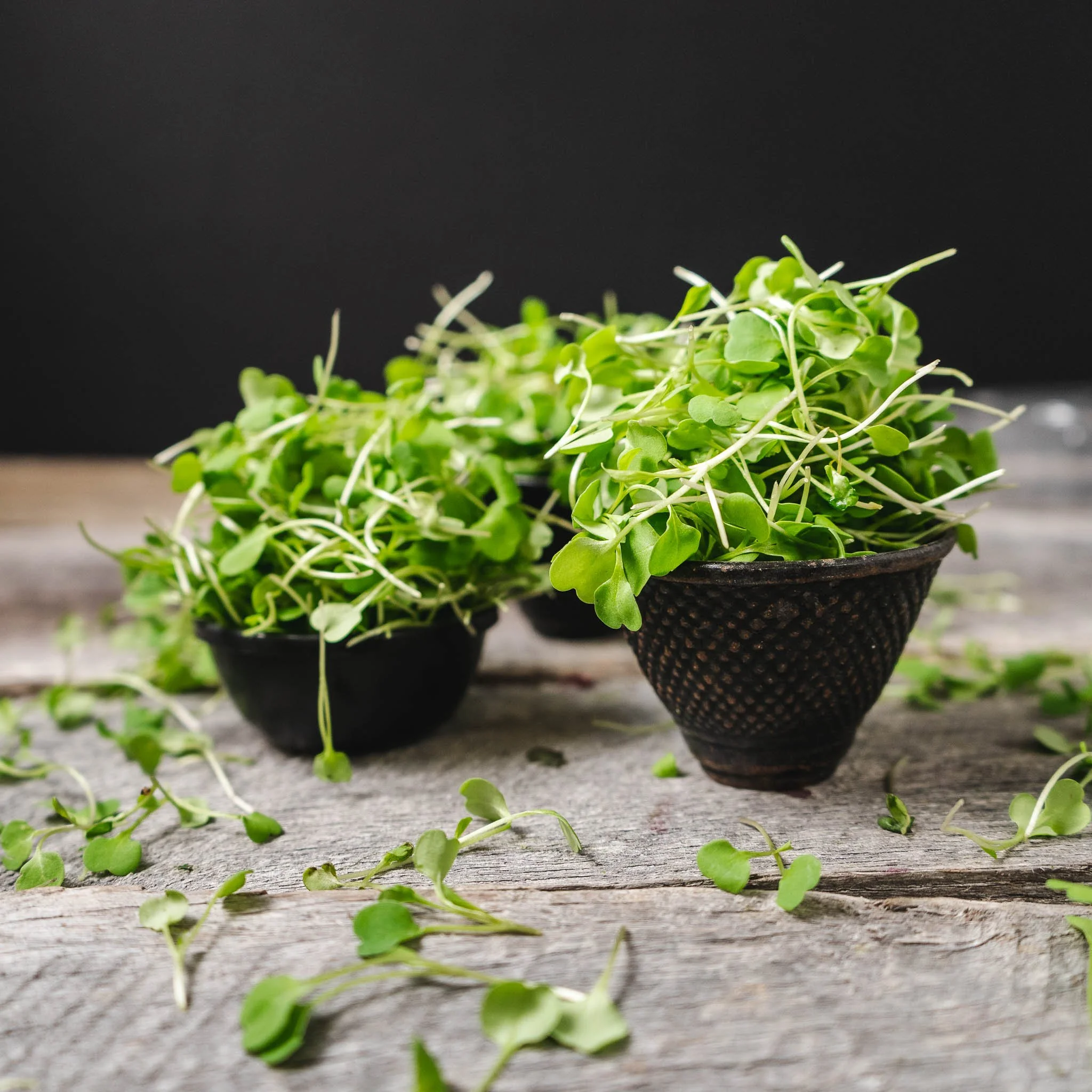
Wasabi Mustard Microgreens have a bold, spicy, zesty flavor profile with a sharp, quick kick similar to horseradish, blending tangy, slightly bitter mustard notes with fresh, peppery undertones and a clean, fast-fading heat that enhances dishes without lingering
Suggested Uses:
Adds a spicy, zesty kick to many dishes, perfect as a garnish or mix-in for salads, sandwiches, wraps, sushi, burgers, tacos, stir-fries, and even blended into smoothies or mixed into eggs for a nutritious, flavorful boost. They offer a bold, horseradish-like heat that enhances Asian-inspired meals, grilled meats, and savory breakfasts.
Salads & Bowls: Toss into green salads or add to poke bowls and rice bowls for spice and texture.
Sandwiches & Wraps: Use as a zesty filling in wraps, burgers (especially with sharp cheddar), or chicken salad.
Asian Cuisine: Garnish sushi, sashimi, spring rolls, miso, or stir-fries.
Meats & Fish: Top grilled steak, salmon, scallops, or lamb.
Breakfast: Mix into omelets, scrambled eggs, or serve on a bagel with cream cheese.
Soups & Stews: Garnish soups, stews, or add to savory tarts.
For Pets: *(always consult a vet before adding microgreens to your pet’s diet)
Bearded Dragons: Mustard microgreens are safe and highly nutritious for bearded dragons, making an excellent, nutrient-dense addition to their diet. They are rich in essential vitamins and minerals, lower in oxalates than many other greens, and provide a mild, tasty foraging option that can be offered regularly.
Cats: Not recommended for cats.
Dogs: Not recommended for dogs.
Guinea Pigs: Mustard microgreens are generally safe for guinea pigs in moderation, offering a nutrient-dense source of vitamins, but they should not be a staple food due to moderate calcium content. They are safe as part of a varied diet, often enjoyed by guinea pigs, but must be thoroughly washed to remove contaminants before feeding.
Rabbits: Mustard microgreens are generally safe for rabbits to eat, but they should only be given as a rare, small treat rather than a staple food. Due to their intense, peppery flavor and concentrated nutrients, they can cause digestive upset if overfed. They should never replace essential daily hay and should be introduced slowly.
Nutrition:*not verified by FDA
Wasabi Mustard Microgreens are nutrient-dense, offering high levels of vitamins (A, C, E, K, B-complex), minerals (calcium, iron, potassium, magnesium, phosphorus), fiber, and antioxidants, with a potent spicy kick from allyl isothiocyanates; they provide significant immune support, aid digestion, and may offer antibacterial benefits, often containing more nutrients than mature plants.
Vitamins: Rich in Vitamins A, C, E, K, and B-complex (B1, B3, B6, folate).
Minerals: Good sources of Calcium, Iron, Magnesium, Potassium, Phosphorus, Manganese, and Copper.
Antioxidants: Contain beta-carotene and other antioxidants that fight cell damage.
Fiber: Aids in digestive health.
Isothiocyanates: The compounds responsible for their spicy flavor, also linked to antibacterial properties.
Macronutrients (per serving, approximate):
Calories: ~25-35 kcal.
Protein: 2-3 g.
Carbohydrates: 3-4 g.
Fat: Less than 1 g.
Fiber: 1-2 g.
Potential Health Benefits:*not verified by FDA
Immune Support: Vitamins C and E bolster the immune system.
Bone Health: Calcium and phosphorus support strong bones.
Blood Health: Iron aids oxygen transport.
Heart Health: Fiber and healthy fats can support cholesterol levels.
Digestive Aid: Fiber promotes gut health.
Disclaimer:Nutritional information and listed Health Benefits have not been evaluated by the Food and Drug Administration. This product is not intended to diagnose, treat, cure, or prevent any disease. The information on this website is for educational purposes only and not intended as medical advice.
History:
Wasabi's history in Japan spans over a millennium, evolving from ancient medicinal use (antibacterial) to a culinary staple, especially with sushi in the Edo period, valued for flavor and perceived health benefits, though today's common green paste is often horseradish/mustard mix, while real wasabi comes from the rare Wasabia japonica plant, a type of mustard green, prized for its delicate, fleeting heat.
Flavor Profile:
Wasabi Mustard Microgreens have a bold, spicy, zesty flavor profile with a sharp, quick kick similar to horseradish, blending tangy, slightly bitter mustard notes with fresh, peppery undertones and a clean, fast-fading heat that enhances dishes without lingering
Suggested Uses:
Adds a spicy, zesty kick to many dishes, perfect as a garnish or mix-in for salads, sandwiches, wraps, sushi, burgers, tacos, stir-fries, and even blended into smoothies or mixed into eggs for a nutritious, flavorful boost. They offer a bold, horseradish-like heat that enhances Asian-inspired meals, grilled meats, and savory breakfasts.
Salads & Bowls: Toss into green salads or add to poke bowls and rice bowls for spice and texture.
Sandwiches & Wraps: Use as a zesty filling in wraps, burgers (especially with sharp cheddar), or chicken salad.
Asian Cuisine: Garnish sushi, sashimi, spring rolls, miso, or stir-fries.
Meats & Fish: Top grilled steak, salmon, scallops, or lamb.
Breakfast: Mix into omelets, scrambled eggs, or serve on a bagel with cream cheese.
Soups & Stews: Garnish soups, stews, or add to savory tarts.
For Pets: *(always consult a vet before adding microgreens to your pet’s diet)
Bearded Dragons: Mustard microgreens are safe and highly nutritious for bearded dragons, making an excellent, nutrient-dense addition to their diet. They are rich in essential vitamins and minerals, lower in oxalates than many other greens, and provide a mild, tasty foraging option that can be offered regularly.
Cats: Not recommended for cats.
Dogs: Not recommended for dogs.
Guinea Pigs: Mustard microgreens are generally safe for guinea pigs in moderation, offering a nutrient-dense source of vitamins, but they should not be a staple food due to moderate calcium content. They are safe as part of a varied diet, often enjoyed by guinea pigs, but must be thoroughly washed to remove contaminants before feeding.
Rabbits: Mustard microgreens are generally safe for rabbits to eat, but they should only be given as a rare, small treat rather than a staple food. Due to their intense, peppery flavor and concentrated nutrients, they can cause digestive upset if overfed. They should never replace essential daily hay and should be introduced slowly.
Nutrition:*not verified by FDA
Wasabi Mustard Microgreens are nutrient-dense, offering high levels of vitamins (A, C, E, K, B-complex), minerals (calcium, iron, potassium, magnesium, phosphorus), fiber, and antioxidants, with a potent spicy kick from allyl isothiocyanates; they provide significant immune support, aid digestion, and may offer antibacterial benefits, often containing more nutrients than mature plants.
Vitamins: Rich in Vitamins A, C, E, K, and B-complex (B1, B3, B6, folate).
Minerals: Good sources of Calcium, Iron, Magnesium, Potassium, Phosphorus, Manganese, and Copper.
Antioxidants: Contain beta-carotene and other antioxidants that fight cell damage.
Fiber: Aids in digestive health.
Isothiocyanates: The compounds responsible for their spicy flavor, also linked to antibacterial properties.
Macronutrients (per serving, approximate):
Calories: ~25-35 kcal.
Protein: 2-3 g.
Carbohydrates: 3-4 g.
Fat: Less than 1 g.
Fiber: 1-2 g.
Potential Health Benefits:*not verified by FDA
Immune Support: Vitamins C and E bolster the immune system.
Bone Health: Calcium and phosphorus support strong bones.
Blood Health: Iron aids oxygen transport.
Heart Health: Fiber and healthy fats can support cholesterol levels.
Digestive Aid: Fiber promotes gut health.