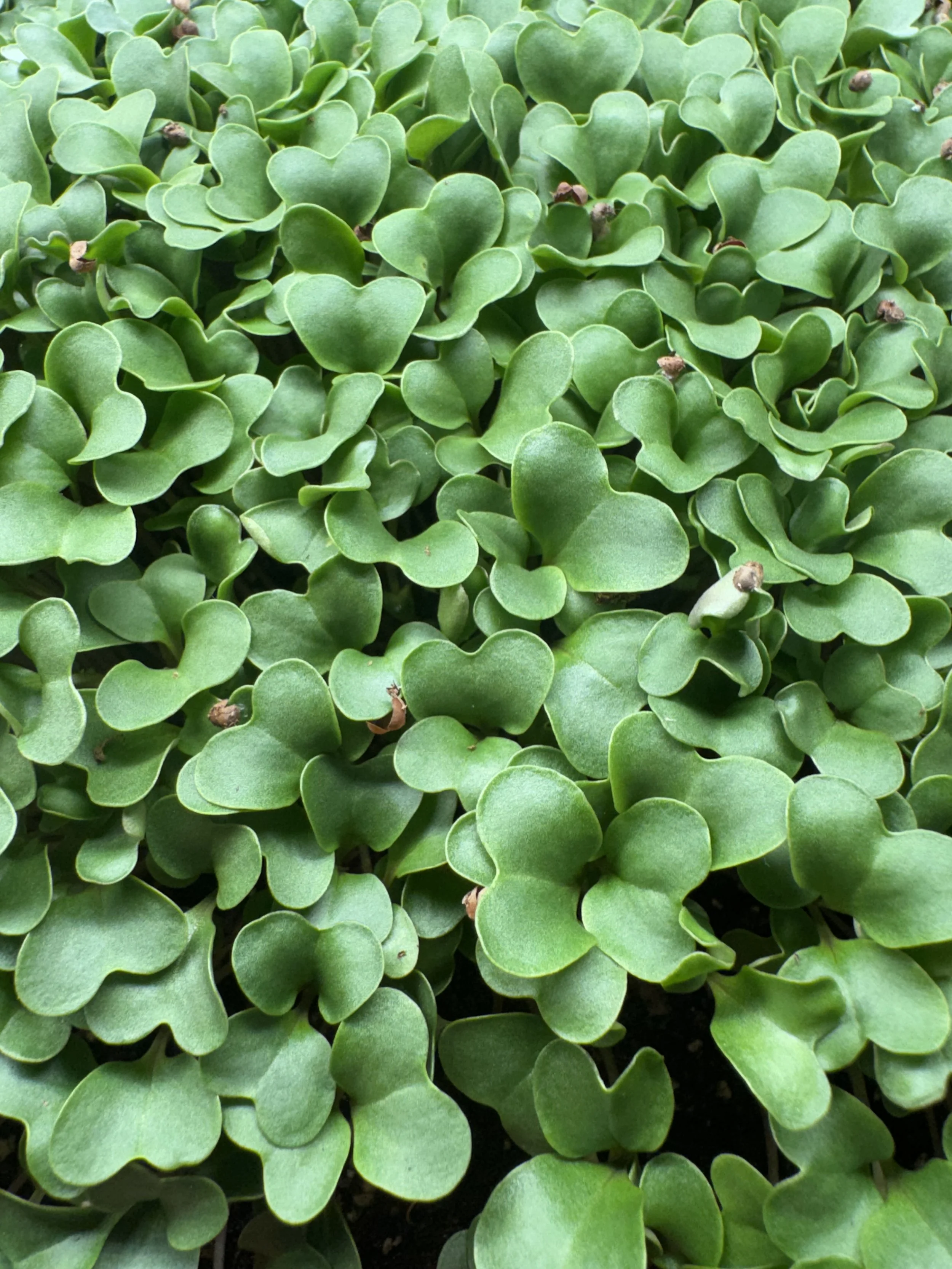
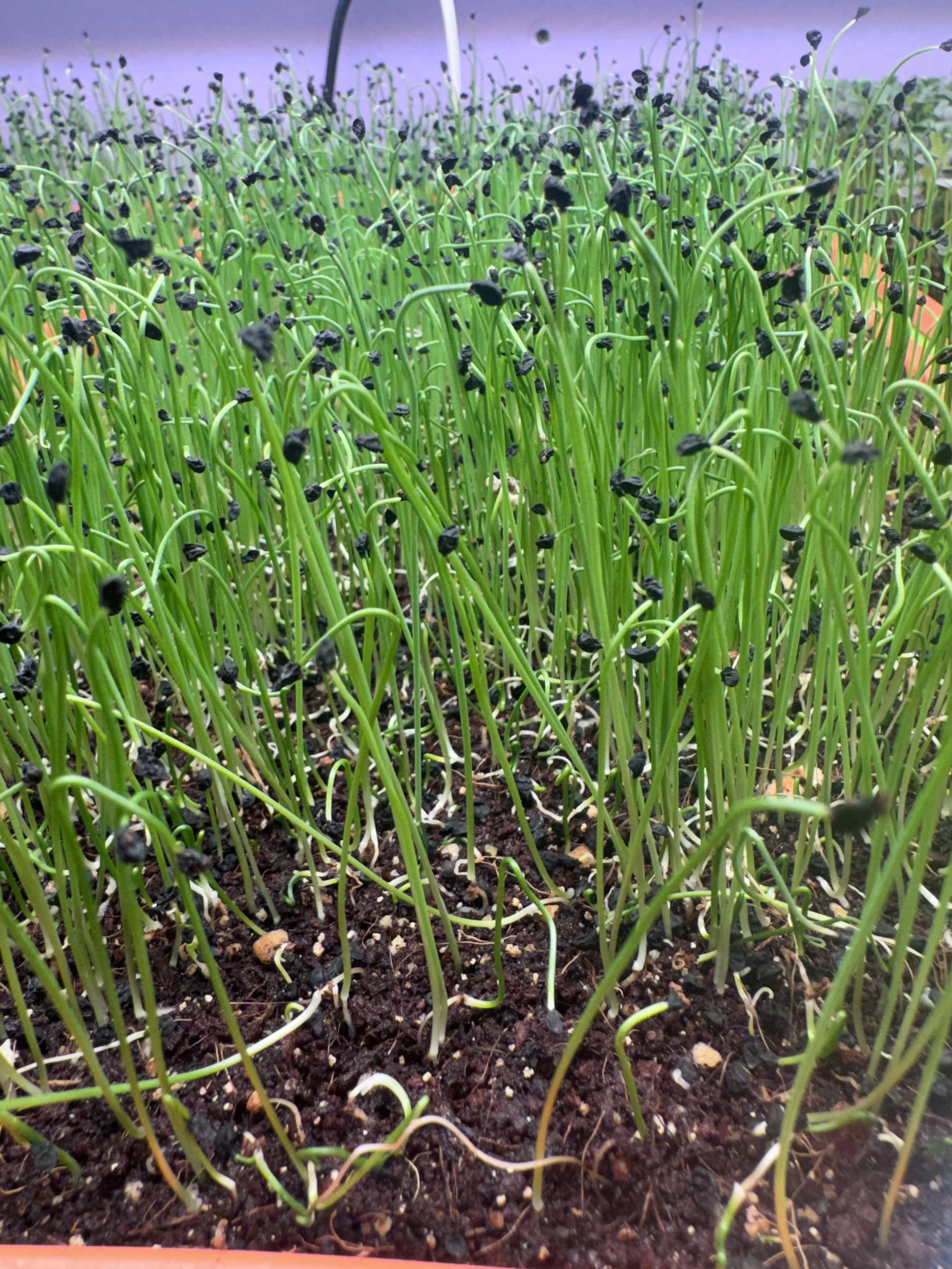
 Image 1 of 1
Disclaimer:Nutritional information and listed Health Benefits have not been evaluated by the Food and Drug Administration. This product is not intended to diagnose, treat, cure, or prevent any disease. The information on this website is for educational purposes only and not intended as medical advice.
History:
Leek history begins with ancient Egyptians and Mesopotamians, who cultivated the vegetable at least as far back as the second millennium BCE. It was a favorite of the ancient Romans, with Emperor Nero famously eating them for their supposed benefit to his voice, earning him the nickname "Leek-Eater". Leeks were introduced to Britain by the Romans and later became a symbol for Wales, particularly after a legendary battle in 640 AD where Welsh soldiers wore leeks to distinguish themselves from their Saxon enemies.
Flavor Profile:
Leek microgreens have a mild, delicate onion-like flavor that is less pungent than mature leeks or onions, often with a subtle hint of garlic and sometimes a surprising note of cucumber. They have a tender texture and are less bitter than scallions.
Suggested Uses:
Leek microgreens can be used in many culinary applications to add a mild onion flavor, such as in salads, soups, omelets, and as a garnish on dishes like burgers, wraps, and sandwiches. They are also excellent for making pesto, creating flavored salts, and can be blended into smoothies or added to avocado toast for extra flavor and nutrients.
Garnishes: Sprinkle on top of soups, burgers, wraps, and sandwiches for a fresh, mild onion flavor.
Salads: Add to salads for a mild, onion-like taste and a crisp texture.
Omelets and eggs: Fold into eggs just before serving for a gourmet touch and a boost of nutrients.
Soups: Stir into soups as a garnish to enhance flavor.
Main courses: Use in dishes like mushroom and leek galettes, or as a topping for roasted vegetables.
Sandwiches: Include in grilled cheese, wraps, or other sandwiches.
Other uses
Pesto: Blend with other ingredients for a unique leek-flavored pesto.
Flavored salts: Dehydrate them and mix with sea salt to create a flavorful seasoning for fish, poultry, and other dishes.
Smoothies: Blend into smoothies for added vitamins, antioxidants, and nutrients.
Avocado toast: Sprinkle on avocado toast for a fresh, slightly peppery taste that complements the avocado.
Nutrition:*not verified by FDA
Leek microgreens are nutrient-dense and packed with vitamins A, C, and K, as well as B vitamins (like B6 and folate), and minerals such as iron, potassium, and magnesium. They are also a good source of fiber and antioxidants, which can support immune function, bone health, and cardiovascular wellness.
Vitamins: Leek microgreens are especially rich in vitamins A, C, and K, along with various B vitamins, including B6 and folate.
Minerals: They provide essential minerals like iron, potassium, and magnesium.
Antioxidants: They contain beneficial compounds like allicin (similar to garlic) and antioxidants that can help combat inflammation and protect against disease.
Fiber: They are a good source of dietary fiber, which supports digestive health.
Potential Health Benefits:*not verified by FDA
Leek microgreens are nutrient-dense, providing vitamins A, C, and K, as well as iron, folate, and antioxidants like kaempferol. They may support immune function, vision, and heart health, and contribute to a healthy gut. As a member of the allium family, they also contain beneficial compounds similar to garlic and onions.
Helps support vision and immune function: They are particularly high in provitamin A carotenoids, which the body converts to vitamin A, supporting vision, cell communication, and immune function.
Contains antioxidants: They are rich in antioxidants, such as kaempferol, which may help combat oxidative stress and reduce the risk of chronic diseases like heart disease and certain cancers.
Helps promote heart health: Like other alliums, leek microgreens contain beneficial compounds that may help lower inflammation and protect heart health.
Helps aid digestion: The prebiotic fibers in microgreens help support a healthy gut.
May alleviate PMS symptoms: Manganese, which is present in leek microgreens, may help reduce premenstrual syndrome (PMS) symptoms.
Potential antimicrobial properties: The compound allicin, found in leeks and other alliums, has known anti-microbial properties and can support the immune system.
Disclaimer:Nutritional information and listed Health Benefits have not been evaluated by the Food and Drug Administration. This product is not intended to diagnose, treat, cure, or prevent any disease. The information on this website is for educational purposes only and not intended as medical advice.
History:
Leek history begins with ancient Egyptians and Mesopotamians, who cultivated the vegetable at least as far back as the second millennium BCE. It was a favorite of the ancient Romans, with Emperor Nero famously eating them for their supposed benefit to his voice, earning him the nickname "Leek-Eater". Leeks were introduced to Britain by the Romans and later became a symbol for Wales, particularly after a legendary battle in 640 AD where Welsh soldiers wore leeks to distinguish themselves from their Saxon enemies.
Flavor Profile:
Leek microgreens have a mild, delicate onion-like flavor that is less pungent than mature leeks or onions, often with a subtle hint of garlic and sometimes a surprising note of cucumber. They have a tender texture and are less bitter than scallions.
Suggested Uses:
Leek microgreens can be used in many culinary applications to add a mild onion flavor, such as in salads, soups, omelets, and as a garnish on dishes like burgers, wraps, and sandwiches. They are also excellent for making pesto, creating flavored salts, and can be blended into smoothies or added to avocado toast for extra flavor and nutrients.
Garnishes: Sprinkle on top of soups, burgers, wraps, and sandwiches for a fresh, mild onion flavor.
Salads: Add to salads for a mild, onion-like taste and a crisp texture.
Omelets and eggs: Fold into eggs just before serving for a gourmet touch and a boost of nutrients.
Soups: Stir into soups as a garnish to enhance flavor.
Main courses: Use in dishes like mushroom and leek galettes, or as a topping for roasted vegetables.
Sandwiches: Include in grilled cheese, wraps, or other sandwiches.
Other uses
Pesto: Blend with other ingredients for a unique leek-flavored pesto.
Flavored salts: Dehydrate them and mix with sea salt to create a flavorful seasoning for fish, poultry, and other dishes.
Smoothies: Blend into smoothies for added vitamins, antioxidants, and nutrients.
Avocado toast: Sprinkle on avocado toast for a fresh, slightly peppery taste that complements the avocado.
Nutrition:*not verified by FDA
Leek microgreens are nutrient-dense and packed with vitamins A, C, and K, as well as B vitamins (like B6 and folate), and minerals such as iron, potassium, and magnesium. They are also a good source of fiber and antioxidants, which can support immune function, bone health, and cardiovascular wellness.
Vitamins: Leek microgreens are especially rich in vitamins A, C, and K, along with various B vitamins, including B6 and folate.
Minerals: They provide essential minerals like iron, potassium, and magnesium.
Antioxidants: They contain beneficial compounds like allicin (similar to garlic) and antioxidants that can help combat inflammation and protect against disease.
Fiber: They are a good source of dietary fiber, which supports digestive health.
Potential Health Benefits:*not verified by FDA
Leek microgreens are nutrient-dense, providing vitamins A, C, and K, as well as iron, folate, and antioxidants like kaempferol. They may support immune function, vision, and heart health, and contribute to a healthy gut. As a member of the allium family, they also contain beneficial compounds similar to garlic and onions.
Helps support vision and immune function: They are particularly high in provitamin A carotenoids, which the body converts to vitamin A, supporting vision, cell communication, and immune function.
Contains antioxidants: They are rich in antioxidants, such as kaempferol, which may help combat oxidative stress and reduce the risk of chronic diseases like heart disease and certain cancers.
Helps promote heart health: Like other alliums, leek microgreens contain beneficial compounds that may help lower inflammation and protect heart health.
Helps aid digestion: The prebiotic fibers in microgreens help support a healthy gut.
May alleviate PMS symptoms: Manganese, which is present in leek microgreens, may help reduce premenstrual syndrome (PMS) symptoms.
Potential antimicrobial properties: The compound allicin, found in leeks and other alliums, has known anti-microbial properties and can support the immune system.