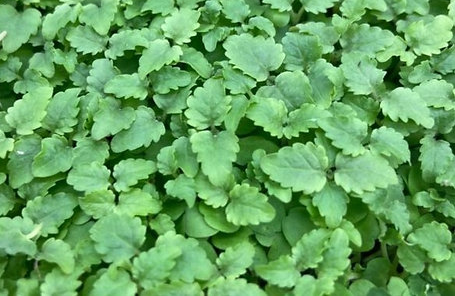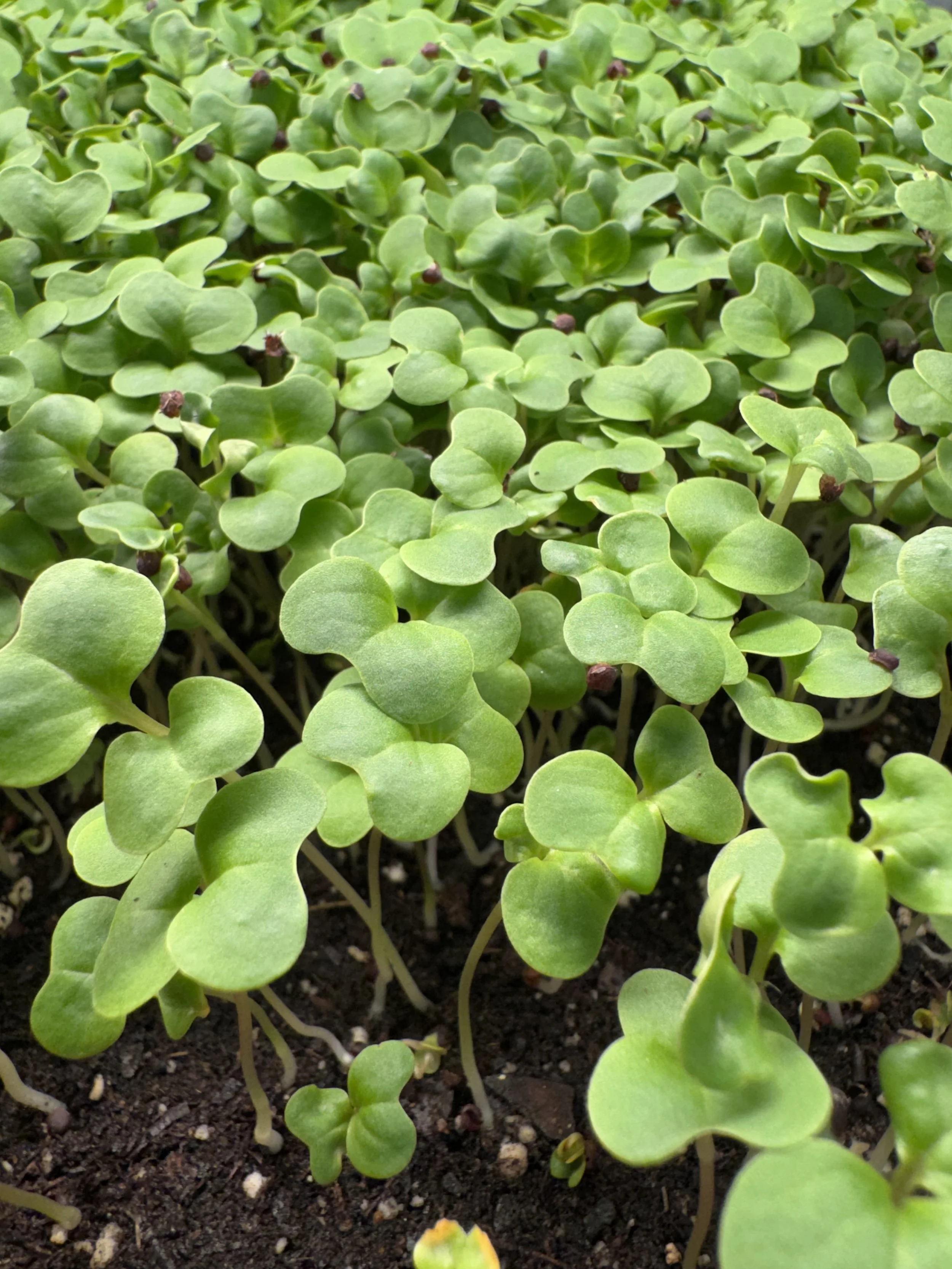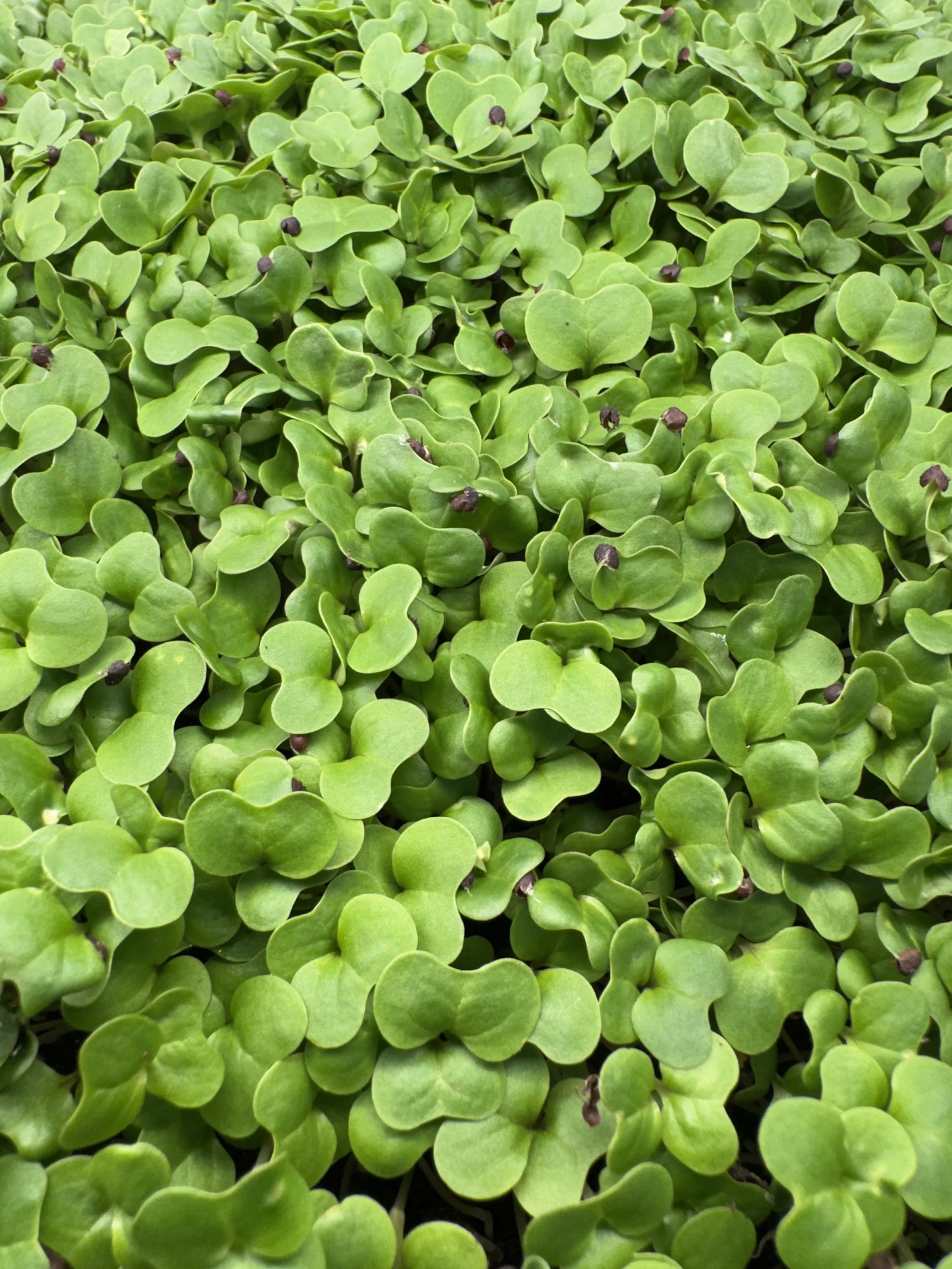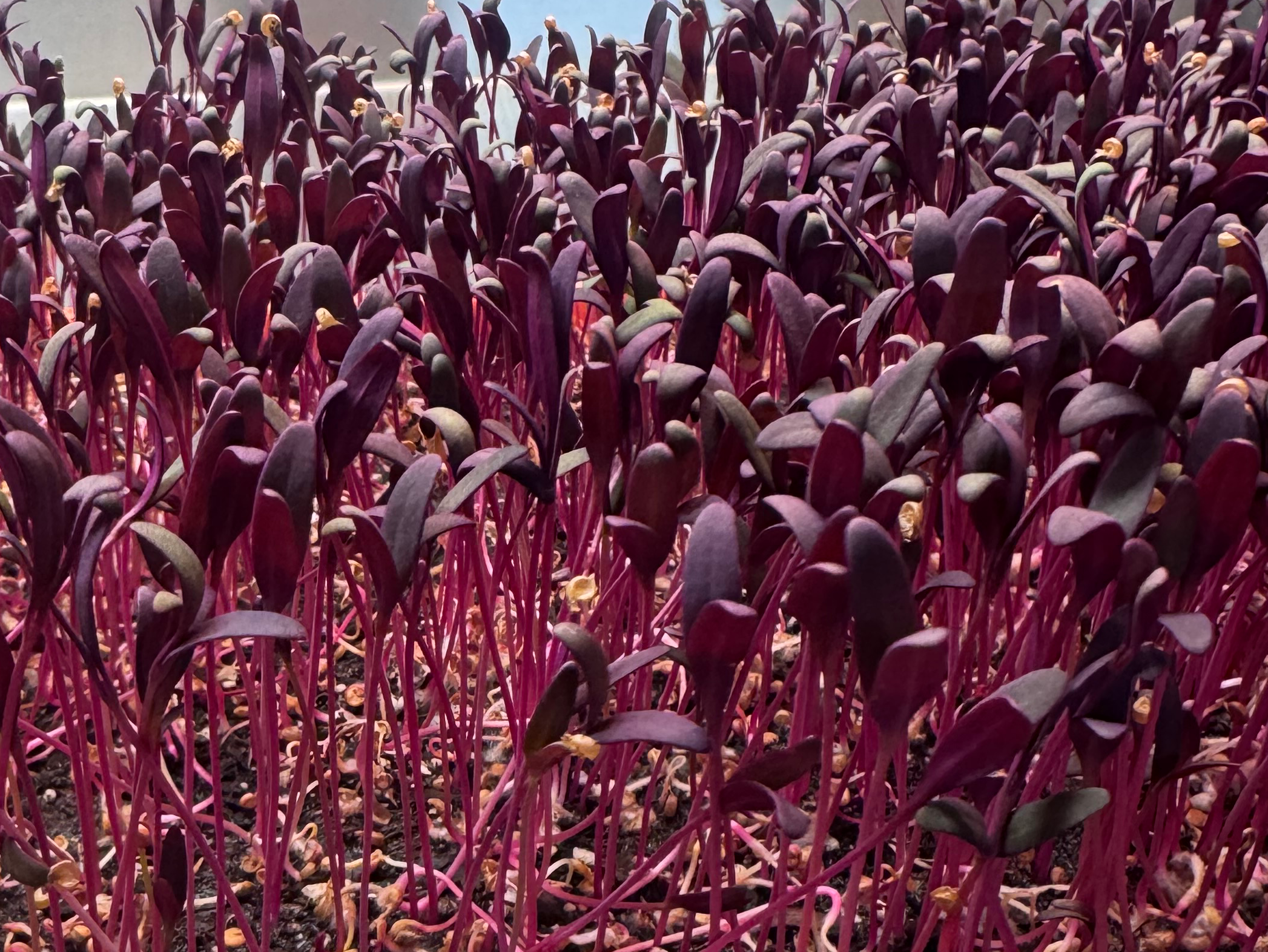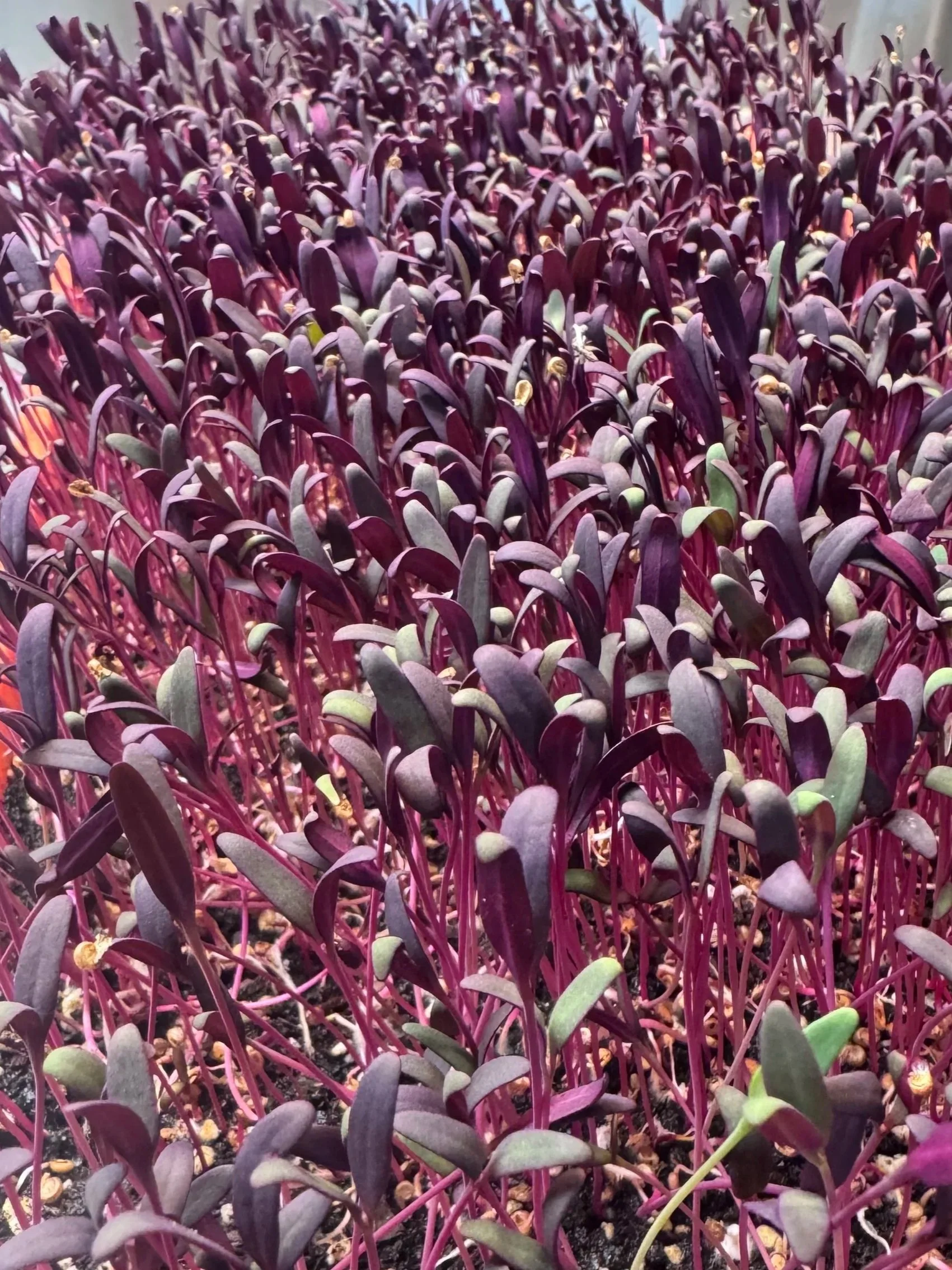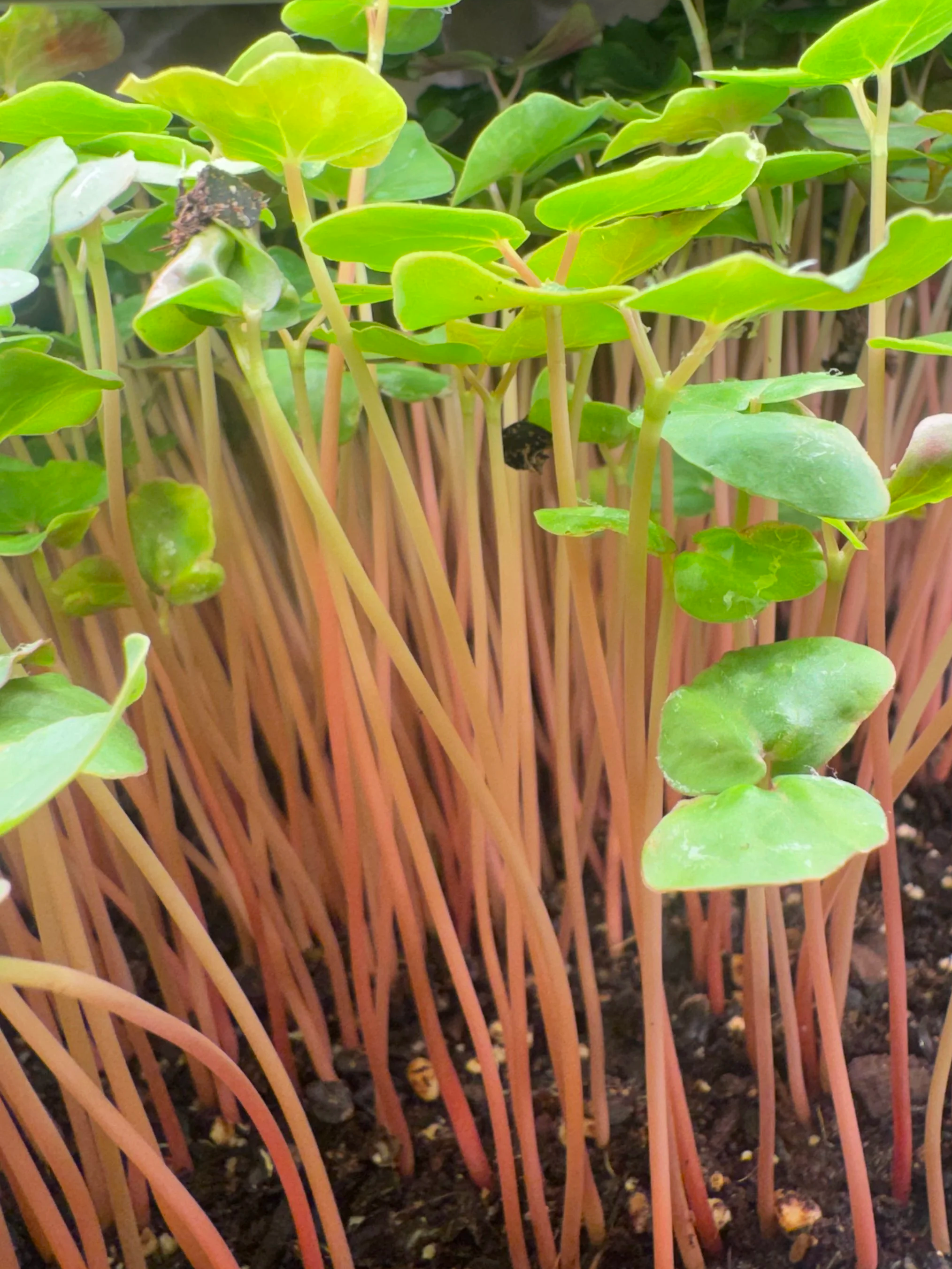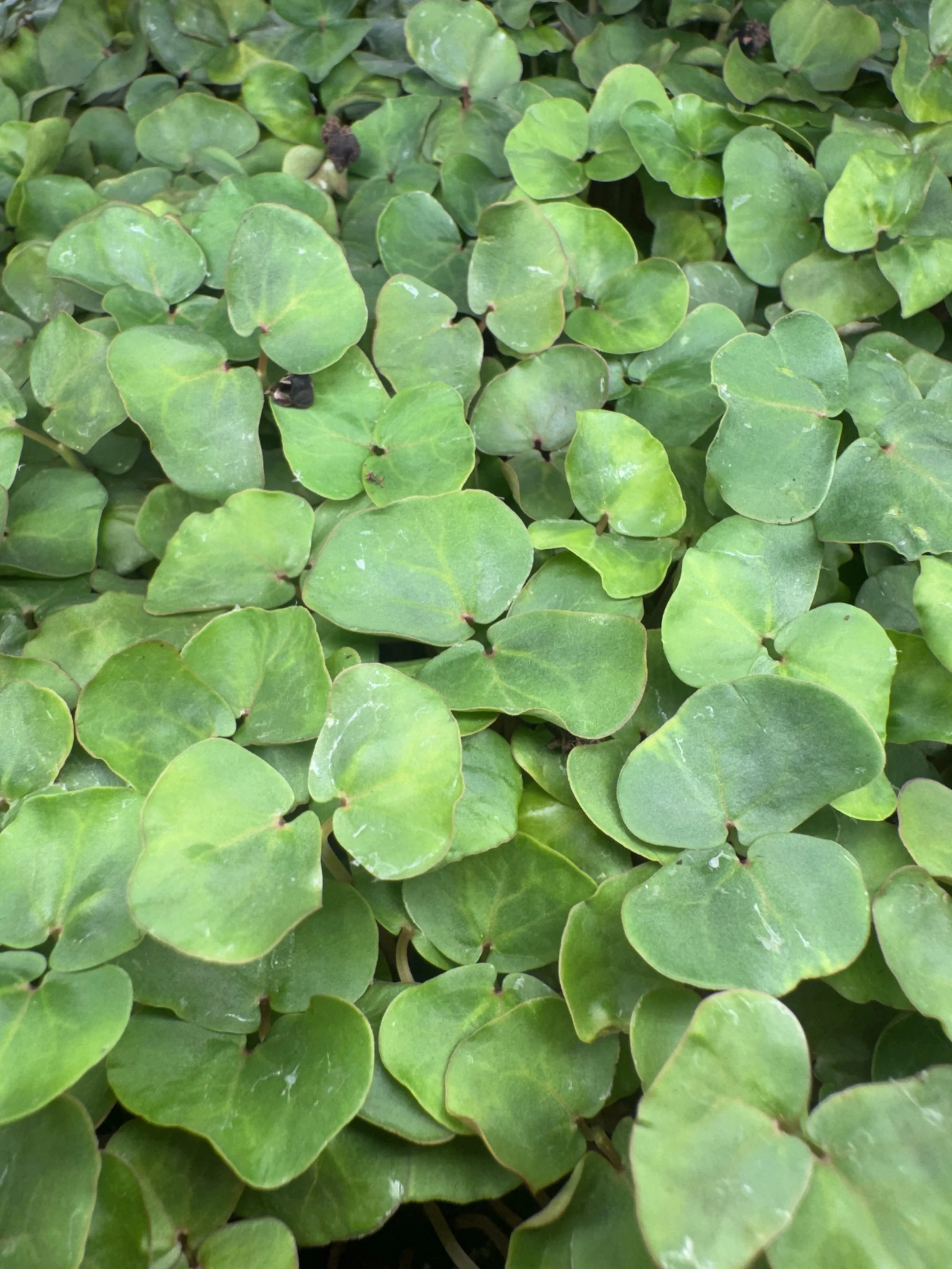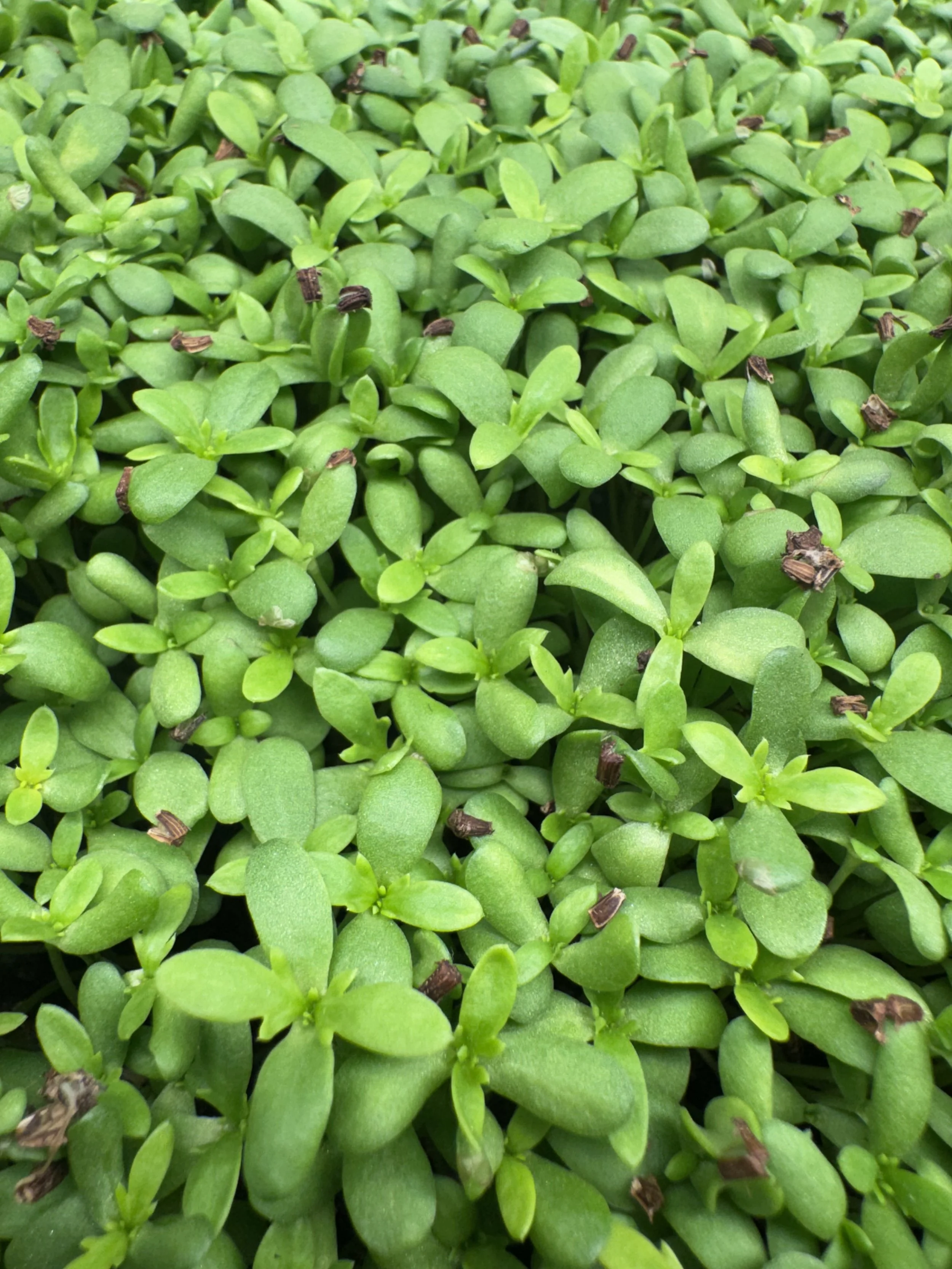
 Image 1 of 2
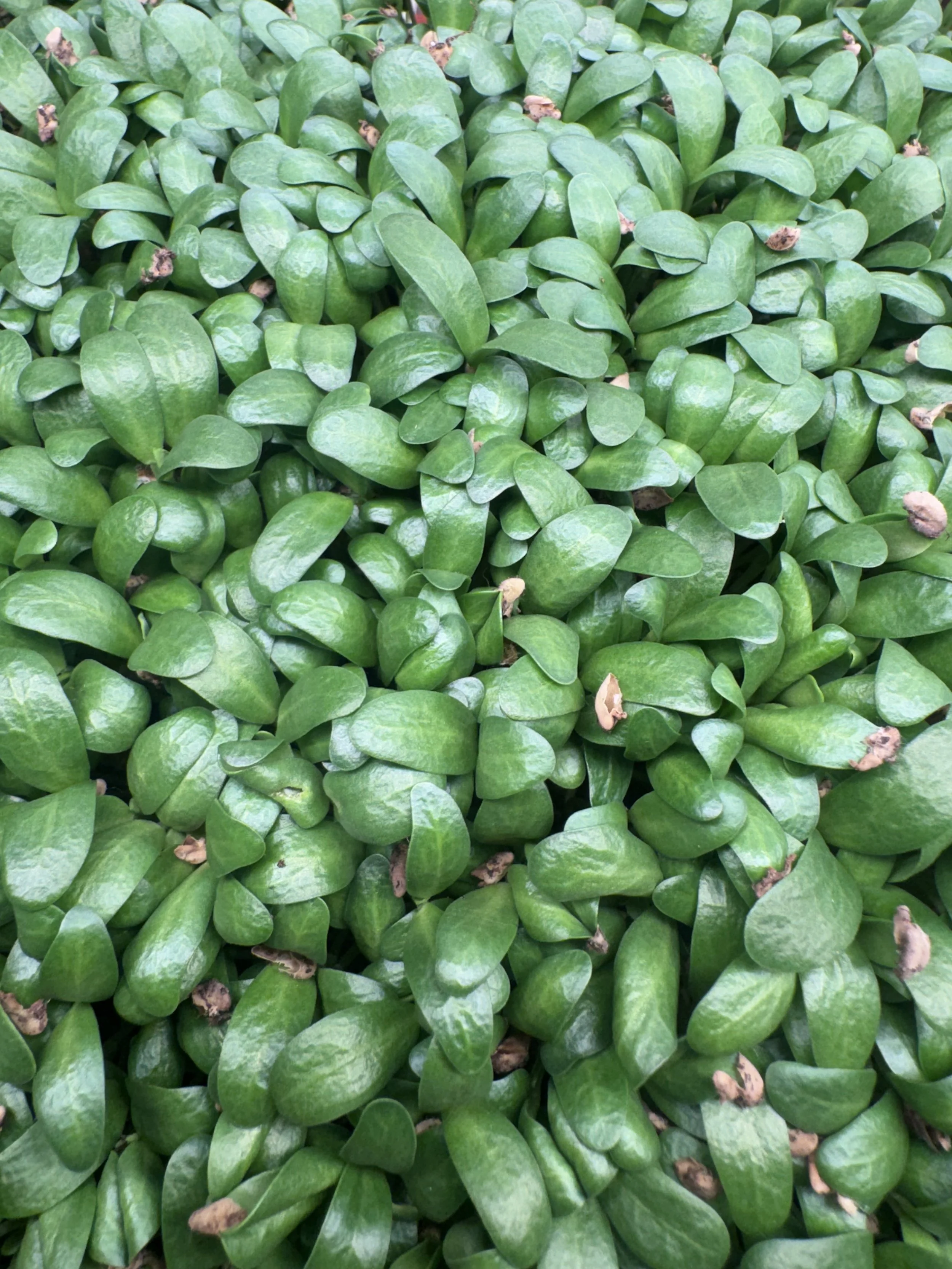 Image 2 of 2
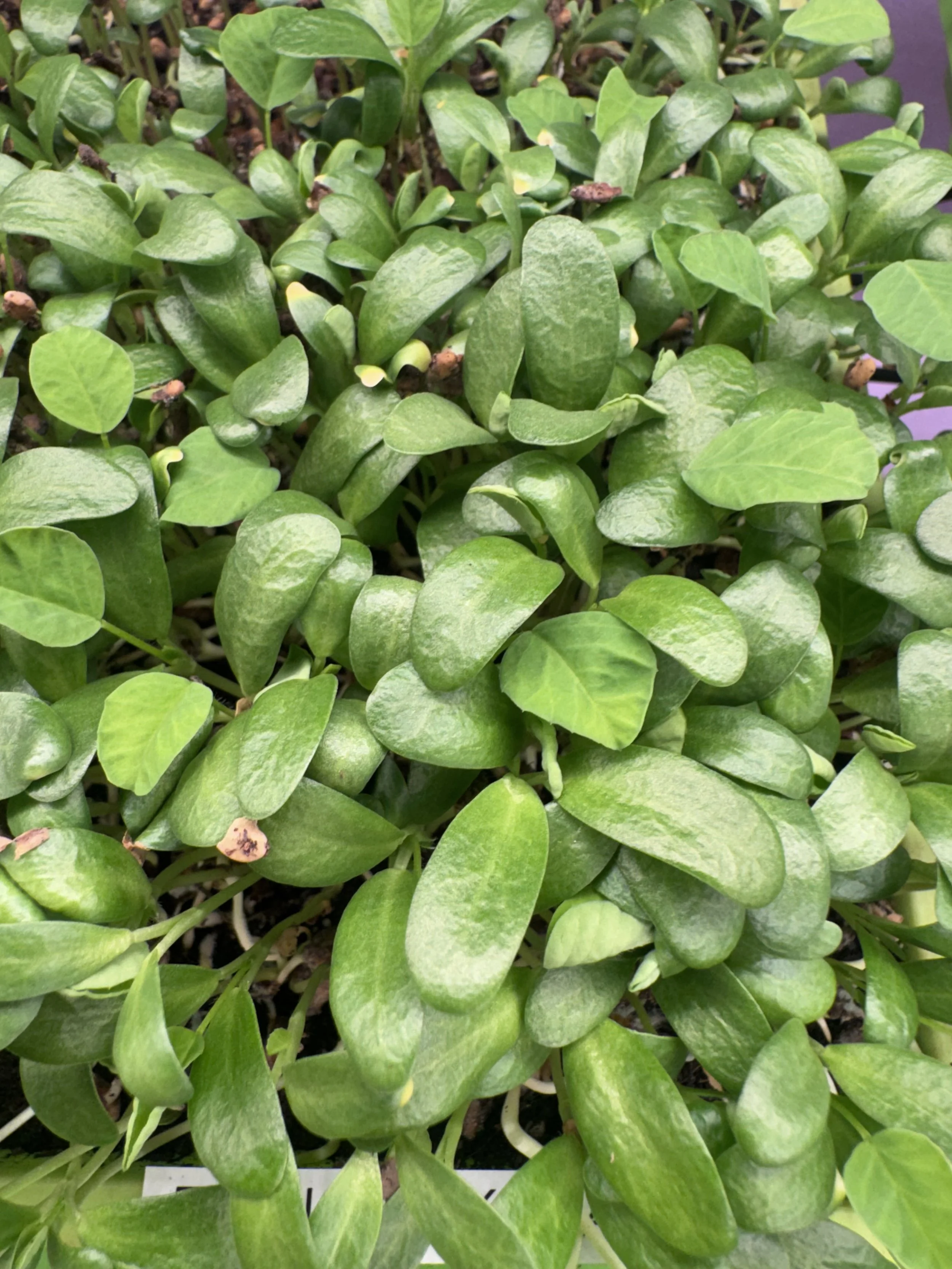
This item is grown to order and requires a 2 week lead time. We will grow a 10"x10" tray of these micros which we will cut and package for you when they are ready.
Disclaimer: Nutritional information and listed Health Benefits have not been evaluated by the Food and Drug Administration. This product is not intended to diagnose, treat, cure, or prevent any disease. The information on this website is for educational purposes only and not intended as medical advice.
History:
Fenugreek's history dates back thousands of years, with origins in the Mediterranean and Middle East regions before spreading to India and China. It was used by ancient Egyptians for embalming, and by the Greeks and Romans for medicinal and culinary purposes. Today, fenugreek is widely used in Indian cuisine and traditional medicine, and is cultivated in many countries, with India being the largest producer.
Flavor Profile:
Fenugreek microgreens have a complex flavor profile that is a mix of mildly bitter, nutty, and slightly sweet notes, often with a curry-like, maple-like, or fresh, grassy aroma.
Suggested Uses:
Fenugreek microgreens can be used in various culinary applications, from adding a fresh, slightly bitter flavor to salads and wraps to enhancing dishes like curries, soups, and stir-fries. They can also be blended into smoothies for a nutritional boost, mixed into dough for flatbreads, or used as a garnish on savory dishes like eggs or oats.
Garnish and toppings: Sprinkle on top of salads, wraps, sandwiches, soups, curries, scrambled eggs, or savory oats for a burst of flavor and nutrition.
Salads and bowls: Add to salads with chickpeas and lemon, or mix into lentil and chickpea salads for a complementary flavor.
Indian and Middle Eastern dishes: Incorporate into dishes like lentil soups, curries, parathas (flatbreads), or stir-fries for an authentic taste.
Wraps and sandwiches: Use as a filling or topping for wraps and sandwiches, often paired with hummus or other spreads.
Smoothies: Blend into green smoothies to add vitamins, minerals, and a unique flavor.
Dips and purees: Add to hummus or sweet potato purees.
Snack: Eat them raw with just a pinch of salt.
Herbal tea: Steep in hot water with ginger to make a soothing digestive tea.
Nutrition:*not verified by FDA
Fenugreek microgreens are nutrient-dense, offering high amounts of fiber, iron, protein, and vitamins B-6, E, and C. They are a good source of minerals like magnesium, manganese, and phosphorus, along with other vitamins such as A, K, and folate.
Vitamins: Rich in vitamins A, B (B-1, B-2, B-6, niacin), C, E, and K.
Minerals: Excellent source of iron, manganese, and phosphorus, as well as magnesium, potassium, and zinc.
Protein: A good source of protein and essential amino acids.
Fiber: High in dietary fiber.
Potential Health Benefits:*not verified by FDA
Fenugreek microgreens offer several benefits, including regulating blood sugar, supporting digestion, and providing high levels of vitamins and minerals like iron, vitamin C, and fiber. They may also help with menstrual discomfort, promote lactation, and have antioxidant properties.
Blood sugar regulation: Fenugreek microgreens are high in fiber, which helps regulate blood sugar levels and can lower cholesterol.
Digestive health: They are rich in fiber and act as a mild digestive tonic, helping to relieve constipation and improve overall digestion.
Rich in nutrients: They are an excellent source of essential nutrients, with particularly high amounts of iron, protein, fiber, and vitamins like C, A, and B6.
Women's health: They are traditionally used to help relieve menstrual discomfort and can help with lactation by stimulating milk production.
Antioxidant and anti-inflammatory properties: The microgreens contain antioxidants and the compound diosgenin, which may help reduce inflammation and protect against diseases.
Immune support: High levels of vitamin C support the immune system and collagen production.
Other potential benefits: Some sources suggest they may aid in weight management and improve cognitive function and skin health.
This item is grown to order and requires a 2 week lead time. We will grow a 10"x10" tray of these micros which we will cut and package for you when they are ready.
Disclaimer: Nutritional information and listed Health Benefits have not been evaluated by the Food and Drug Administration. This product is not intended to diagnose, treat, cure, or prevent any disease. The information on this website is for educational purposes only and not intended as medical advice.
History:
Fenugreek's history dates back thousands of years, with origins in the Mediterranean and Middle East regions before spreading to India and China. It was used by ancient Egyptians for embalming, and by the Greeks and Romans for medicinal and culinary purposes. Today, fenugreek is widely used in Indian cuisine and traditional medicine, and is cultivated in many countries, with India being the largest producer.
Flavor Profile:
Fenugreek microgreens have a complex flavor profile that is a mix of mildly bitter, nutty, and slightly sweet notes, often with a curry-like, maple-like, or fresh, grassy aroma.
Suggested Uses:
Fenugreek microgreens can be used in various culinary applications, from adding a fresh, slightly bitter flavor to salads and wraps to enhancing dishes like curries, soups, and stir-fries. They can also be blended into smoothies for a nutritional boost, mixed into dough for flatbreads, or used as a garnish on savory dishes like eggs or oats.
Garnish and toppings: Sprinkle on top of salads, wraps, sandwiches, soups, curries, scrambled eggs, or savory oats for a burst of flavor and nutrition.
Salads and bowls: Add to salads with chickpeas and lemon, or mix into lentil and chickpea salads for a complementary flavor.
Indian and Middle Eastern dishes: Incorporate into dishes like lentil soups, curries, parathas (flatbreads), or stir-fries for an authentic taste.
Wraps and sandwiches: Use as a filling or topping for wraps and sandwiches, often paired with hummus or other spreads.
Smoothies: Blend into green smoothies to add vitamins, minerals, and a unique flavor.
Dips and purees: Add to hummus or sweet potato purees.
Snack: Eat them raw with just a pinch of salt.
Herbal tea: Steep in hot water with ginger to make a soothing digestive tea.
Nutrition:*not verified by FDA
Fenugreek microgreens are nutrient-dense, offering high amounts of fiber, iron, protein, and vitamins B-6, E, and C. They are a good source of minerals like magnesium, manganese, and phosphorus, along with other vitamins such as A, K, and folate.
Vitamins: Rich in vitamins A, B (B-1, B-2, B-6, niacin), C, E, and K.
Minerals: Excellent source of iron, manganese, and phosphorus, as well as magnesium, potassium, and zinc.
Protein: A good source of protein and essential amino acids.
Fiber: High in dietary fiber.
Potential Health Benefits:*not verified by FDA
Fenugreek microgreens offer several benefits, including regulating blood sugar, supporting digestion, and providing high levels of vitamins and minerals like iron, vitamin C, and fiber. They may also help with menstrual discomfort, promote lactation, and have antioxidant properties.
Blood sugar regulation: Fenugreek microgreens are high in fiber, which helps regulate blood sugar levels and can lower cholesterol.
Digestive health: They are rich in fiber and act as a mild digestive tonic, helping to relieve constipation and improve overall digestion.
Rich in nutrients: They are an excellent source of essential nutrients, with particularly high amounts of iron, protein, fiber, and vitamins like C, A, and B6.
Women's health: They are traditionally used to help relieve menstrual discomfort and can help with lactation by stimulating milk production.
Antioxidant and anti-inflammatory properties: The microgreens contain antioxidants and the compound diosgenin, which may help reduce inflammation and protect against diseases.
Immune support: High levels of vitamin C support the immune system and collagen production.
Other potential benefits: Some sources suggest they may aid in weight management and improve cognitive function and skin health.