 Image 1 of 2
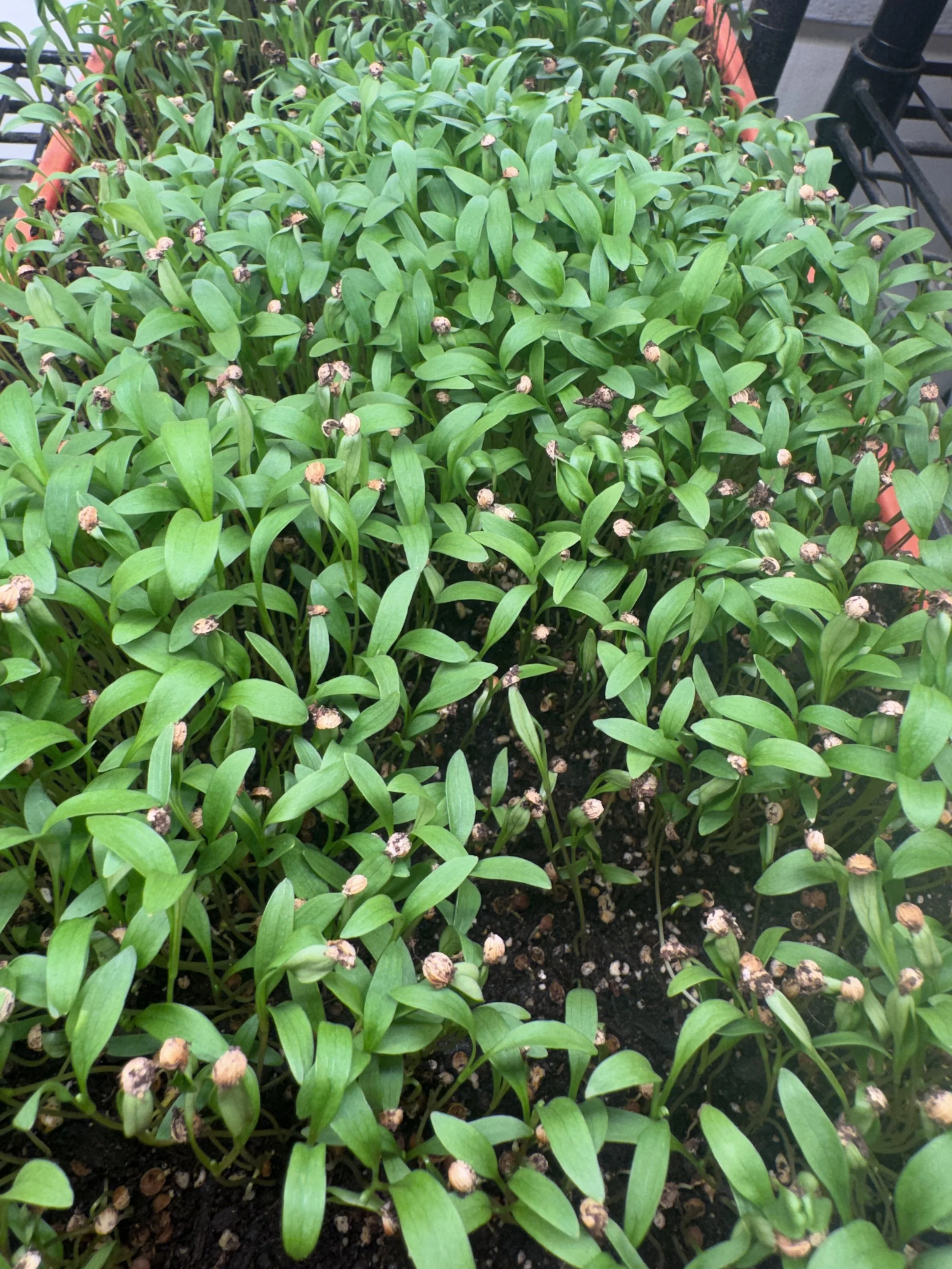 Image 2 of 2
Disclaimer: Nutritional information and listed Health Benefits have not been evaluated by the Food and Drug Administration. This product is not intended to diagnose, treat, cure, or prevent any disease. The information on this website is for educational purposes only and not intended as medical advice.
History:
Cilantro has a long history dating back to ancient civilizations, with its origins possibly in the Mediterranean and southwestern Europe, where seeds were found in a cave in Israel dating to 6000 BCE. It was used by ancient Greeks and Egyptians for both culinary and medicinal purposes, and was included in the tomb of King Tutankhamun. The Spanish introduced it to the Americas in the 1500s, where it became a staple in Mexican cuisine, while it was brought to North America later by the British.
Flavor Profile:
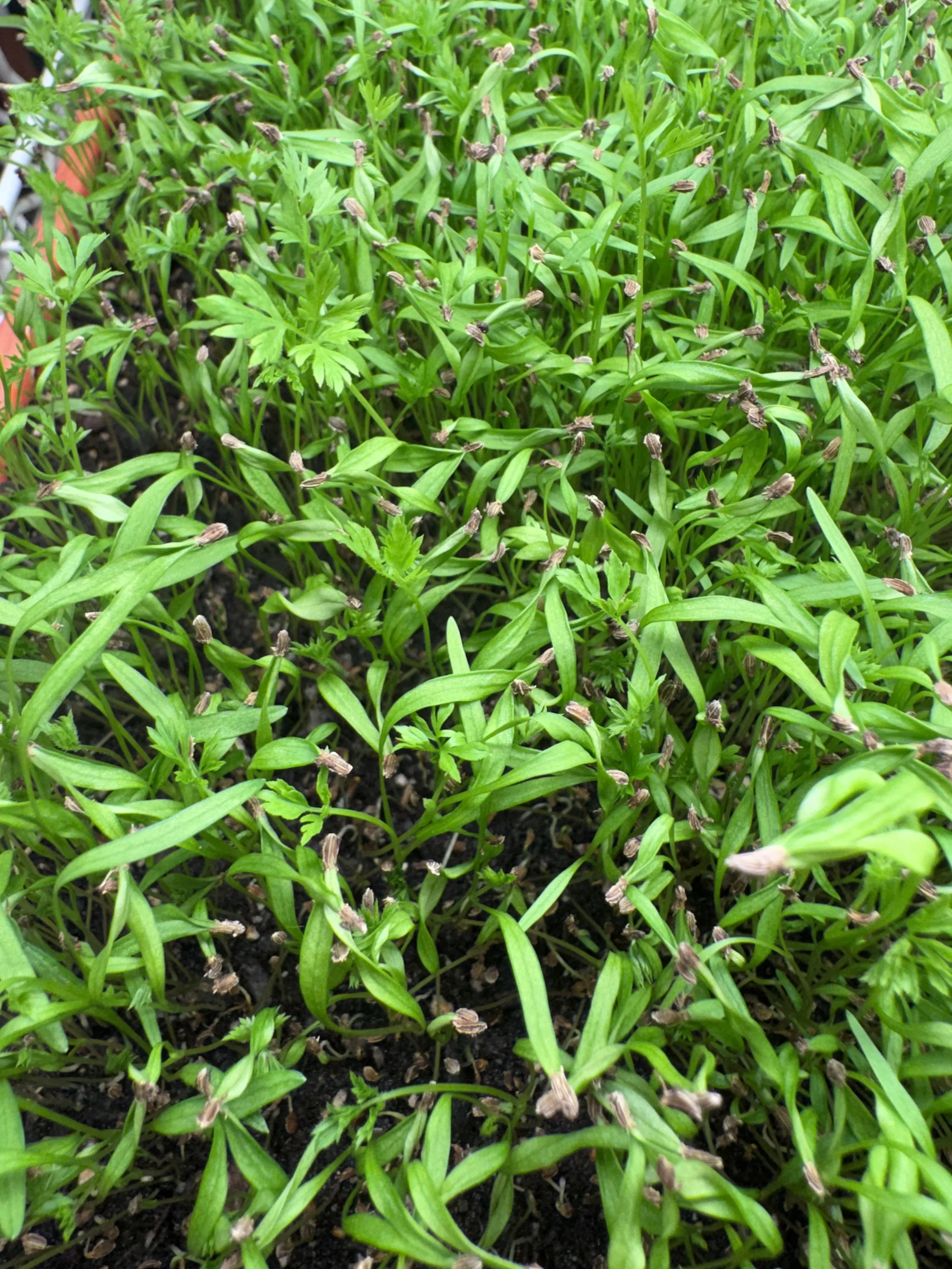
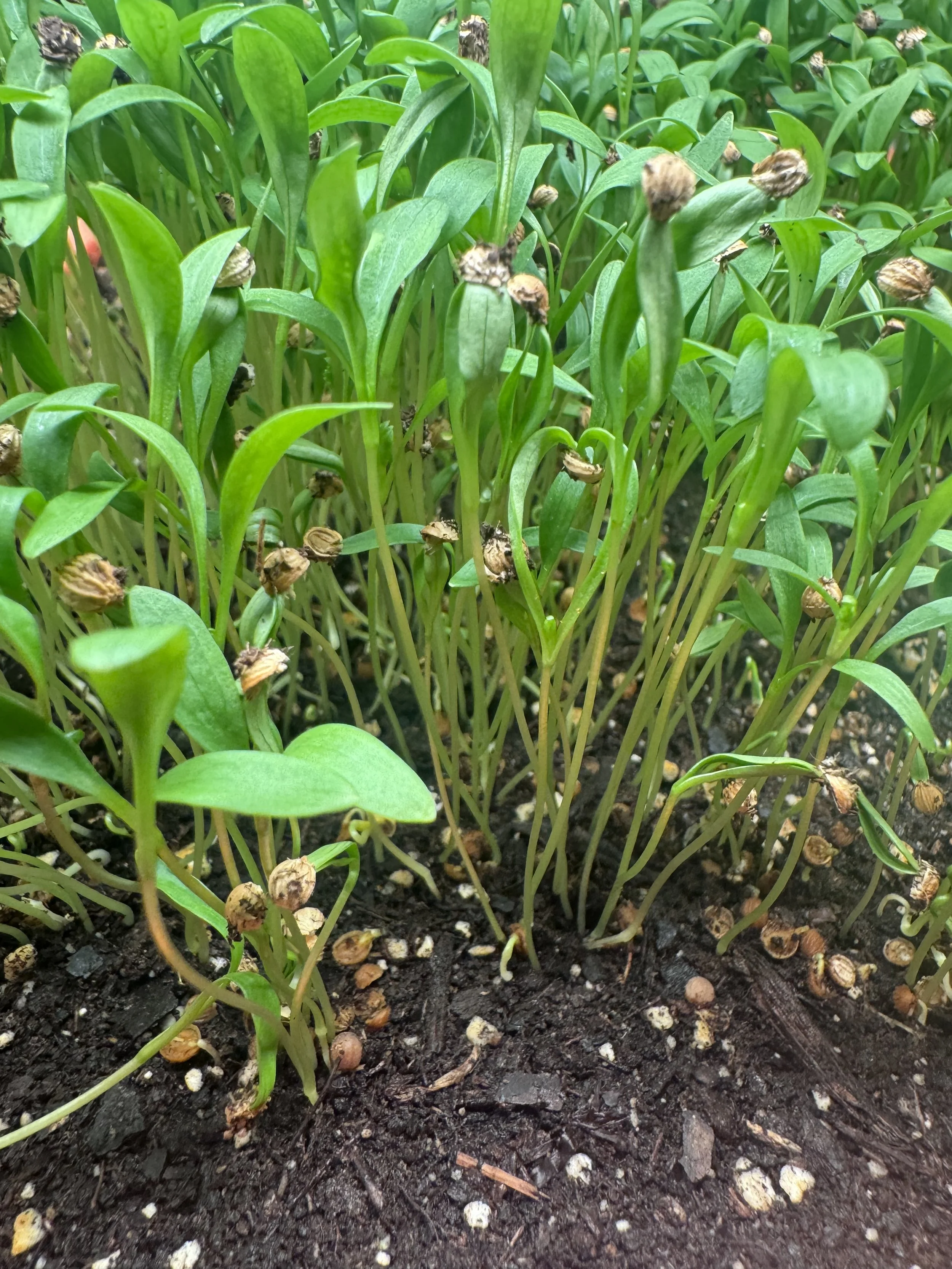
Cilantro microgreens have a bright, citrusy, and herbal flavor that is often less intense than mature cilantro, making them a more approachable option. They are fresh, clean, and can have a slight sweetness, with less of the soapy taste some people associate with the full-grown herb. This makes them a versatile garnish or ingredient in many dishes.
Suggested Uses:
Cilantro microgreens are used as a fresh, flavorful garnish or ingredient in a wide variety of dishes, especially those from Latin, Indian, Thai, and Mediterranean cuisines. They can be added to tacos, salads, salsas, and guacamole, or used to finish soups, stir-fries, noodle dishes, and egg dishes.
Mexican and Latin American: Top tacos, burrito bowls, or enchiladas; layer into quesadillas; stir into guacamole; blend into salsas.
Salads and grains: Add to green or grain bowls for a burst of freshness.
Soups and noodles: Sprinkle over finished bowls of Thai coconut soup, ramen, pho, or curries.
Breakfast: Use in breakfast tacos, veggie scrambles, or to top avocado toast and poached eggs.
Asian cuisine: Garnish spring rolls, add to egg rolls, or finish stir-fries.
Sandwiches and wraps: Use as a flavorful filling to add brightness to sandwiches and wraps.
Beverages: Blend into juices or smoothies for a detoxifying green boost, or use as a garnish for cocktails and mocktails.
For Pets: *(always consult a vet before adding microgreens to your pet’s diet)
Bearded Dragons: Cilantro microgreens are safe for bearded dragons, but only in moderation as a treat or salad topper. While they offer beneficial nutrients like vitamins A, C, and K, their high water content and potential to cause digestive upset mean they should not be a staple, daily food.
Cats: Cilantro microgreens are safe and non-toxic for cats in moderation. They are highly nutritious, providing antioxidants, vitamins A and C, and can be used as a healthy treat or supplement to their diet. However, they should only make up a small portion of a cat's diet to avoid potential digestive upset.
Dogs: Cilantro microgreens are safe and nutritious for dogs, offering vitamins A, C, and K, as well as minerals. They are not toxic, making them a healthy, fiber-rich addition in moderation. Serve them finely chopped as a topper to enhance digestion and nutrition, keeping them to about 10% of their diet.
Guinea Pigs: Cilantro microgreens are safe and healthy for guinea pigs in moderation, offering vitamins A, C, and K. While safe, they should be treated as a varied part of a daily salad (3-5 fresh foods) rather than a staple, due to the need for a balanced nutrient intake.
Rabbits: Cilantro microgreens are safe and nutritious for rabbits, offering essential vitamins and minerals in a small package. They are low in sugar and starch, making them a good addition to a rabbit's diet in moderation, alongside other leafy greens.
Nutrition:*not verified by FDA
Cilantro microgreens are nutritionally dense, packed with vitamins A, B (including B1, B2, B3, B6), C, E, and K, along with minerals like iron, calcium, magnesium, and potassium. They are also a good source of protein, fiber, and antioxidants, offering benefits like immune system support and healthy vision. The nutritional content can be significantly higher than mature cilantro plants.
Vitamins: A, B1, B2, B3, B6, C, E, and K
Minerals: Calcium, iron, potassium, magnesium, zinc, and copper
Antioxidants: Rich in beta-carotene and vitamin E, which protect cells from damage
Protein and Fiber: Contain protein for tissue repair and fiber for digestive health
Health Benefits:*not verified by FDA
Rich in antioxidants: Cilantro microgreens are packed with antioxidants, such as polyphenols and flavonoids like quercetin, which help protect your body from cell damage caused by free radicals.
Anti-inflammatory: The flavonoids in cilantro microgreens have anti-inflammatory properties that can help reduce swelling and discomfort.
Boosts digestion: Natural oils in cilantro, like terpenes, can help boost digestive enzymes, which may reduce bloating and improve gut health.
High in vitamins: These microgreens are an excellent source of vitamins A, C, and K.
Vitamin A: Supports healthy vision and skin.
Vitamin C: Essential for immune function.
Vitamin K: Promotes proper blood clotting and bone health.
Supports bone health: The high content of vitamin K helps the body absorb calcium, which is important for strong bones.
May have detoxifying properties: Cilantro microgreens have been linked to helping the body remove heavy metals, although more research is needed.
Nutrient-dense: Cilantro microgreens can contain up to 40 times more vitamins and antioxidants than their mature counterparts, providing a powerful nutrient boost in a small serving.
Disclaimer: Nutritional information and listed Health Benefits have not been evaluated by the Food and Drug Administration. This product is not intended to diagnose, treat, cure, or prevent any disease. The information on this website is for educational purposes only and not intended as medical advice.
History:
Cilantro has a long history dating back to ancient civilizations, with its origins possibly in the Mediterranean and southwestern Europe, where seeds were found in a cave in Israel dating to 6000 BCE. It was used by ancient Greeks and Egyptians for both culinary and medicinal purposes, and was included in the tomb of King Tutankhamun. The Spanish introduced it to the Americas in the 1500s, where it became a staple in Mexican cuisine, while it was brought to North America later by the British.
Flavor Profile:
Cilantro microgreens have a bright, citrusy, and herbal flavor that is often less intense than mature cilantro, making them a more approachable option. They are fresh, clean, and can have a slight sweetness, with less of the soapy taste some people associate with the full-grown herb. This makes them a versatile garnish or ingredient in many dishes.
Suggested Uses:
Cilantro microgreens are used as a fresh, flavorful garnish or ingredient in a wide variety of dishes, especially those from Latin, Indian, Thai, and Mediterranean cuisines. They can be added to tacos, salads, salsas, and guacamole, or used to finish soups, stir-fries, noodle dishes, and egg dishes.
Mexican and Latin American: Top tacos, burrito bowls, or enchiladas; layer into quesadillas; stir into guacamole; blend into salsas.
Salads and grains: Add to green or grain bowls for a burst of freshness.
Soups and noodles: Sprinkle over finished bowls of Thai coconut soup, ramen, pho, or curries.
Breakfast: Use in breakfast tacos, veggie scrambles, or to top avocado toast and poached eggs.
Asian cuisine: Garnish spring rolls, add to egg rolls, or finish stir-fries.
Sandwiches and wraps: Use as a flavorful filling to add brightness to sandwiches and wraps.
Beverages: Blend into juices or smoothies for a detoxifying green boost, or use as a garnish for cocktails and mocktails.
For Pets: *(always consult a vet before adding microgreens to your pet’s diet)
Bearded Dragons: Cilantro microgreens are safe for bearded dragons, but only in moderation as a treat or salad topper. While they offer beneficial nutrients like vitamins A, C, and K, their high water content and potential to cause digestive upset mean they should not be a staple, daily food.
Cats: Cilantro microgreens are safe and non-toxic for cats in moderation. They are highly nutritious, providing antioxidants, vitamins A and C, and can be used as a healthy treat or supplement to their diet. However, they should only make up a small portion of a cat's diet to avoid potential digestive upset.
Dogs: Cilantro microgreens are safe and nutritious for dogs, offering vitamins A, C, and K, as well as minerals. They are not toxic, making them a healthy, fiber-rich addition in moderation. Serve them finely chopped as a topper to enhance digestion and nutrition, keeping them to about 10% of their diet.
Guinea Pigs: Cilantro microgreens are safe and healthy for guinea pigs in moderation, offering vitamins A, C, and K. While safe, they should be treated as a varied part of a daily salad (3-5 fresh foods) rather than a staple, due to the need for a balanced nutrient intake.
Rabbits: Cilantro microgreens are safe and nutritious for rabbits, offering essential vitamins and minerals in a small package. They are low in sugar and starch, making them a good addition to a rabbit's diet in moderation, alongside other leafy greens.
Nutrition:*not verified by FDA
Cilantro microgreens are nutritionally dense, packed with vitamins A, B (including B1, B2, B3, B6), C, E, and K, along with minerals like iron, calcium, magnesium, and potassium. They are also a good source of protein, fiber, and antioxidants, offering benefits like immune system support and healthy vision. The nutritional content can be significantly higher than mature cilantro plants.
Vitamins: A, B1, B2, B3, B6, C, E, and K
Minerals: Calcium, iron, potassium, magnesium, zinc, and copper
Antioxidants: Rich in beta-carotene and vitamin E, which protect cells from damage
Protein and Fiber: Contain protein for tissue repair and fiber for digestive health
Health Benefits:*not verified by FDA
Rich in antioxidants: Cilantro microgreens are packed with antioxidants, such as polyphenols and flavonoids like quercetin, which help protect your body from cell damage caused by free radicals.
Anti-inflammatory: The flavonoids in cilantro microgreens have anti-inflammatory properties that can help reduce swelling and discomfort.
Boosts digestion: Natural oils in cilantro, like terpenes, can help boost digestive enzymes, which may reduce bloating and improve gut health.
High in vitamins: These microgreens are an excellent source of vitamins A, C, and K.
Vitamin A: Supports healthy vision and skin.
Vitamin C: Essential for immune function.
Vitamin K: Promotes proper blood clotting and bone health.
Supports bone health: The high content of vitamin K helps the body absorb calcium, which is important for strong bones.
May have detoxifying properties: Cilantro microgreens have been linked to helping the body remove heavy metals, although more research is needed.
Nutrient-dense: Cilantro microgreens can contain up to 40 times more vitamins and antioxidants than their mature counterparts, providing a powerful nutrient boost in a small serving.