 Image 1 of 1
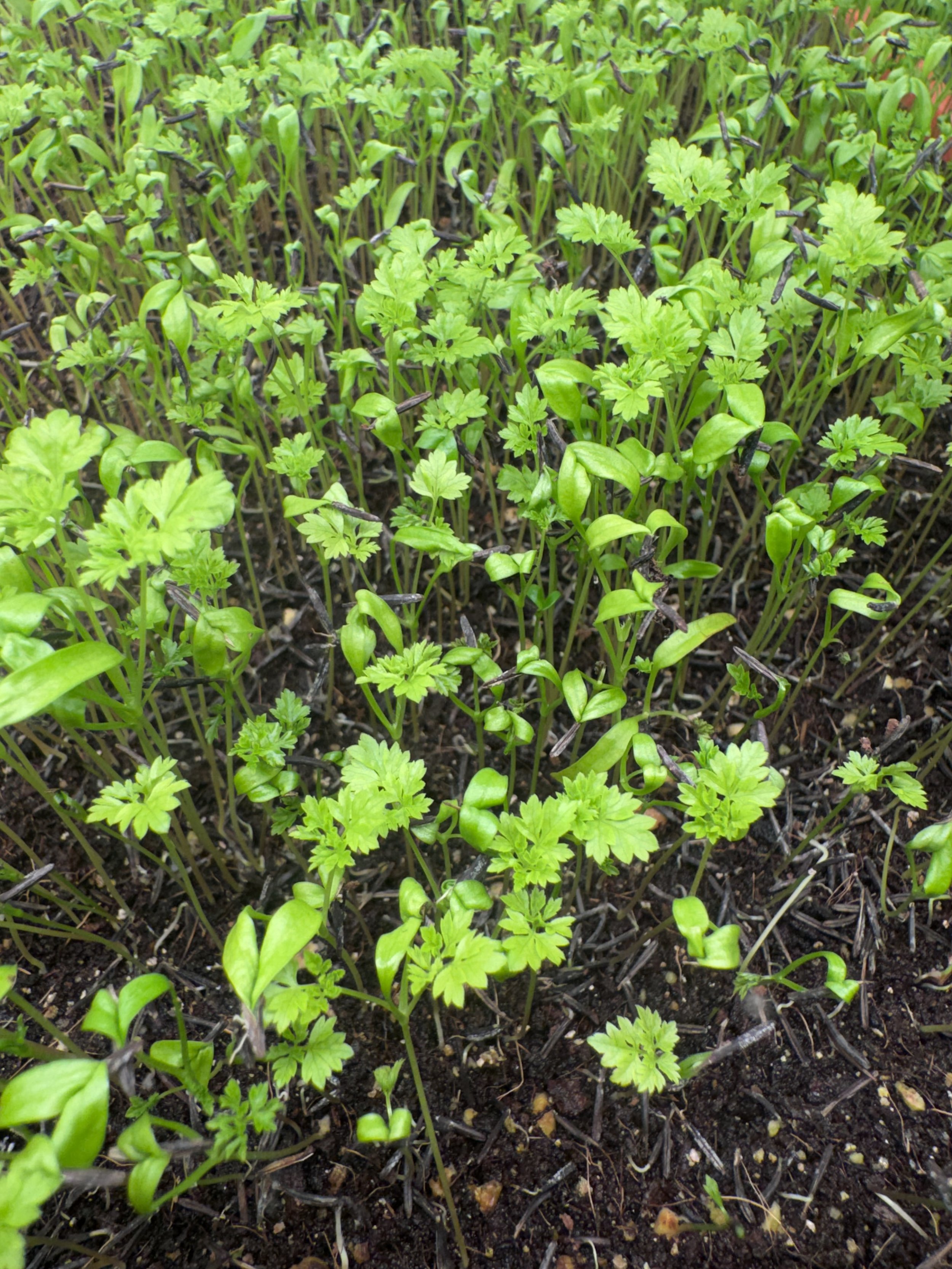
This item is grown to order and requires a 2 week lead time. We will grow a 10"x10" tray of these micros which we will cut and package for you when they are ready.
Disclaimer: Nutritional information and listed Health Benefits have not been evaluated by the Food and Drug Administration. This product is not intended to diagnose, treat, cure, or prevent any disease. The information on this website is for educational purposes only and not intended as medical advice.
History:
Chervil originated in the Caucasus region of Western Asia and was spread throughout Europe by the ancient Romans, who used it both for its flavor and believed medicinal properties. It became a staple in French cuisine, a key component of the classic herb blend fines herbes, and historically held symbolic meaning, particularly for its association with new life in spring and its link to Easter.
Chervil was highly prized by ancient civilizations for its medicinal properties and was used to treat ailments such as digestive issues, respiratory problems, and insomnia. It was also believed to have aphrodisiac properties and was used in love potions and rituals.
Flavor Profile:
Chervil microgreens have a delicate, mild, and sweet flavor with notes of anise, parsley, and sometimes a hint of mint or fennel. Their flavor is best described as a subtle anise or licorice taste without being overpowering, making them a refined garnish for many dishes.
Suggested Uses:
Chervil microgreens are best used fresh as a delicate garnish or subtle flavoring for a wide variety of dishes, including soups, salads, eggs, and fish. Their mild, slightly anise-flavored leaves add elegance and are often used in French cuisine. They can also be added to casseroles, roasted vegetables, and sauces, or even used to infuse oils.
Nutrition:*not verified by FDA
Chervil microgreens are a good source of vitamins A, C, and E, as well as minerals like iron, potassium, calcium, and magnesium. They also contain antioxidants, which help protect cells from damage and support the immune system. Due to their concentrated nutrient profile, they can offer more vitamins and minerals than the mature plant.
Potential Health Benefits:*not verified by FDA
Vitamins A, C, and E: These act as antioxidants, helping to protect cells from damage, support vision, and boost the immune system.
Reduced inflammation: The antioxidant properties of these vitamins can help reduce inflammation in the body.
Bone and blood health *not verified by FDA
Calcium and Iron: Chervil microgreens are a source of calcium for bone formation and iron for healthy red blood cell formation and oxygen transport.
Vitamin K: This vitamin contributes to strong bones and proper blood clotting.
Digestive and heart health *not verified by FDA
Digestive support: Chervil microgreens are associated with supporting healthy digestion.
Heart health: They can contribute to heart health, and studies on microgreens, in general, show potential for reducing heart disease risk factors like high LDL cholesterol and triglycerides.
Additional benefits*not verified by FDA
Other minerals: They contain other important minerals such as potassium, copper, and zinc, which are crucial for various bodily functions including nervous system and heart function.
Antibacterial and antifungal properties: They may have antibacterial and antifungal properties that help protect against infections.
This item is grown to order and requires a 2 week lead time. We will grow a 10"x10" tray of these micros which we will cut and package for you when they are ready.
Disclaimer: Nutritional information and listed Health Benefits have not been evaluated by the Food and Drug Administration. This product is not intended to diagnose, treat, cure, or prevent any disease. The information on this website is for educational purposes only and not intended as medical advice.
History:
Chervil originated in the Caucasus region of Western Asia and was spread throughout Europe by the ancient Romans, who used it both for its flavor and believed medicinal properties. It became a staple in French cuisine, a key component of the classic herb blend fines herbes, and historically held symbolic meaning, particularly for its association with new life in spring and its link to Easter.
Chervil was highly prized by ancient civilizations for its medicinal properties and was used to treat ailments such as digestive issues, respiratory problems, and insomnia. It was also believed to have aphrodisiac properties and was used in love potions and rituals.
Flavor Profile:
Chervil microgreens have a delicate, mild, and sweet flavor with notes of anise, parsley, and sometimes a hint of mint or fennel. Their flavor is best described as a subtle anise or licorice taste without being overpowering, making them a refined garnish for many dishes.
Suggested Uses:
Chervil microgreens are best used fresh as a delicate garnish or subtle flavoring for a wide variety of dishes, including soups, salads, eggs, and fish. Their mild, slightly anise-flavored leaves add elegance and are often used in French cuisine. They can also be added to casseroles, roasted vegetables, and sauces, or even used to infuse oils.
Nutrition:*not verified by FDA
Chervil microgreens are a good source of vitamins A, C, and E, as well as minerals like iron, potassium, calcium, and magnesium. They also contain antioxidants, which help protect cells from damage and support the immune system. Due to their concentrated nutrient profile, they can offer more vitamins and minerals than the mature plant.
Potential Health Benefits:*not verified by FDA
Vitamins A, C, and E: These act as antioxidants, helping to protect cells from damage, support vision, and boost the immune system.
Reduced inflammation: The antioxidant properties of these vitamins can help reduce inflammation in the body.
Bone and blood health *not verified by FDA
Calcium and Iron: Chervil microgreens are a source of calcium for bone formation and iron for healthy red blood cell formation and oxygen transport.
Vitamin K: This vitamin contributes to strong bones and proper blood clotting.
Digestive and heart health *not verified by FDA
Digestive support: Chervil microgreens are associated with supporting healthy digestion.
Heart health: They can contribute to heart health, and studies on microgreens, in general, show potential for reducing heart disease risk factors like high LDL cholesterol and triglycerides.
Additional benefits*not verified by FDA
Other minerals: They contain other important minerals such as potassium, copper, and zinc, which are crucial for various bodily functions including nervous system and heart function.
Antibacterial and antifungal properties: They may have antibacterial and antifungal properties that help protect against infections.