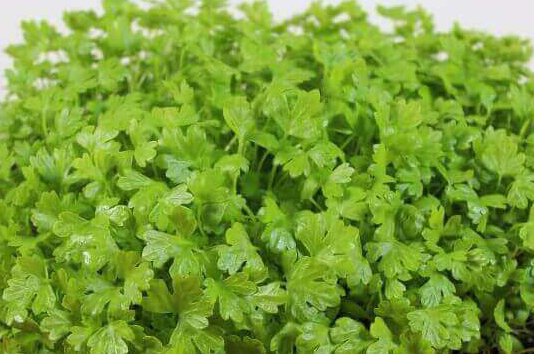
 Image 1 of 2
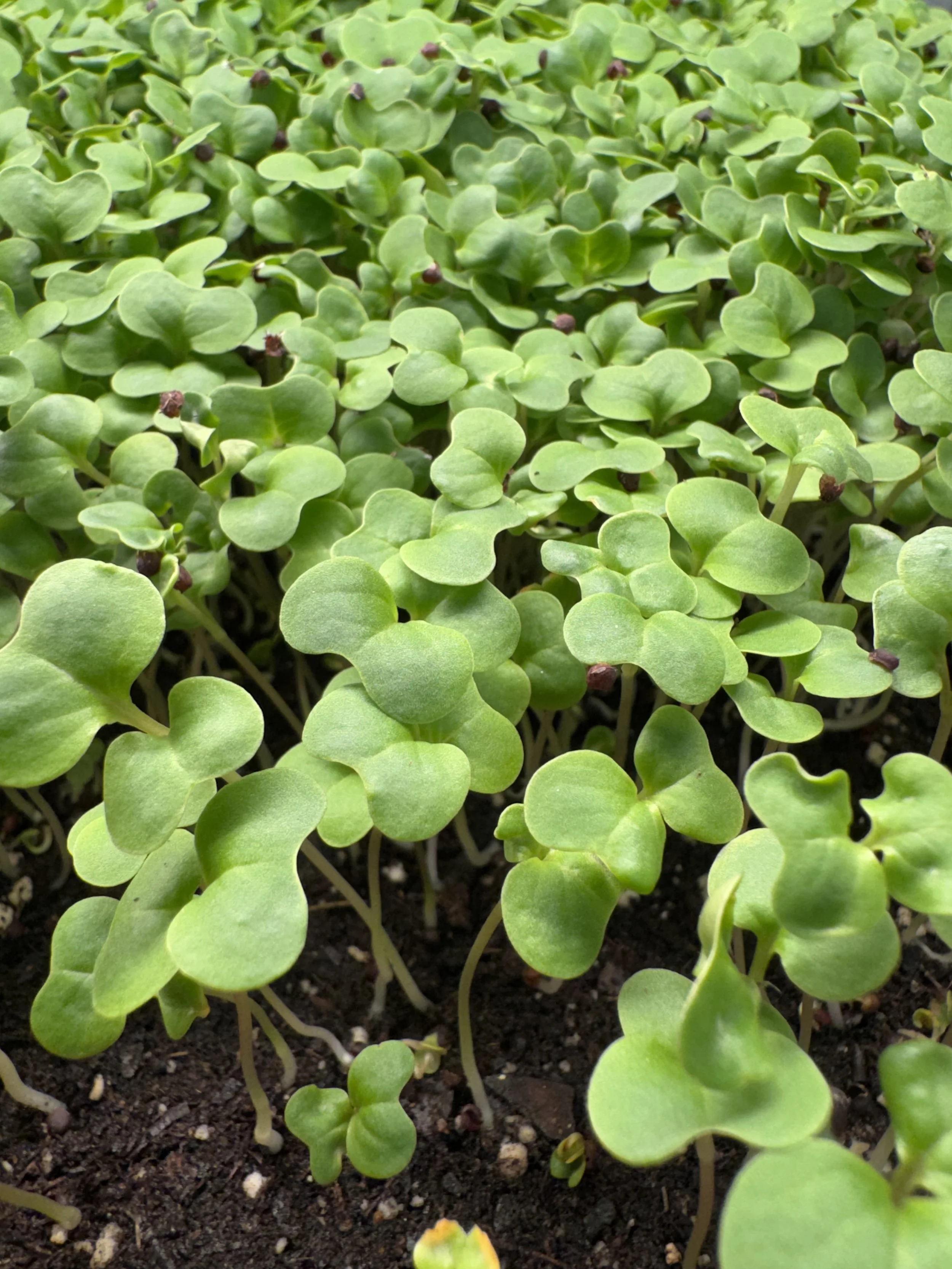
 Image 2 of 2
Disclaimer:Nutritional information and listed Health Benefits have not been evaluated by the Food and Drug Administration. This product is not intended to diagnose, treat, cure, or prevent any disease. The information on this website is for educational purposes only and not intended as medical advice.
This item is grown to order and requires a 2 week lead time. We will grow a 10"x10" tray of these micros which we will cut and package for you when they are ready.
History:
Canola was developed in Canada during the 1970s by plant breeders who used traditional cross-breeding to create a new type of rapeseed with low levels of erucic acid and glucosinolates. This new crop, named "canola" (a contraction of "CANada Oil Low Acid"), was intended for human consumption and animal feed, and was marketed by the late 1970s to differentiate it from the parent rapeseed plant, which was previously used primarily for industrial lubricants.
Flavor Profile:
Canola microgreens have a crunchy, tender texture with a mild, fresh, and slightly spicy flavor that is comparable to kale or mustard greens.
Suggested Uses:
Canola is a versatile microgreen that can be used in salads, soups, smoothies, or sauces to add a subtle peppery kick and a touch of mild bitterness.
Nutrition:*not verified by FDA
Canola microgreens are a nutritional powerhouse, although it is best to consume them in moderation since large amounts may be less healthy in the long run. They are rich in Vitamins A, B, C, E, and K, as well as minerals like potassium, iron, calcium, magnesium, zinc, and phosphorus. They are packed with antioxidants and can offer several health benefits, such as supporting heart health, boosting the immune system, and contributing to healthy skin.
Vitamins: Canola microgreens contain a wide array of vitamins, including a, B (B1, B2, B3, B5, B6, B9), C, E, and K.
Minerals: They are an excellent source of essential minerals like potassium, iron, calcium, magnesium, zinc, and phosphorus.
Antioxidants: They are high in antioxidants, such as polyphenols and flavonoids, which help protect the body from cell damage and chronic diseases.
Other compounds: They also contain dietary fiber, saturated fatty acids, and can be a good source of protein.
Suggested Health Benefits:*not verified by FDA
Heart health: The high levels of polyphenols may help reduce the risk of heart disease.
Immune support: The vitamins and minerals found in these microgreens strengthen the immune system.
Digestive health: They can improve the function of the gastrointestinal tract and boost metabolism, which may aid in weight management.
Blood health: They can help prevent the formation of blood clots and improve the condition of the circulatory system.
Skin health: They may help preserve the health and beauty of the skin.
Disclaimer:Nutritional information and listed Health Benefits have not been evaluated by the Food and Drug Administration. This product is not intended to diagnose, treat, cure, or prevent any disease. The information on this website is for educational purposes only and not intended as medical advice.
This item is grown to order and requires a 2 week lead time. We will grow a 10"x10" tray of these micros which we will cut and package for you when they are ready.
History:
Canola was developed in Canada during the 1970s by plant breeders who used traditional cross-breeding to create a new type of rapeseed with low levels of erucic acid and glucosinolates. This new crop, named "canola" (a contraction of "CANada Oil Low Acid"), was intended for human consumption and animal feed, and was marketed by the late 1970s to differentiate it from the parent rapeseed plant, which was previously used primarily for industrial lubricants.
Flavor Profile:
Canola microgreens have a crunchy, tender texture with a mild, fresh, and slightly spicy flavor that is comparable to kale or mustard greens.
Suggested Uses:
Canola is a versatile microgreen that can be used in salads, soups, smoothies, or sauces to add a subtle peppery kick and a touch of mild bitterness.
Nutrition:*not verified by FDA
Canola microgreens are a nutritional powerhouse, although it is best to consume them in moderation since large amounts may be less healthy in the long run. They are rich in Vitamins A, B, C, E, and K, as well as minerals like potassium, iron, calcium, magnesium, zinc, and phosphorus. They are packed with antioxidants and can offer several health benefits, such as supporting heart health, boosting the immune system, and contributing to healthy skin.
Vitamins: Canola microgreens contain a wide array of vitamins, including a, B (B1, B2, B3, B5, B6, B9), C, E, and K.
Minerals: They are an excellent source of essential minerals like potassium, iron, calcium, magnesium, zinc, and phosphorus.
Antioxidants: They are high in antioxidants, such as polyphenols and flavonoids, which help protect the body from cell damage and chronic diseases.
Other compounds: They also contain dietary fiber, saturated fatty acids, and can be a good source of protein.
Suggested Health Benefits:*not verified by FDA
Heart health: The high levels of polyphenols may help reduce the risk of heart disease.
Immune support: The vitamins and minerals found in these microgreens strengthen the immune system.
Digestive health: They can improve the function of the gastrointestinal tract and boost metabolism, which may aid in weight management.
Blood health: They can help prevent the formation of blood clots and improve the condition of the circulatory system.
Skin health: They may help preserve the health and beauty of the skin.