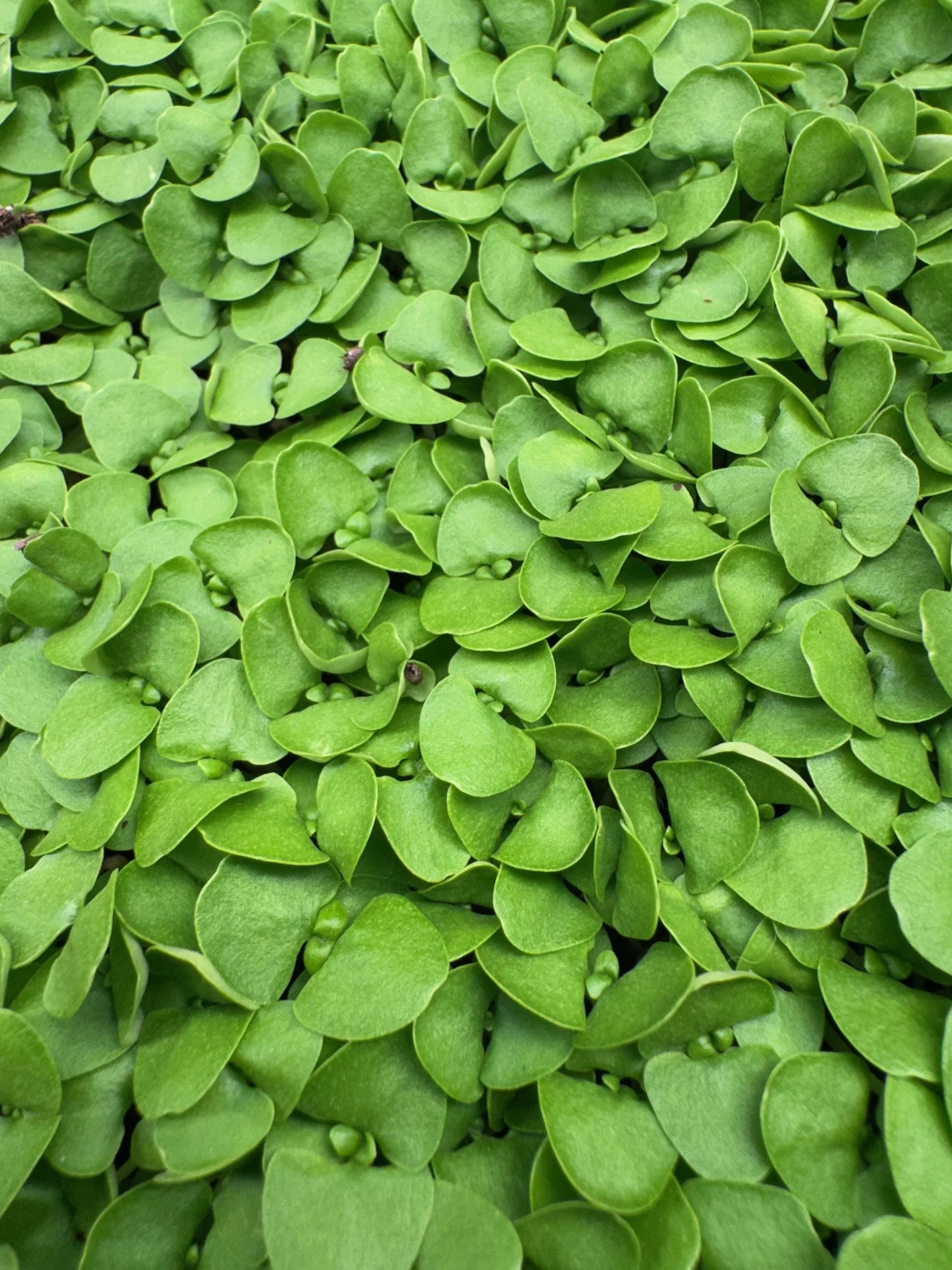
 Image 1 of 2
 Image 2 of 2
Disclaimer: Nutritional information and listed Health Benefits have not been evaluated by the Food and Drug Administration. This product is not intended to diagnose, treat, cure, or prevent any disease. The information on this website is for educational purposes only and not intended as medical advice.
History:
Despite its name, buckwheat and wheat are unrelated. Buckwheat is actually gluten free!
Since ancient times, it has been domesticated and is an everyday cuisine in many Asian nations. During the Middle Ages, cultivation spread throughout Europe, where it developed into a significant staple crop, especially in areas with poor soil.
Buckwheat was initially grown for its grain-like seeds. It has since made its way into many local cuisines. It is well-known for its usage in flour, noodles, and pancakes. But the health and wellness industry has discovered a nutritional gem in buckwheat microgreens.
Buckwheat microgreens are an attractive addition to vegetarian or vegan diets since they are an excellent source of dietary fiber and plant-based proteins.
Flavor Profile:
Buckwheat microgreens have a mild, nutty flavor with a hint of sweetness. They are often described as having a fresh and earthy taste.
Suggested Uses:
Buckwheat microgreens can be used as a flavorful and nutrient-dense addition to many dishes, including salads, sandwiches, wraps, and grain bowls, as well as being blended into smoothies or juiced for a nutritional boost. They are also used as a garnish for a variety of meals, such as soups and pizzas, and can even be incorporated into dips, pestos, and sauces.
Nutrition:*not verified by FDA
Buckwheat microgreens are a nutritious food, rich in B vitamins, vitamin C, and vitamin K. They are an excellent source of high-quality protein and fiber, and also provide a wide range of essential minerals like magnesium, copper, zinc, and manganese. These microgreens contain the antioxidant bioflavonoid rutin, which can support cardiovascular health by strengthening blood vessels and reducing LDL cholesterol oxidation.
Vitamins: B vitamins (including folic acid), C, and K.
Minerals: Magnesium, manganese, copper, zinc, iron, potassium, and calcium.
Protein: All eight essential amino acids, making it a complete protein.
Fiber: High in dietary fiber, which aids digestion.
Antioxidants: Rich in bioflavonoids like rutin, which has antioxidant and anti-inflammatory properties.
Potential Health Benefits:*not verified by FDA
Cardiovascular health: Rutin may help strengthen blood vessels, improve circulation, and lower LDL cholesterol.
Immune support: Essential vitamins and minerals like magnesium, copper, and zinc contribute to a healthy immune system.
Bone health: Minerals such as magnesium, phosphorus, and calcium are crucial for maintaining healthy bones and teeth.
Digestive health: High fiber content promotes healthy digestion and gut health.
Blood sugar regulation: Some studies suggest compounds in buckwheat may help slow glucose absorption, which could benefit people with diabetes.
Collagen production: Contains lysine, an amino acid important for collagen production.
Disclaimer: Nutritional information and listed Health Benefits have not been evaluated by the Food and Drug Administration. This product is not intended to diagnose, treat, cure, or prevent any disease. The information on this website is for educational purposes only and not intended as medical advice.
History:
Despite its name, buckwheat and wheat are unrelated. Buckwheat is actually gluten free!
Since ancient times, it has been domesticated and is an everyday cuisine in many Asian nations. During the Middle Ages, cultivation spread throughout Europe, where it developed into a significant staple crop, especially in areas with poor soil.
Buckwheat was initially grown for its grain-like seeds. It has since made its way into many local cuisines. It is well-known for its usage in flour, noodles, and pancakes. But the health and wellness industry has discovered a nutritional gem in buckwheat microgreens.
Buckwheat microgreens are an attractive addition to vegetarian or vegan diets since they are an excellent source of dietary fiber and plant-based proteins.
Flavor Profile:
Buckwheat microgreens have a mild, nutty flavor with a hint of sweetness. They are often described as having a fresh and earthy taste.
Suggested Uses:
Buckwheat microgreens can be used as a flavorful and nutrient-dense addition to many dishes, including salads, sandwiches, wraps, and grain bowls, as well as being blended into smoothies or juiced for a nutritional boost. They are also used as a garnish for a variety of meals, such as soups and pizzas, and can even be incorporated into dips, pestos, and sauces.
Nutrition:*not verified by FDA
Buckwheat microgreens are a nutritious food, rich in B vitamins, vitamin C, and vitamin K. They are an excellent source of high-quality protein and fiber, and also provide a wide range of essential minerals like magnesium, copper, zinc, and manganese. These microgreens contain the antioxidant bioflavonoid rutin, which can support cardiovascular health by strengthening blood vessels and reducing LDL cholesterol oxidation.
Vitamins: B vitamins (including folic acid), C, and K.
Minerals: Magnesium, manganese, copper, zinc, iron, potassium, and calcium.
Protein: All eight essential amino acids, making it a complete protein.
Fiber: High in dietary fiber, which aids digestion.
Antioxidants: Rich in bioflavonoids like rutin, which has antioxidant and anti-inflammatory properties.
Potential Health Benefits:*not verified by FDA
Cardiovascular health: Rutin may help strengthen blood vessels, improve circulation, and lower LDL cholesterol.
Immune support: Essential vitamins and minerals like magnesium, copper, and zinc contribute to a healthy immune system.
Bone health: Minerals such as magnesium, phosphorus, and calcium are crucial for maintaining healthy bones and teeth.
Digestive health: High fiber content promotes healthy digestion and gut health.
Blood sugar regulation: Some studies suggest compounds in buckwheat may help slow glucose absorption, which could benefit people with diabetes.
Collagen production: Contains lysine, an amino acid important for collagen production.