 Image 1 of 1
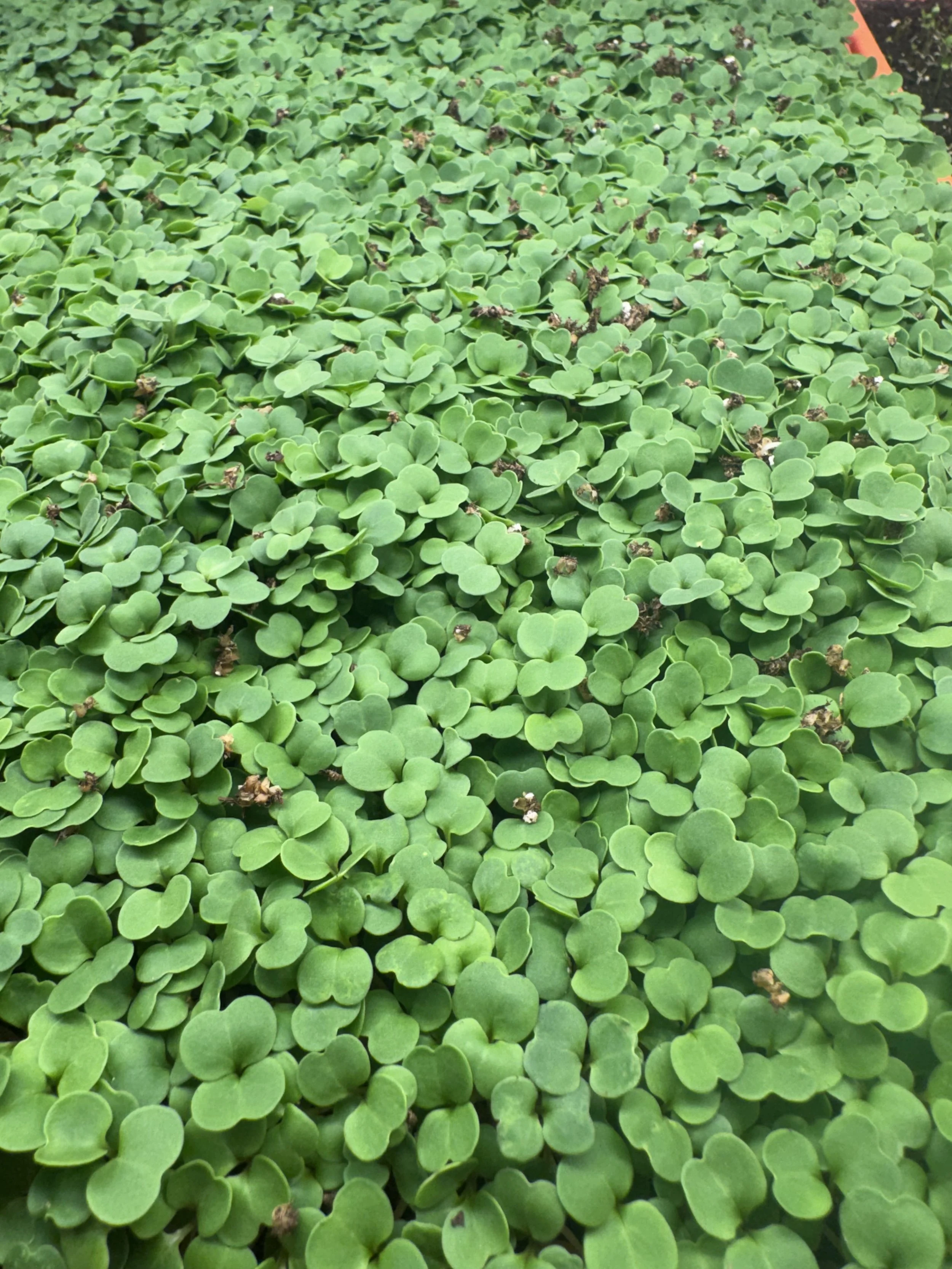
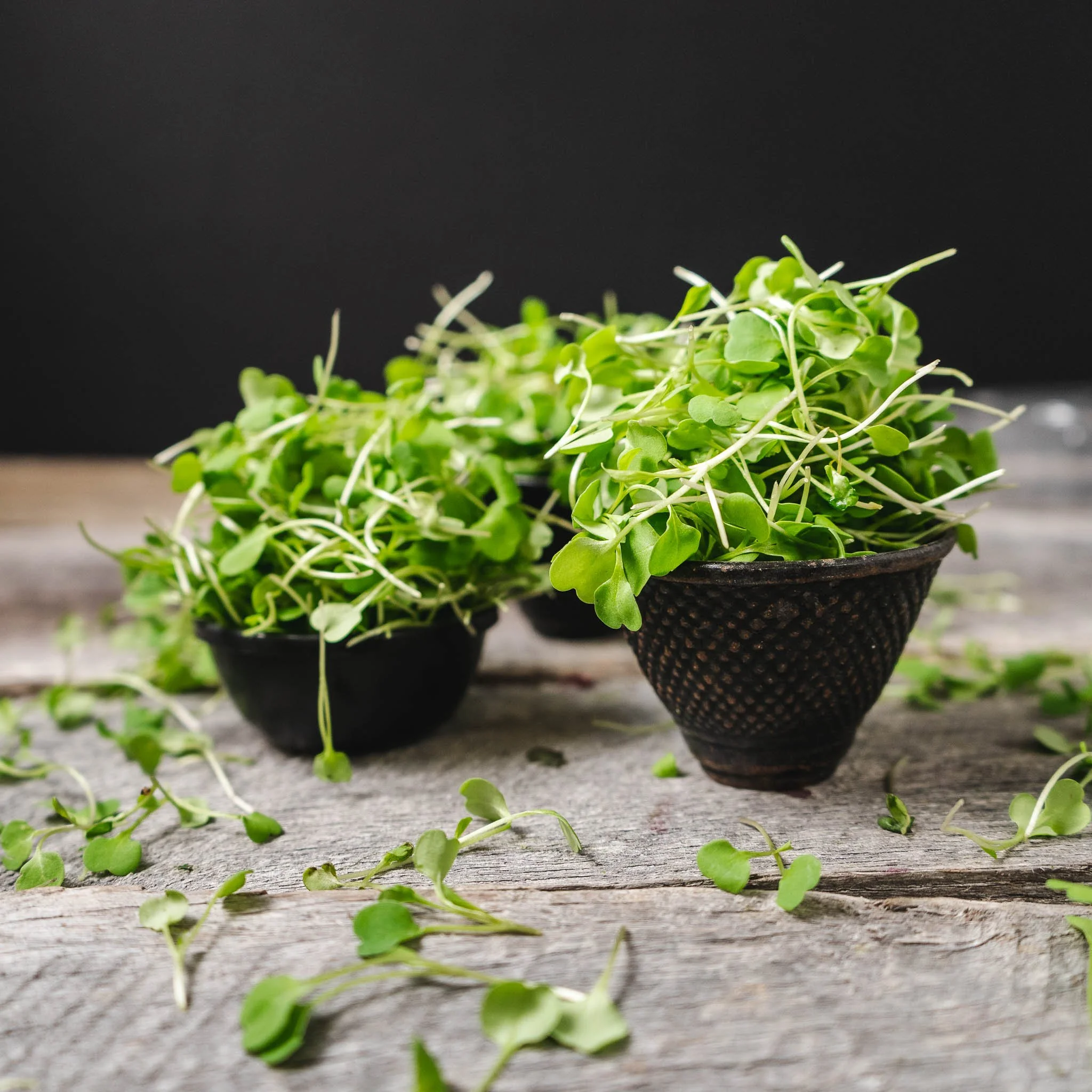
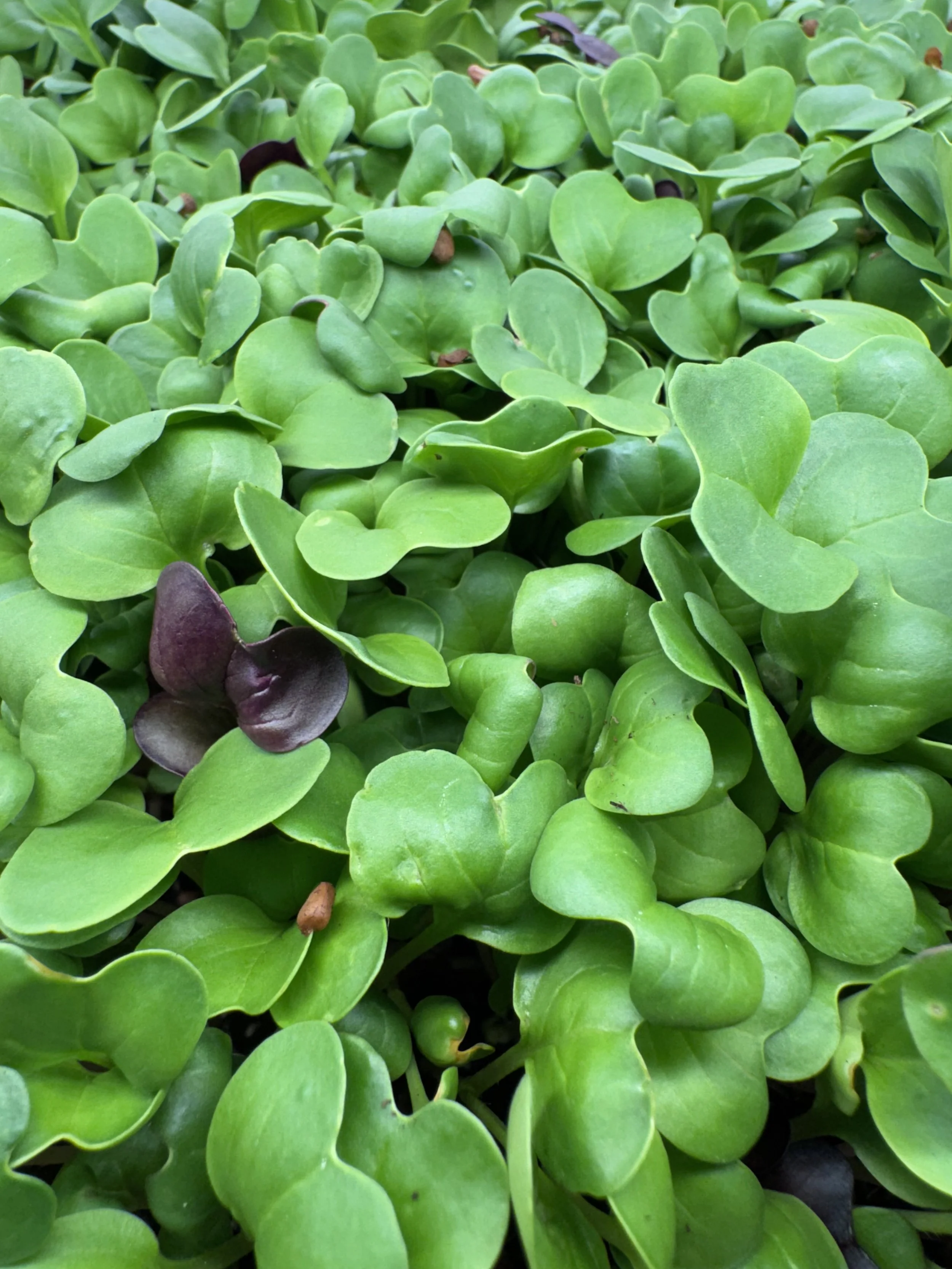
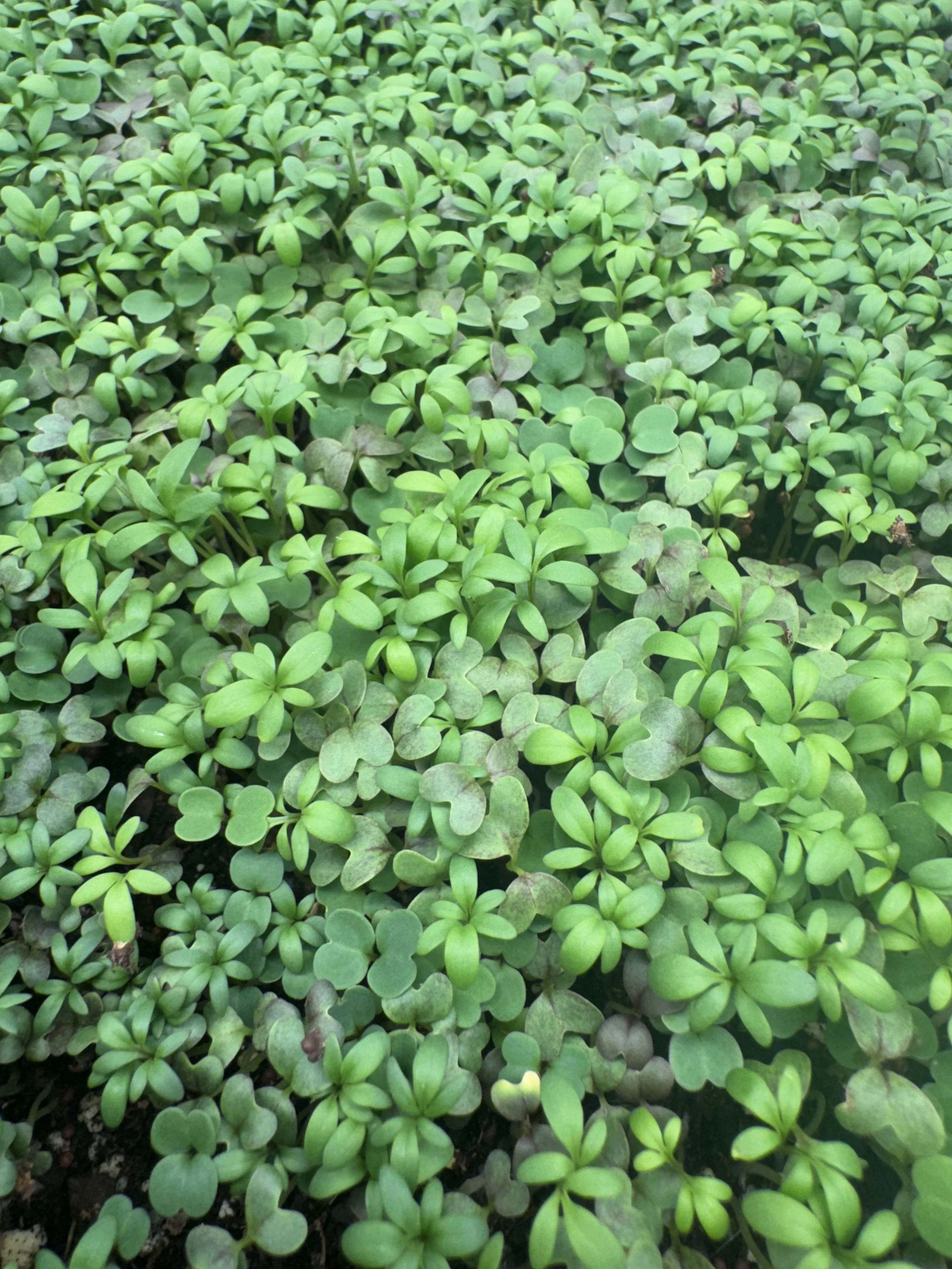
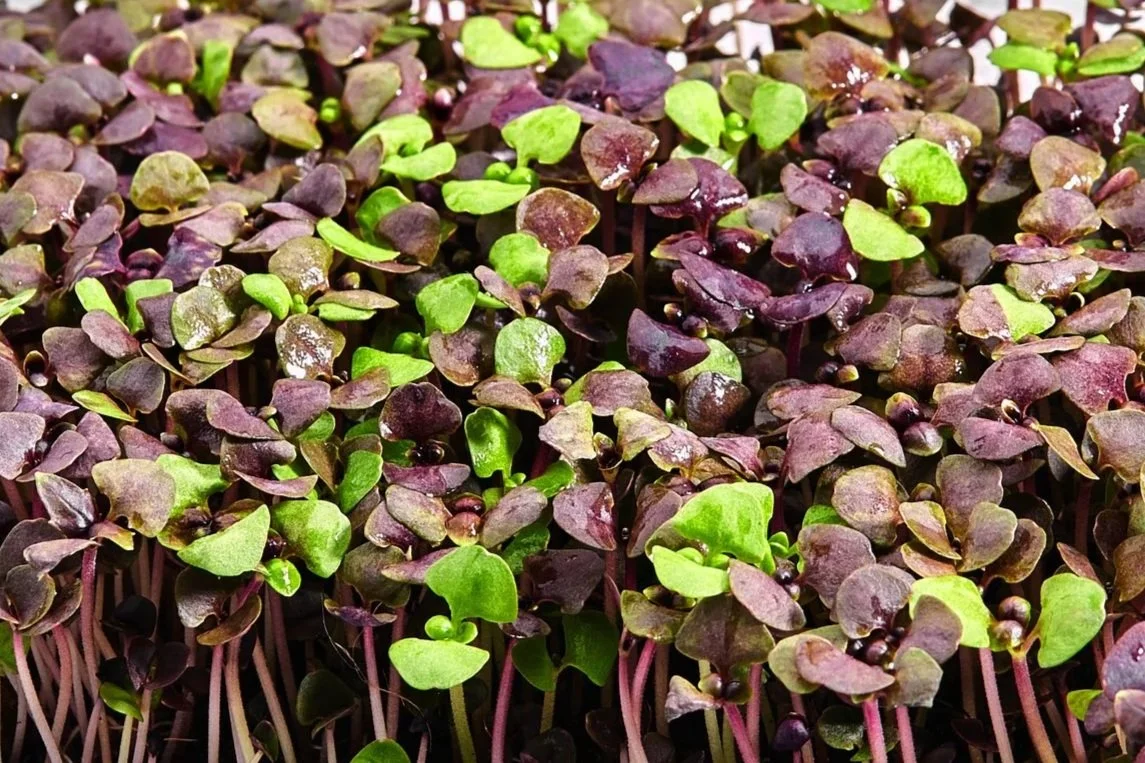
This item is grown to order and requires a 2 week lead time. We will grow a 10"x10" tray of these micros which we will cut and package for you when they are ready.
Disclaimer: Nutritional information and listed Health Benefits have not been evaluated by the Food and Drug Administration. This product is not intended to diagnose, treat, cure, or prevent any disease. The information on this website is for educational purposes only and not intended as medical advice.
History:
Yellow mustard (Sinapis alba or Brassica hirta) microgreens, prized for their intense, pungent, and spicy flavor, originate from a plant cultivated for thousands of years, with roots in ancient Asia and Europe. While mature mustard greens have been a staple food for over 5,000 years, the harvesting of mustard as microgreens emerged alongside the rise of gourmet cuisine, popularizing in high-end Californian restaurants during the 1980s.
Flavor Profile:
Yellow mustard microgreens have a distinctively bold, zesty, and, peppery flavor, often compared to mild horseradish or true yellow mustard condiment. They are slightly milder than other mustard varieties (like Wasabi), offering a fast-hitting, pungent spice that fades quickly, making them ideal for salads, sandwiches, and sushi.
Suggested Uses:
Yellow mustard microgreens are packed with vitamins A, C, E, and K, offering a peppery, intense mustard flavor suitable for raw or gently wilted culinary uses. Key uses include elevating salads, sandwiches, burgers, and wraps, or garnishing soups, sushi, and egg dishes. They also add a nutritious kick to smoothies and pestos.
Sandwiches & Wraps: Adds a fresh, peppery crunch.
Salads: Used to enhance flavor in mixed green salads.
Garnish: Ideal for soups, omelets, and grilled meats.
Specialty Dishes: Complements bagel and cream cheese, sushi, or rice dishes.
Smoothies: A nutrient-dense addition.
For Pets: *(always consult a vet before adding microgreens to your pet’s diet)
Bearded Dragons: Mustard microgreens are safe and highly nutritious for bearded dragons, making an excellent, nutrient-dense addition to their diet. They are rich in essential vitamins and minerals, lower in oxalates than many other greens, and provide a mild, tasty foraging option that can be offered regularly.
Cats:Not recommended for cats.
Dogs:Not recommended for dogs.
Guinea Pigs: Mustard microgreens are generally safe for guinea pigs in moderation, offering a nutrient-dense source of vitamins, but they should not be a staple food due to moderate calcium content. They are safe as part of a varied diet, often enjoyed by guinea pigs, but must be thoroughly washed to remove contaminants before feeding.
Rabbits: Mustard microgreens are generally safe for rabbits to eat, but they should only be given as a rare, small treat rather than a staple food. Due to their intense, peppery flavor and concentrated nutrients, they can cause digestive upset if overfed. They should never replace essential daily hay and should be introduced slowly.
Nutrition:*not verified by FDA
Yellow mustard microgreens are a nutrient-dense, peppery superfood packed with vitamins A, C, E, and K, along with minerals like iron, calcium, and potassium. They offer high concentrations of antioxidants, such as glucosinolates and beta-carotene, which help reduce inflammation and boost immunity.
High Vitamin Content: Specifically rich in Vitamin K (essential for bone health and blood clotting), Vitamin A (for vision and immune function), and Vitamin C.
Mineral Density: They provide significant amounts of iron, potassium, calcium, magnesium, and zinc.
Antioxidant Powerhouse: They contain high levels of glucosinolates, which are compounds that aid in detoxification and reduce oxidative stress.
Low Calorie, High Nutrition: They are very low in calories (approx. 26 kcal per 100g) while providing fiber (1.5g) and protein (3g).
Potential Health Benefits:*not verified by FDA
Yellow Mustard Microgreens offer potent antioxidant and anti-inflammatory benefits, which support cardiovascular health, boost the immune system, and promote healthy hair, skin, and vision.
Immune System Support: High in vitamins A and C, these microgreens help strengthen the immune system and protect cells from oxidative stress.
Cardiovascular & Heart Health: They contain nutrients like folate, which lowers homocysteine levels, and antioxidants that may help reduce high cholesterol and improve overall heart health.
Anti-Inflammatory & Antioxidant Powerhouse: Packed with glucosinolates and antioxidants, they fight inflammation and reduce the risk of chronic diseases.
Bone Health: A high concentration of Vitamin K helps with calcium absorption and supports strong bone mineralization.
Digestive Aid & Metabolism: Their fiber content supports healthy digestion, while also aiding in glucose metabolism.
Cognitive & Physical Benefits: They contain nutrients that may improve cognitive health and help with hair growth.
This item is grown to order and requires a 2 week lead time. We will grow a 10"x10" tray of these micros which we will cut and package for you when they are ready.
Disclaimer: Nutritional information and listed Health Benefits have not been evaluated by the Food and Drug Administration. This product is not intended to diagnose, treat, cure, or prevent any disease. The information on this website is for educational purposes only and not intended as medical advice.
History:
Yellow mustard (Sinapis alba or Brassica hirta) microgreens, prized for their intense, pungent, and spicy flavor, originate from a plant cultivated for thousands of years, with roots in ancient Asia and Europe. While mature mustard greens have been a staple food for over 5,000 years, the harvesting of mustard as microgreens emerged alongside the rise of gourmet cuisine, popularizing in high-end Californian restaurants during the 1980s.
Flavor Profile:
Yellow mustard microgreens have a distinctively bold, zesty, and, peppery flavor, often compared to mild horseradish or true yellow mustard condiment. They are slightly milder than other mustard varieties (like Wasabi), offering a fast-hitting, pungent spice that fades quickly, making them ideal for salads, sandwiches, and sushi.
Suggested Uses:
Yellow mustard microgreens are packed with vitamins A, C, E, and K, offering a peppery, intense mustard flavor suitable for raw or gently wilted culinary uses. Key uses include elevating salads, sandwiches, burgers, and wraps, or garnishing soups, sushi, and egg dishes. They also add a nutritious kick to smoothies and pestos.
Sandwiches & Wraps: Adds a fresh, peppery crunch.
Salads: Used to enhance flavor in mixed green salads.
Garnish: Ideal for soups, omelets, and grilled meats.
Specialty Dishes: Complements bagel and cream cheese, sushi, or rice dishes.
Smoothies: A nutrient-dense addition.
For Pets: *(always consult a vet before adding microgreens to your pet’s diet)
Bearded Dragons: Mustard microgreens are safe and highly nutritious for bearded dragons, making an excellent, nutrient-dense addition to their diet. They are rich in essential vitamins and minerals, lower in oxalates than many other greens, and provide a mild, tasty foraging option that can be offered regularly.
Cats:Not recommended for cats.
Dogs:Not recommended for dogs.
Guinea Pigs: Mustard microgreens are generally safe for guinea pigs in moderation, offering a nutrient-dense source of vitamins, but they should not be a staple food due to moderate calcium content. They are safe as part of a varied diet, often enjoyed by guinea pigs, but must be thoroughly washed to remove contaminants before feeding.
Rabbits: Mustard microgreens are generally safe for rabbits to eat, but they should only be given as a rare, small treat rather than a staple food. Due to their intense, peppery flavor and concentrated nutrients, they can cause digestive upset if overfed. They should never replace essential daily hay and should be introduced slowly.
Nutrition:*not verified by FDA
Yellow mustard microgreens are a nutrient-dense, peppery superfood packed with vitamins A, C, E, and K, along with minerals like iron, calcium, and potassium. They offer high concentrations of antioxidants, such as glucosinolates and beta-carotene, which help reduce inflammation and boost immunity.
High Vitamin Content: Specifically rich in Vitamin K (essential for bone health and blood clotting), Vitamin A (for vision and immune function), and Vitamin C.
Mineral Density: They provide significant amounts of iron, potassium, calcium, magnesium, and zinc.
Antioxidant Powerhouse: They contain high levels of glucosinolates, which are compounds that aid in detoxification and reduce oxidative stress.
Low Calorie, High Nutrition: They are very low in calories (approx. 26 kcal per 100g) while providing fiber (1.5g) and protein (3g).
Potential Health Benefits:*not verified by FDA
Yellow Mustard Microgreens offer potent antioxidant and anti-inflammatory benefits, which support cardiovascular health, boost the immune system, and promote healthy hair, skin, and vision.
Immune System Support: High in vitamins A and C, these microgreens help strengthen the immune system and protect cells from oxidative stress.
Cardiovascular & Heart Health: They contain nutrients like folate, which lowers homocysteine levels, and antioxidants that may help reduce high cholesterol and improve overall heart health.
Anti-Inflammatory & Antioxidant Powerhouse: Packed with glucosinolates and antioxidants, they fight inflammation and reduce the risk of chronic diseases.
Bone Health: A high concentration of Vitamin K helps with calcium absorption and supports strong bone mineralization.
Digestive Aid & Metabolism: Their fiber content supports healthy digestion, while also aiding in glucose metabolism.
Cognitive & Physical Benefits: They contain nutrients that may improve cognitive health and help with hair growth.