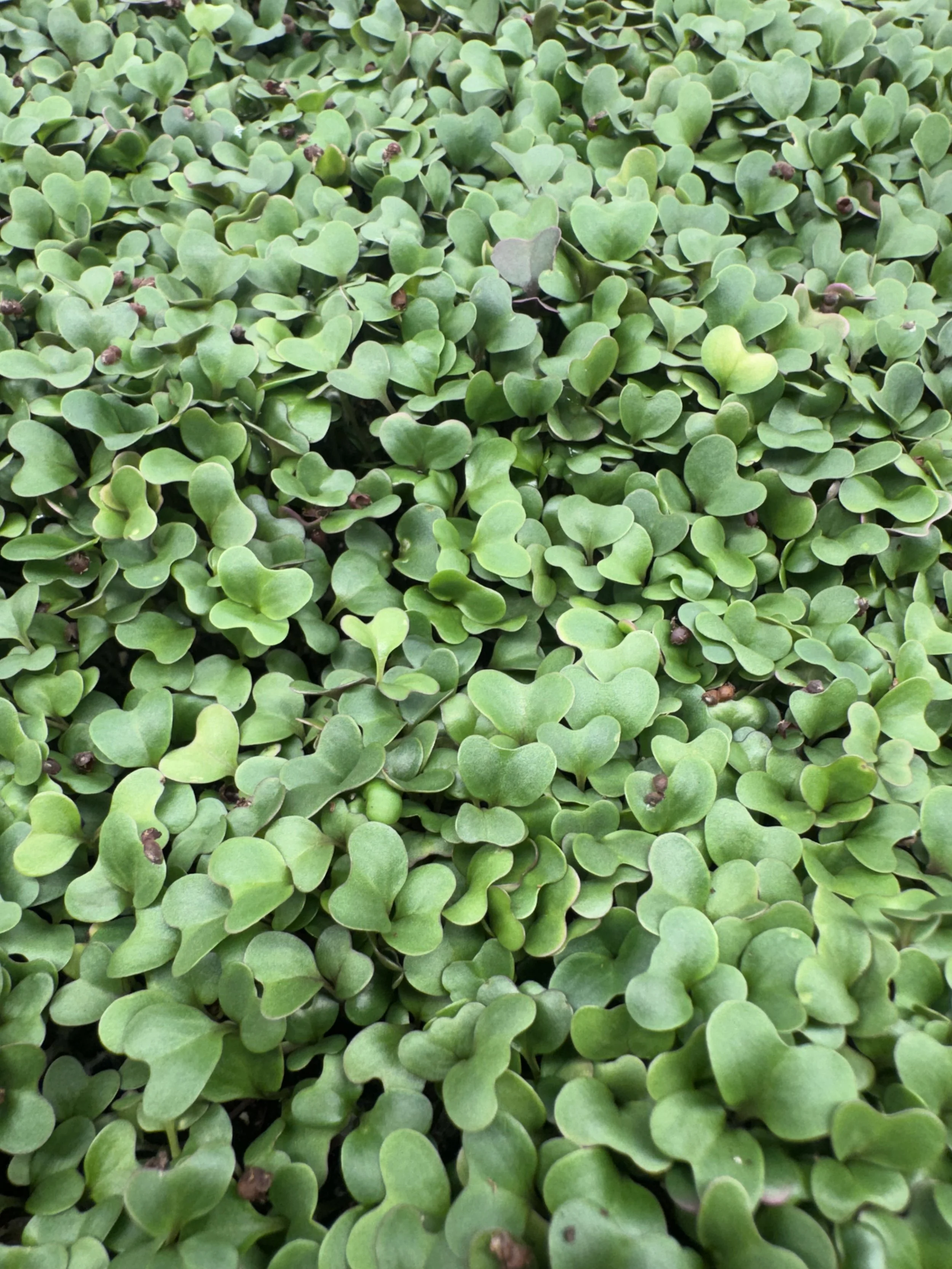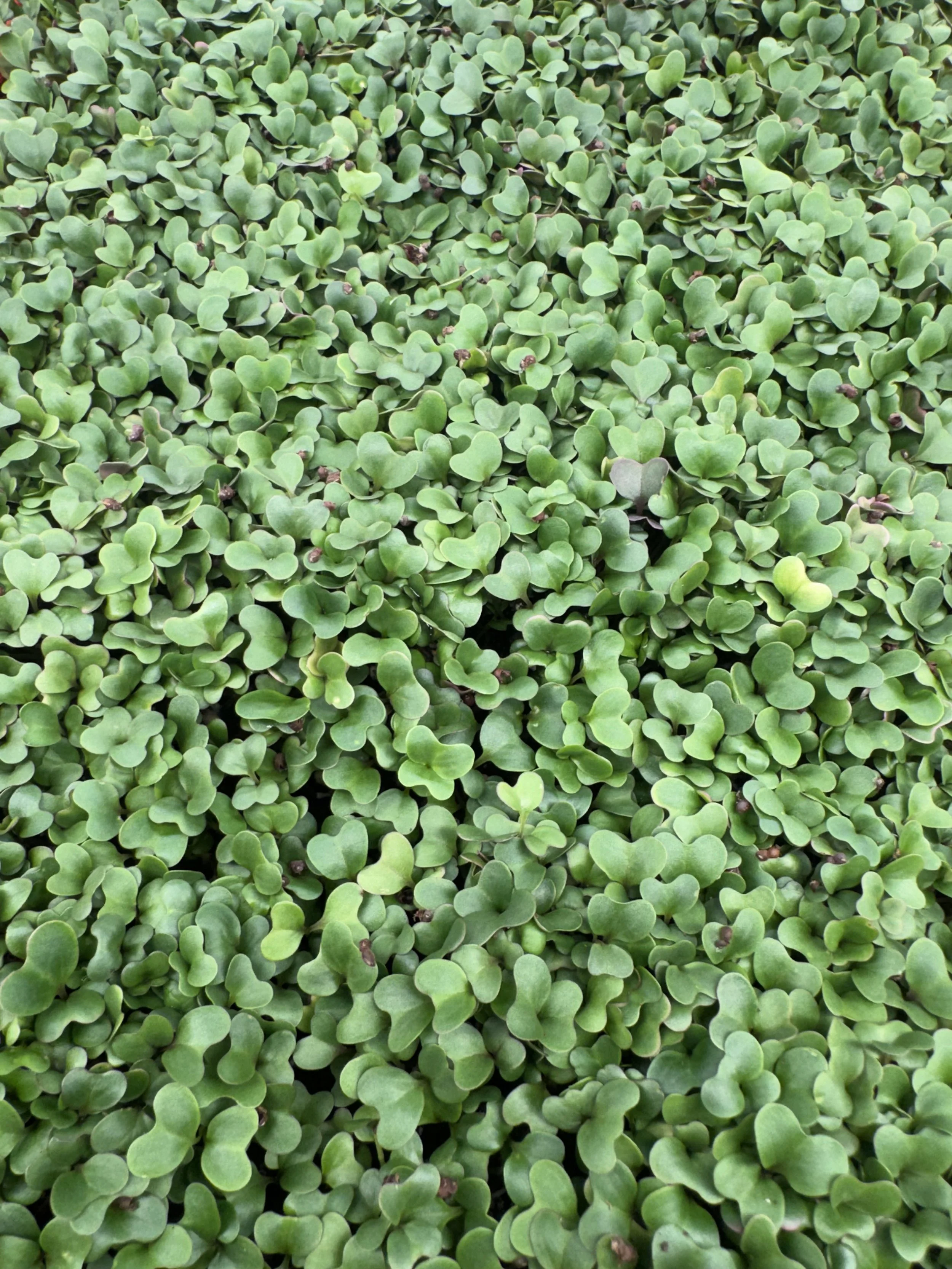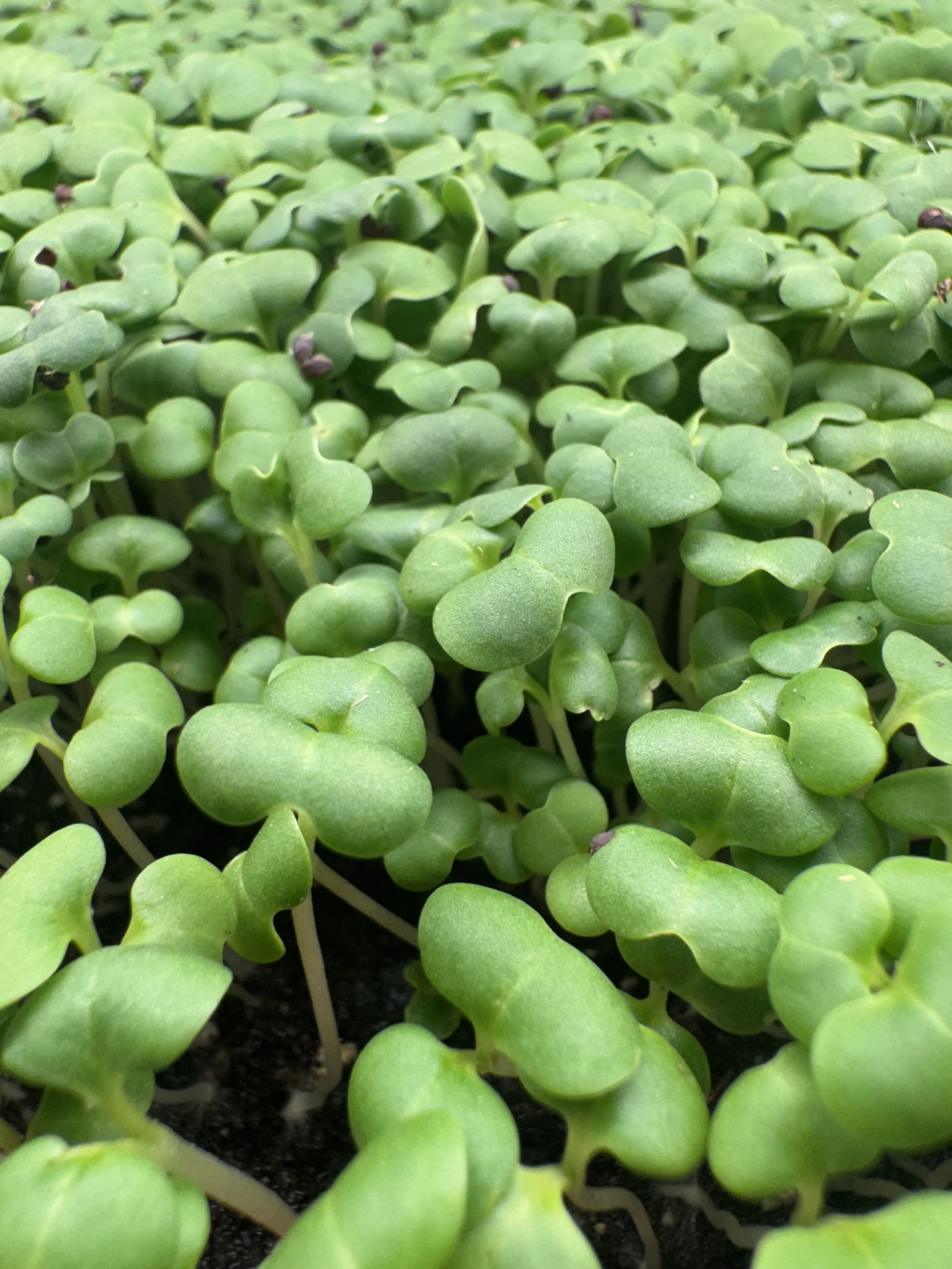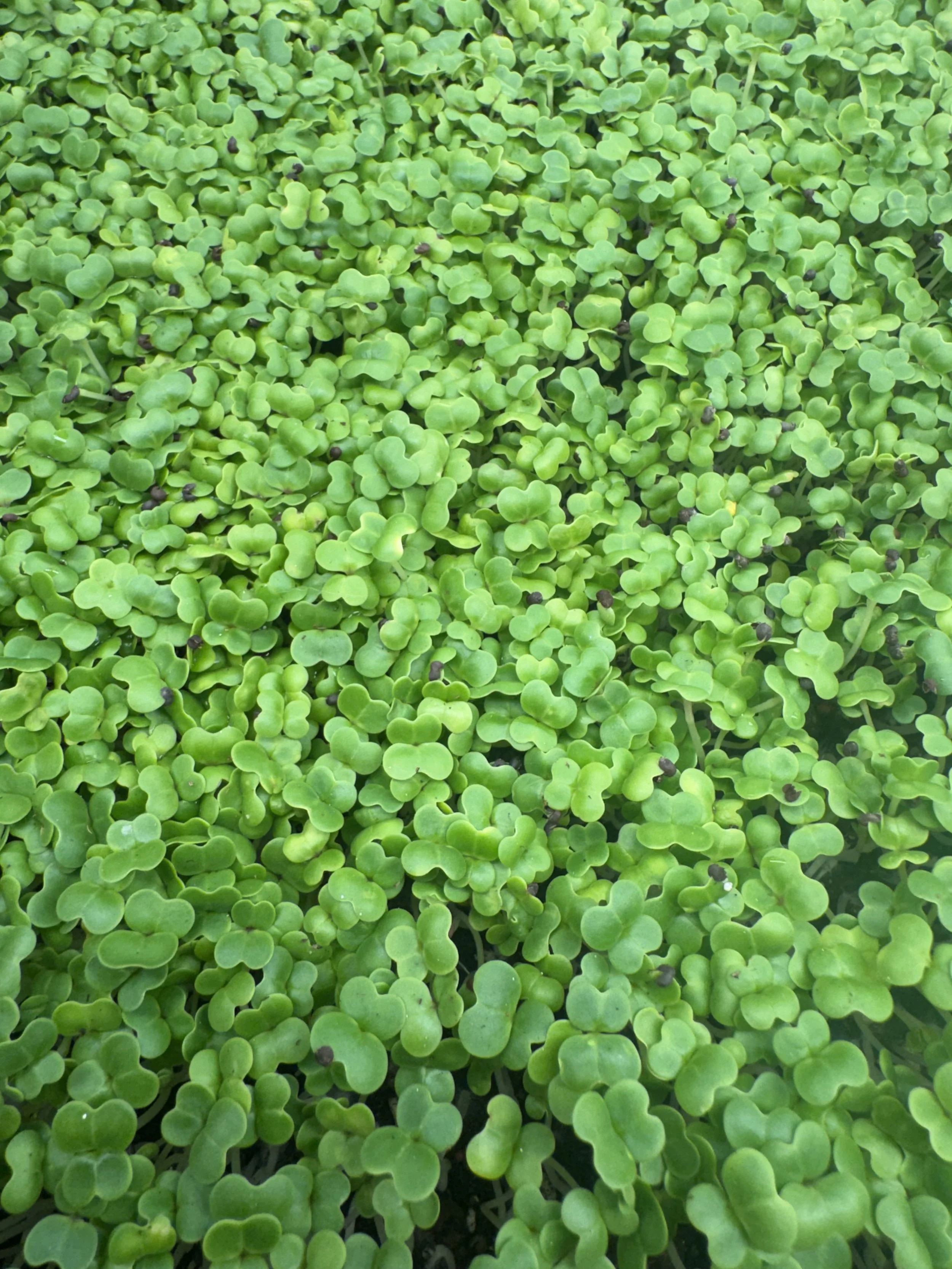
 Image 1 of 2
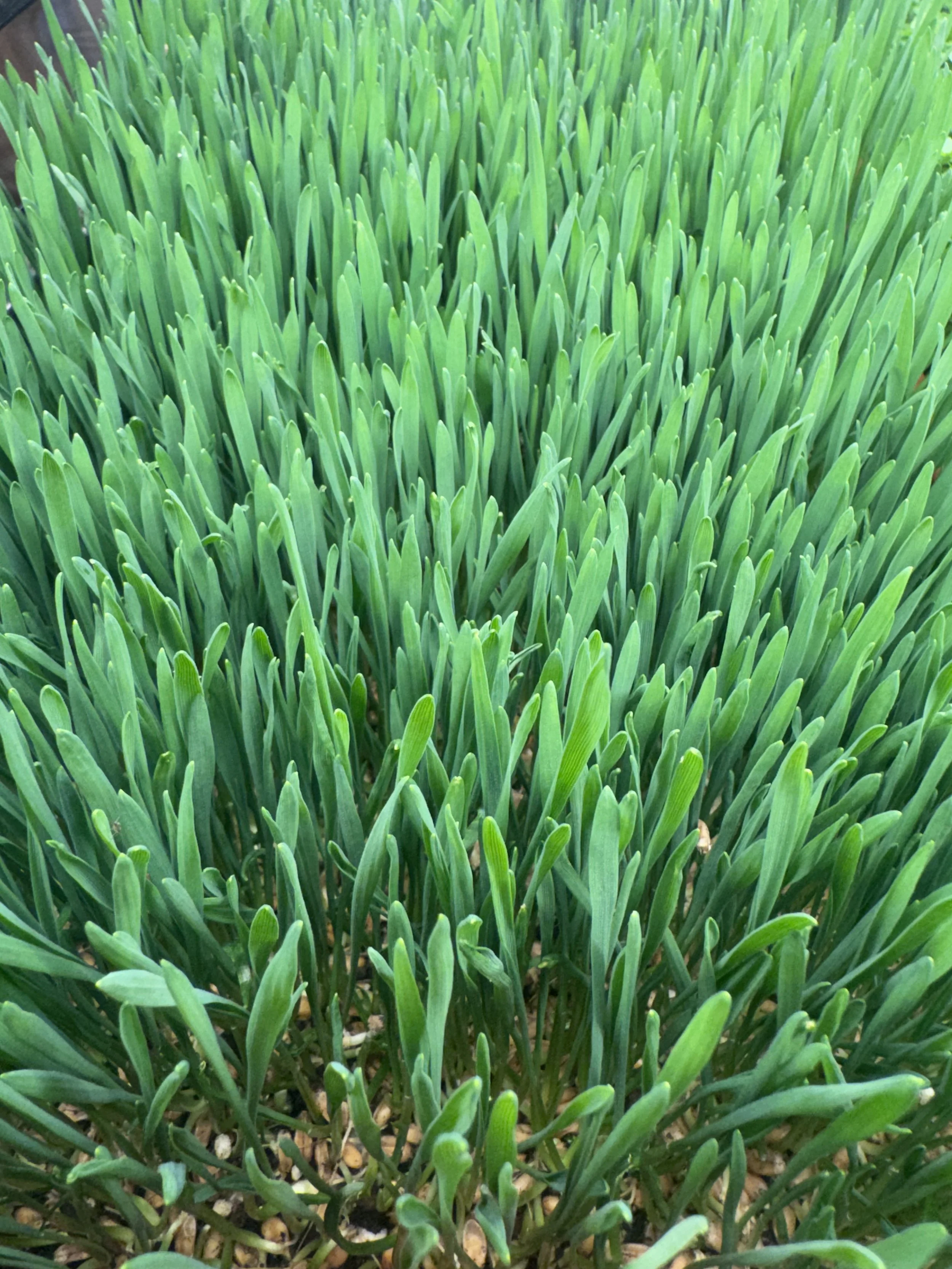 Image 2 of 2
Disclaimer: Nutritional information and listed Health Benefits have not been evaluated by the Food and Drug Administration. This product is not intended to diagnose, treat, cure, or prevent any disease. The information on this website is for educational purposes only and not intended as medical advice.
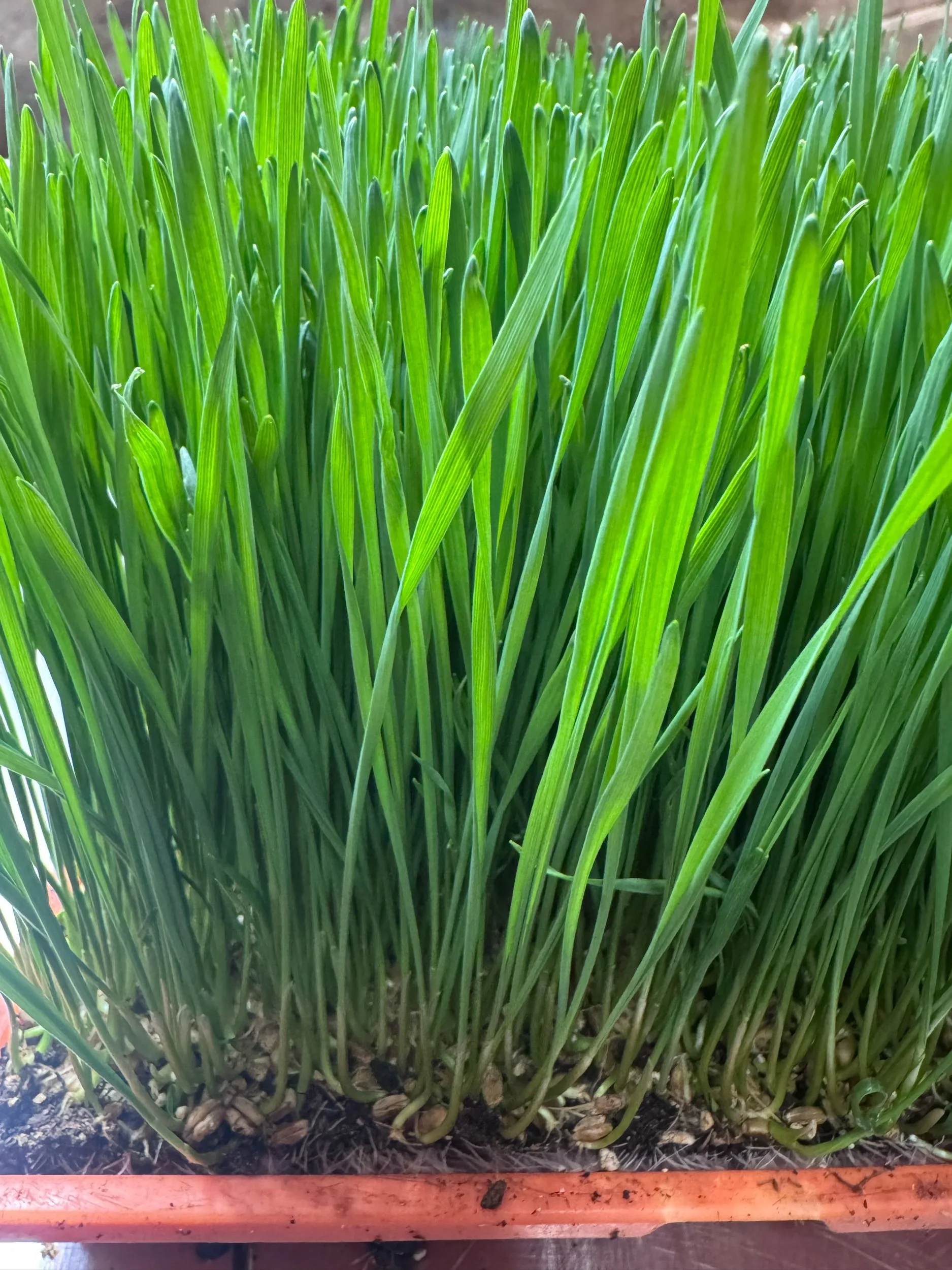
This item is grown to order and requires a 2 week lead time. We will grow a 10"x10" tray of these micros which we will cut and package for you when they are ready.
History:
Ancient Usage (c. 3000 BC+): Egyptians were said to value young, green wheat blades for their, potential, health-enhancing properties.
1930s "Discovery": Agricultural chemist Charles Schnabel conducted experiments with dried, powdered, young wheatgrass, finding it improved poultry health and egg production. By 1940, these products were sold in US/Canadian drugstores.
1940s-1970s Popularization: Ann Wigmore (1909–1994), founder of the Hippocrates Health Institute, popularized raw wheatgrass juice for cleansing, detoxification, and healing chronic diseases.
Modern Era: From the 1970s onward, wheatgrass became a staple of the health food movement, widely used in juice bars and smoothies for its nutrient density, including chlorophyll, vitamins, and minerals.
Flavor Profile:
Wheatgrass has a strong grassy, earthy, and bitter flavor with subtly sweet and herbal undertones. The greens are not commonly consumed alone but instead are paired with a sweeter or more robust taste to help reduce the grass’s pungency.
Suggested Uses: *not verified by FDA
Wheatgrass is not often consumed by itself but rather as fresh juice (1-2 oz daily), turned into a powder, or combined with other items to make a super-nutritious dish or supplement.
Juice: Typically consumed as a 1–2 ounce "shot".
Powder/Capsules: A convenient alternative for smoothies or supplementation.
Topical: Applied as a paste or cream for skin issues.
As a Pet Food Supplement: *(always consult your vet before adding microgreens to your pet’s diet).
Wheatgrass is used as a natural, nutrient-rich supplement for pets (primarily dogs and cats) to aid digestion, reduce gassiness, provide chlorophyll and fiber, and support immunity. It is commonly offered as fresh, potted grass for grazing, finely chopped into food, or administered as a powder to manage constipation and improve nutrient intake.
Bearded Dragons: Wheatgrass is safe for bearded dragons and can be used as an occasional nutritious treat or for enrichment. It provides vitamins A, C, E, K, and B, plus antioxidants, but it should not be a daily staple because it is high in fiber and hard to digest, potentially causing impaction if overfed.
Cats: Wheatgrass is safe, non-toxic, and healthy for cats to eat in moderation. Often sold as "cat grass," it provides essential vitamins (A, E, C), fiber, and chlorophyll, which can aid digestion, help manage hairballs, and freshen breath. Too much may cause vomiting, so limit intake.
Dogs: Wheatgrass is safe and generally healthy for dogs in moderation. As a nutrient-dense green, it provides chlorophyll, fiber, vitamins, and minerals that can aid digestion, freshen breath, boost immunity, and improve skin health. It is not toxic, but excessive consumption may cause vomiting.
Guinea Pigs: Wheatgrass is safe and healthy for guinea pigs to eat as a nutritious, fibrous treat. It is a great alternative to outdoor forage, but it should be introduced slowly to avoid stomach upset and fed in moderation. Wheatgrass should not replace their daily unlimited access to Timothy hay.
Rabbits: Wheatgrass is safe and nutritious for rabbits, offering fiber, vitamins E and K, and a boost to digestive health. It should be given in moderation as a fresh treat or snack, not as a replacement for their daily essential hay, such as timothy hay.
Methods of Serving Wheatgrass to Pets
Fresh Potted Grass: Place pots of organic, home-grown wheatgrass near food/water bowls for pets to graze on directly.
Freshly Chopped: Finely chop fresh wheatgrass blades and sprinkle them over wet or dry food.
Juiced: Add a small amount of fresh wheatgrass juice to water or food.
Powdered Supplement: Use dried, powdered wheatgrass mixed directly into meals, especially for immune support.
Treats: Incorporate finely chopped grass into homemade pet treats.
Benefits and Usage Tips
Digestive Aid: It acts as a natural fiber source, helping with constipation and assisting cats in passing hairballs.
Nutrient Boost: It is rich in vitamins A, C, E, iron, calcium, and magnesium.
Portion Control: Provide only a few blades daily, as overconsumption can cause stomach upset.
Safety: Ensure wheatgrass is organic and grown without pesticides or fertilizer. Do not use human wheatgrass supplements without consulting a vet, as they may be too potent.
Topical Use: Ground, soaked wheatgrass can be applied as a poultice to minor pet skin scrapes.
Nutrition: *not verified by FDA
Wheatgrass is a highly nutrient-dense, low-calorie, green superfood packed with chlorophyll, antioxidants (vitamins A, C, E), iron, and magnesium. It is a potent source of amino acids and enzymes.
Protein: ~36 grams
Carbohydrates: ~49 grams
Nutrients: Rich in chlorophyll (up to 480 mg/l in juice), beta-carotene, vitamins A, C, E, K, and B-complex.
Minerals: High in iron, calcium, phosphorus, magnesium, zinc, and copper
Compounds: Contains antioxidants like glutathione and phytochemicals like apigenin.
Health Benefits: *not verified by FDA
Wheatgrass offers potential health benefits like reducing inflammation, aiding digestion, lowering cholesterol, and boosting immunity.
Reduces Inflammation: Wheatgrass contains compounds, including chlorophyll, that may help lower chronic inflammation, which is associated with conditions like arthritis, cancer, and heart disease.
Boosts Immune System & Detoxification: It is rich in antioxidants that fight free radicals, enhance immunity, and may help eliminate toxins and heavy metals from the bloodstream.
Aids Digestion: Enzymes in wheatgrass help break down food, improve nutrient absorption, and reduce digestive issues like bloating and abdominal pain.
Improves Blood Health: Chlorophyll in wheatgrass is structurally similar to human hemoglobin, which may help improve blood sugar control, lower blood pressure, and potentially assist with anemia.
Promotes Skin Healing: Its antibacterial properties can assist with skin conditions like eczema, psoriasis, and acne.
Supports Weight Loss & Energy: The nutrients and antioxidants provide a natural energy boost, while its nutrient density can support weight management.
Disclaimer: Nutritional information and listed Health Benefits have not been evaluated by the Food and Drug Administration. This product is not intended to diagnose, treat, cure, or prevent any disease. The information on this website is for educational purposes only and not intended as medical advice.
This item is grown to order and requires a 2 week lead time. We will grow a 10"x10" tray of these micros which we will cut and package for you when they are ready.
History:
Ancient Usage (c. 3000 BC+): Egyptians were said to value young, green wheat blades for their, potential, health-enhancing properties.
1930s "Discovery": Agricultural chemist Charles Schnabel conducted experiments with dried, powdered, young wheatgrass, finding it improved poultry health and egg production. By 1940, these products were sold in US/Canadian drugstores.
1940s-1970s Popularization: Ann Wigmore (1909–1994), founder of the Hippocrates Health Institute, popularized raw wheatgrass juice for cleansing, detoxification, and healing chronic diseases.
Modern Era: From the 1970s onward, wheatgrass became a staple of the health food movement, widely used in juice bars and smoothies for its nutrient density, including chlorophyll, vitamins, and minerals.
Flavor Profile:
Wheatgrass has a strong grassy, earthy, and bitter flavor with subtly sweet and herbal undertones. The greens are not commonly consumed alone but instead are paired with a sweeter or more robust taste to help reduce the grass’s pungency.
Suggested Uses: *not verified by FDA
Wheatgrass is not often consumed by itself but rather as fresh juice (1-2 oz daily), turned into a powder, or combined with other items to make a super-nutritious dish or supplement.
Juice: Typically consumed as a 1–2 ounce "shot".
Powder/Capsules: A convenient alternative for smoothies or supplementation.
Topical: Applied as a paste or cream for skin issues.
As a Pet Food Supplement: *(always consult your vet before adding microgreens to your pet’s diet).
Wheatgrass is used as a natural, nutrient-rich supplement for pets (primarily dogs and cats) to aid digestion, reduce gassiness, provide chlorophyll and fiber, and support immunity. It is commonly offered as fresh, potted grass for grazing, finely chopped into food, or administered as a powder to manage constipation and improve nutrient intake.
Bearded Dragons: Wheatgrass is safe for bearded dragons and can be used as an occasional nutritious treat or for enrichment. It provides vitamins A, C, E, K, and B, plus antioxidants, but it should not be a daily staple because it is high in fiber and hard to digest, potentially causing impaction if overfed.
Cats: Wheatgrass is safe, non-toxic, and healthy for cats to eat in moderation. Often sold as "cat grass," it provides essential vitamins (A, E, C), fiber, and chlorophyll, which can aid digestion, help manage hairballs, and freshen breath. Too much may cause vomiting, so limit intake.
Dogs: Wheatgrass is safe and generally healthy for dogs in moderation. As a nutrient-dense green, it provides chlorophyll, fiber, vitamins, and minerals that can aid digestion, freshen breath, boost immunity, and improve skin health. It is not toxic, but excessive consumption may cause vomiting.
Guinea Pigs: Wheatgrass is safe and healthy for guinea pigs to eat as a nutritious, fibrous treat. It is a great alternative to outdoor forage, but it should be introduced slowly to avoid stomach upset and fed in moderation. Wheatgrass should not replace their daily unlimited access to Timothy hay.
Rabbits: Wheatgrass is safe and nutritious for rabbits, offering fiber, vitamins E and K, and a boost to digestive health. It should be given in moderation as a fresh treat or snack, not as a replacement for their daily essential hay, such as timothy hay.
Methods of Serving Wheatgrass to Pets
Fresh Potted Grass: Place pots of organic, home-grown wheatgrass near food/water bowls for pets to graze on directly.
Freshly Chopped: Finely chop fresh wheatgrass blades and sprinkle them over wet or dry food.
Juiced: Add a small amount of fresh wheatgrass juice to water or food.
Powdered Supplement: Use dried, powdered wheatgrass mixed directly into meals, especially for immune support.
Treats: Incorporate finely chopped grass into homemade pet treats.
Benefits and Usage Tips
Digestive Aid: It acts as a natural fiber source, helping with constipation and assisting cats in passing hairballs.
Nutrient Boost: It is rich in vitamins A, C, E, iron, calcium, and magnesium.
Portion Control: Provide only a few blades daily, as overconsumption can cause stomach upset.
Safety: Ensure wheatgrass is organic and grown without pesticides or fertilizer. Do not use human wheatgrass supplements without consulting a vet, as they may be too potent.
Topical Use: Ground, soaked wheatgrass can be applied as a poultice to minor pet skin scrapes.
Nutrition: *not verified by FDA
Wheatgrass is a highly nutrient-dense, low-calorie, green superfood packed with chlorophyll, antioxidants (vitamins A, C, E), iron, and magnesium. It is a potent source of amino acids and enzymes.
Protein: ~36 grams
Carbohydrates: ~49 grams
Nutrients: Rich in chlorophyll (up to 480 mg/l in juice), beta-carotene, vitamins A, C, E, K, and B-complex.
Minerals: High in iron, calcium, phosphorus, magnesium, zinc, and copper
Compounds: Contains antioxidants like glutathione and phytochemicals like apigenin.
Health Benefits: *not verified by FDA
Wheatgrass offers potential health benefits like reducing inflammation, aiding digestion, lowering cholesterol, and boosting immunity.
Reduces Inflammation: Wheatgrass contains compounds, including chlorophyll, that may help lower chronic inflammation, which is associated with conditions like arthritis, cancer, and heart disease.
Boosts Immune System & Detoxification: It is rich in antioxidants that fight free radicals, enhance immunity, and may help eliminate toxins and heavy metals from the bloodstream.
Aids Digestion: Enzymes in wheatgrass help break down food, improve nutrient absorption, and reduce digestive issues like bloating and abdominal pain.
Improves Blood Health: Chlorophyll in wheatgrass is structurally similar to human hemoglobin, which may help improve blood sugar control, lower blood pressure, and potentially assist with anemia.
Promotes Skin Healing: Its antibacterial properties can assist with skin conditions like eczema, psoriasis, and acne.
Supports Weight Loss & Energy: The nutrients and antioxidants provide a natural energy boost, while its nutrient density can support weight management.