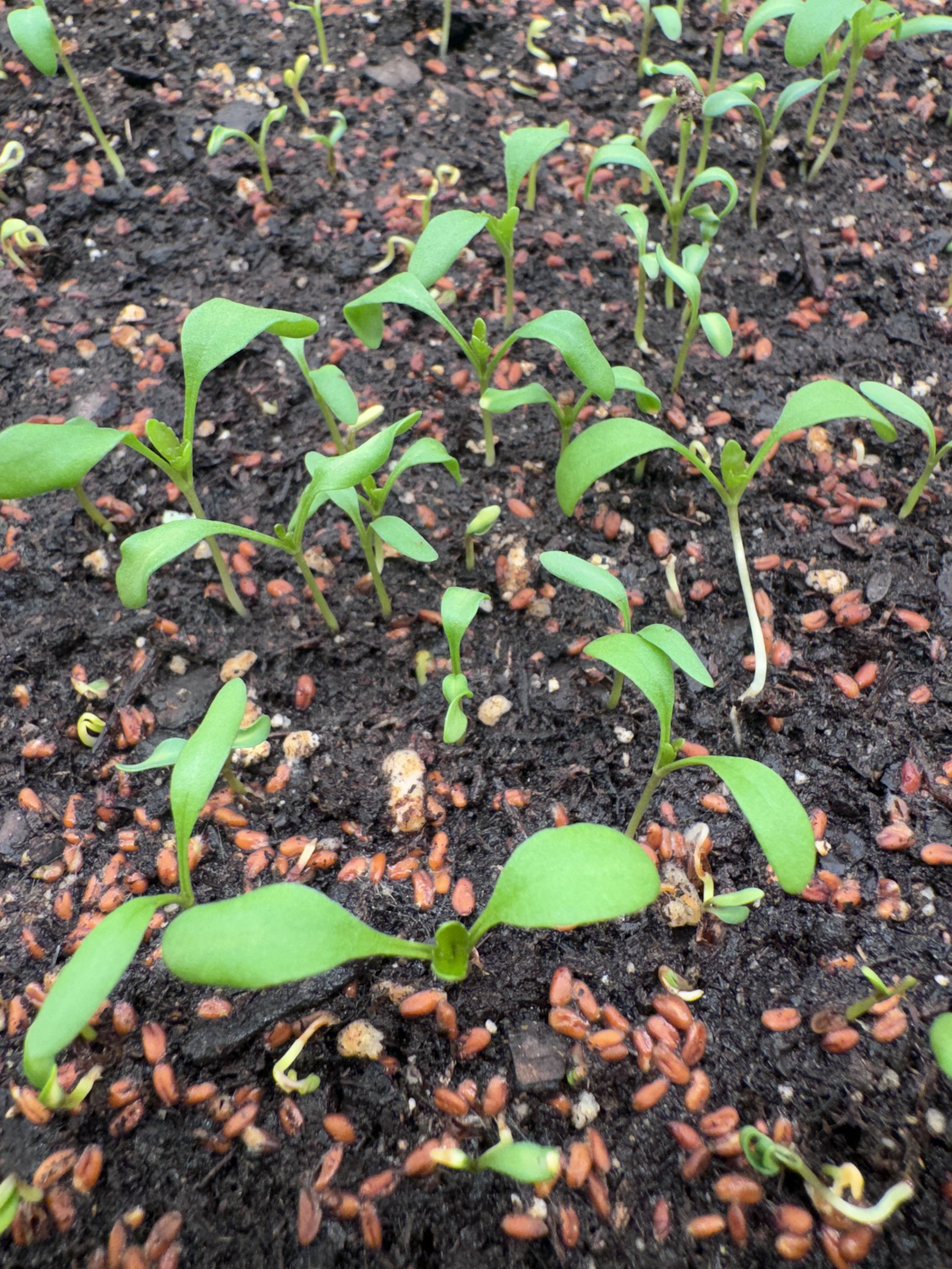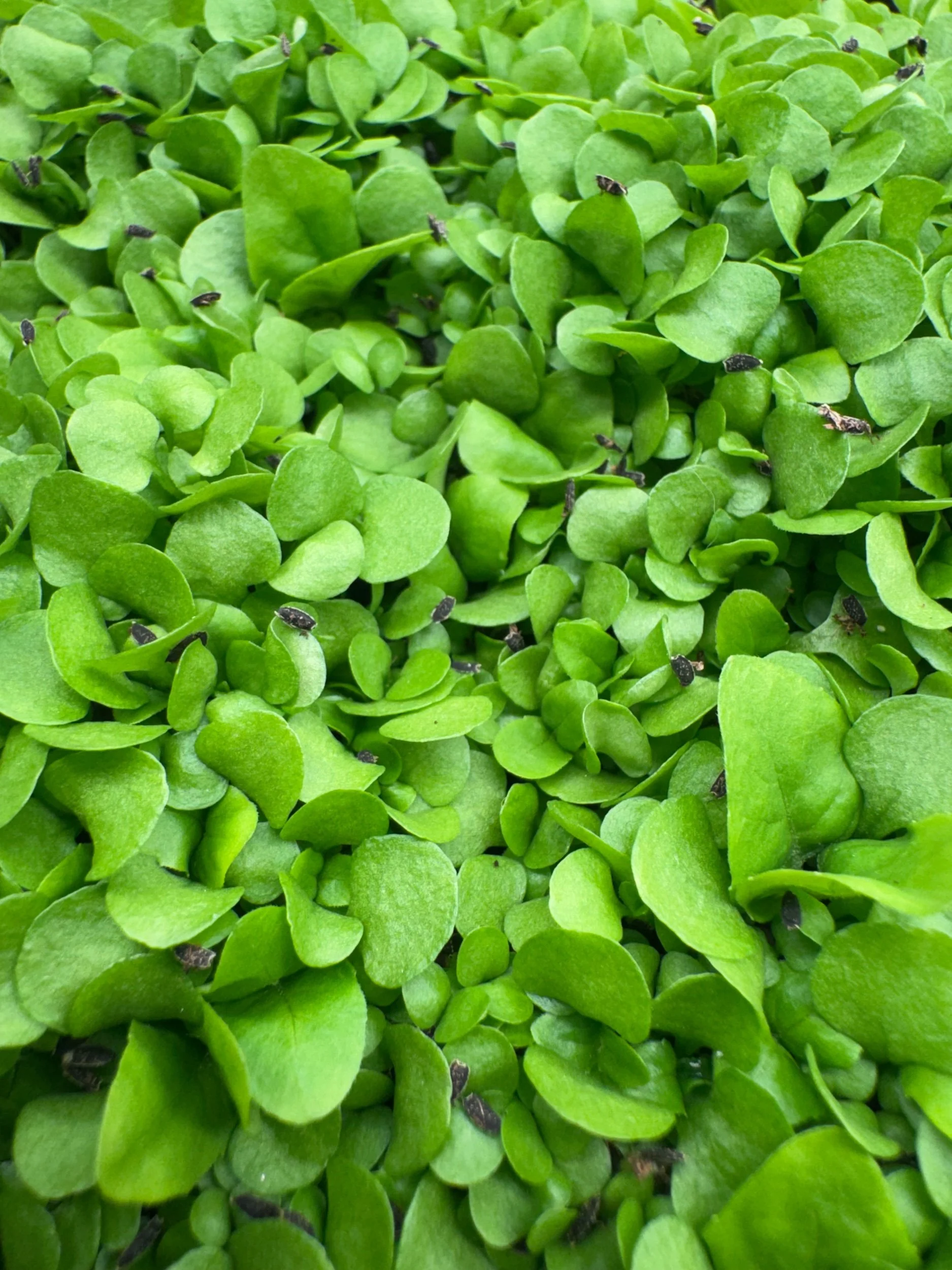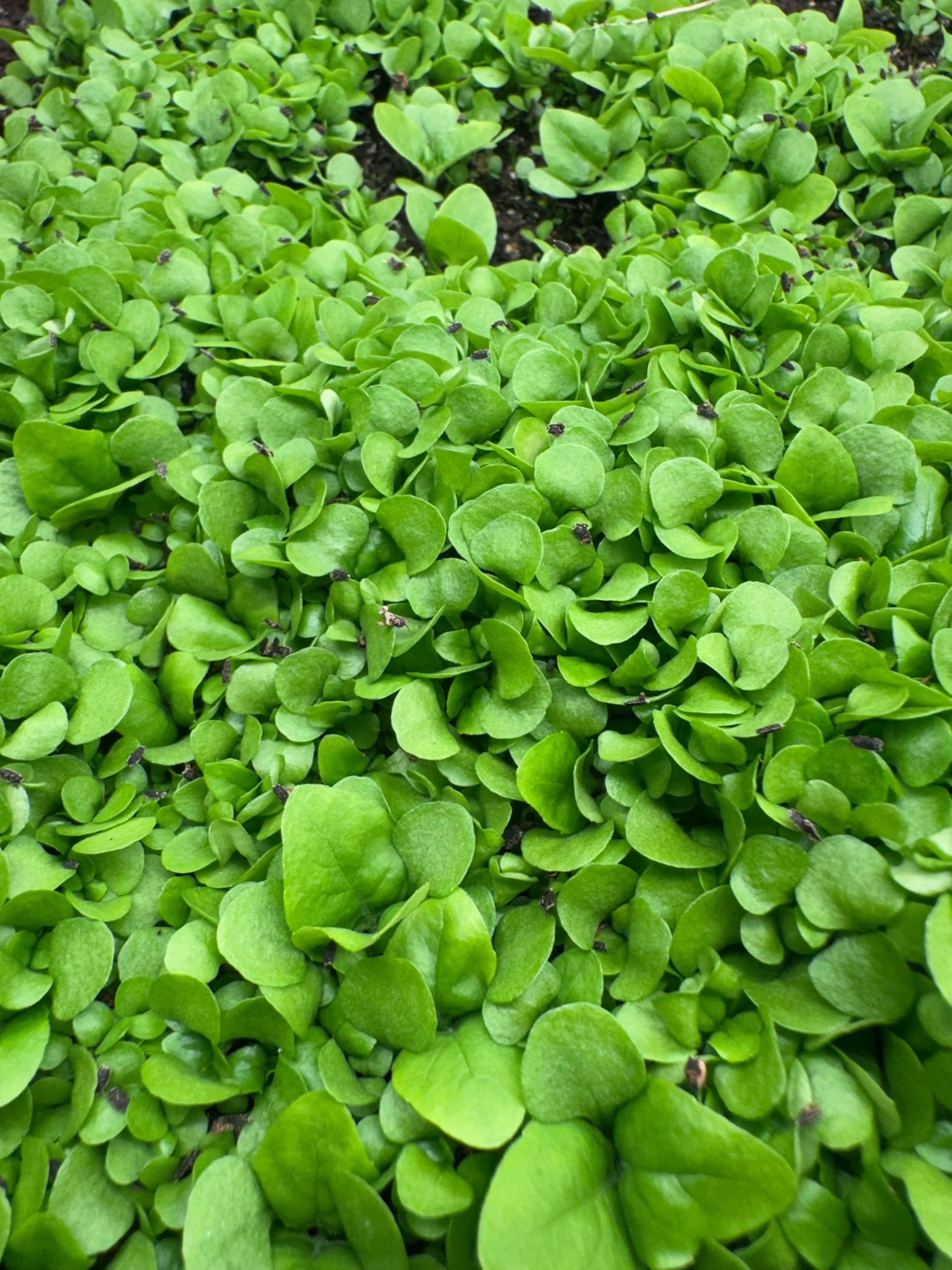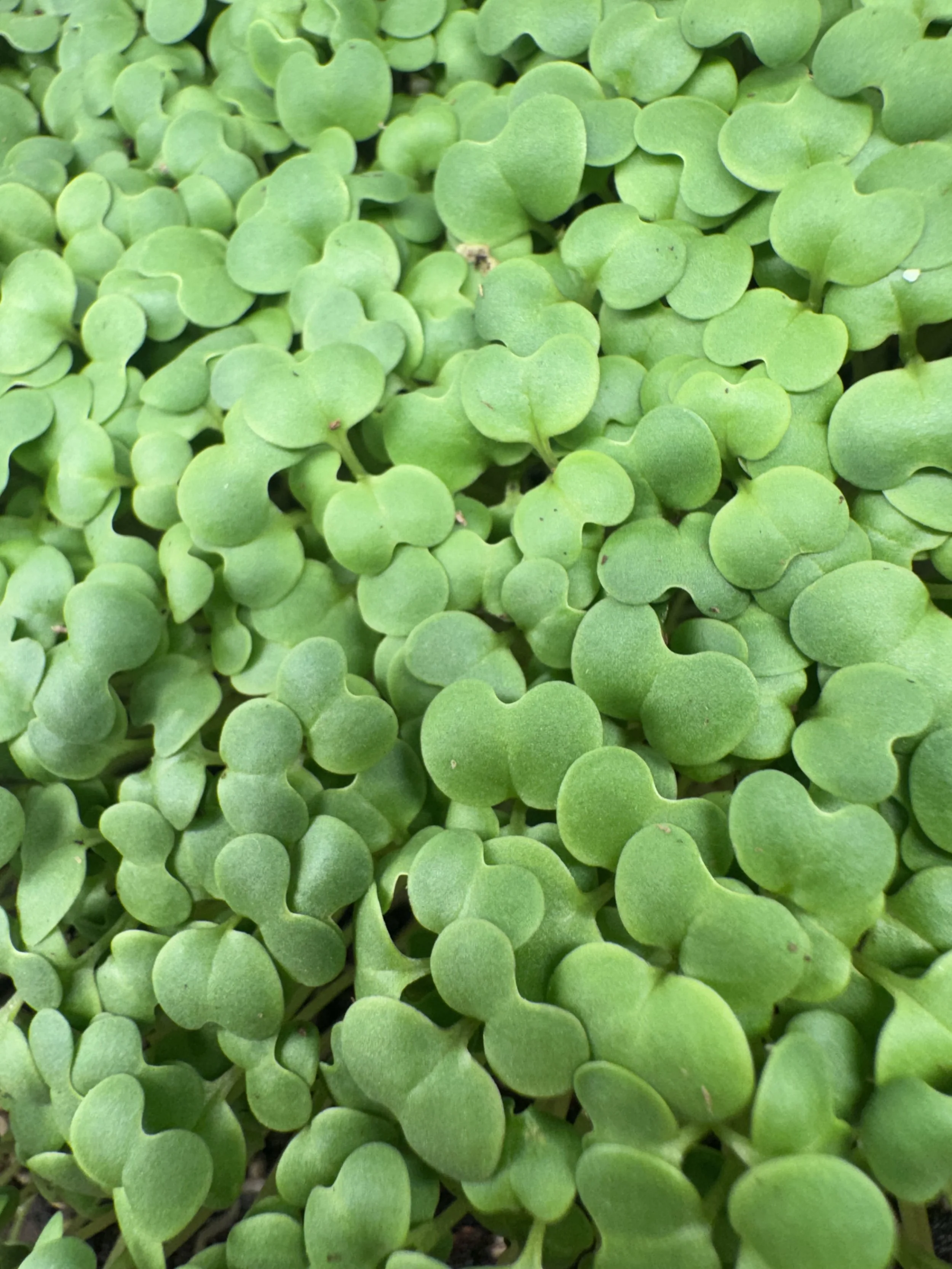
 Image 1 of 2
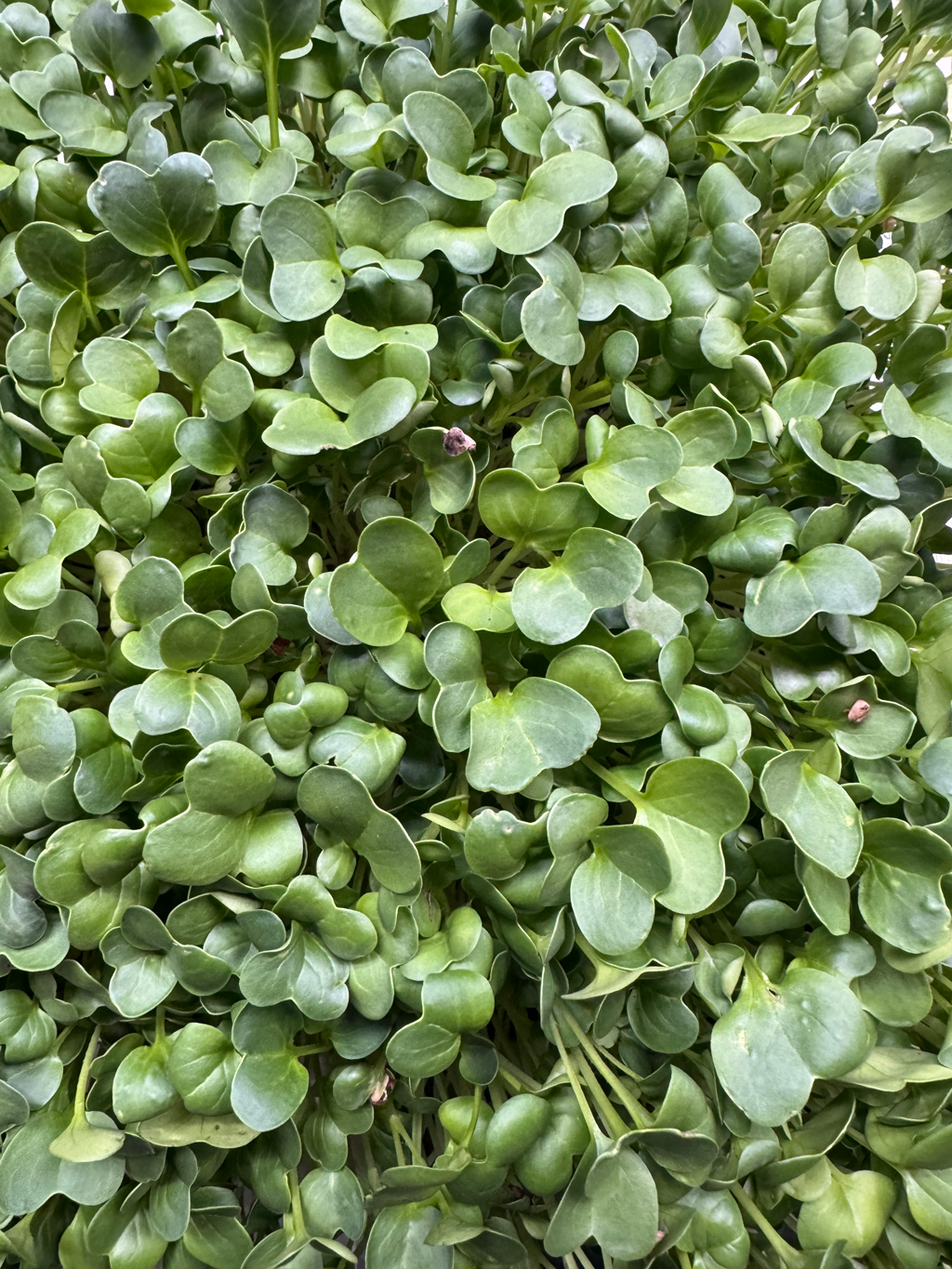 Image 2 of 2
This item is grown to order and requires a 2 week lead time. We will grow a 10"x10" tray of these micros which we will cut and package for you when they are ready.
Disclaimer: Nutritional information and listed Health Benefits have not been evaluated by the Food and Drug Administration. This product is not intended to diagnose, treat, cure, or prevent any disease. The information on this website is for educational purposes only and not intended as medical advice.
History:
Daikon radish (Raphanus sativus), originating in the Mediterranean/Black Sea region and domesticated in ancient China over 1,000 years ago, is a long white root vegetable central to Asian cuisine. Introduced to Japan around 3 A.D., it became a staple crop, known as "big root". It is now globally popular for its mild flavor and crisp texture.
Flavor Profile:
Daikon radish microgreens have a bold, spicy, and notably peppery flavor that closely mimics the mature vegetable but with a crisper, more tender texture. They offer a clean, refreshing, and zesty, slightly sweet taste that adds a sharp, pungent kick to salads, sandwiches, and Asian-inspired dishes.
Suggested Uses:
Daikon radish microgreens are popular for their crunchy texture and sharp, peppery, "radish-like" flavor, making them ideal for adding zest to salads, sandwiches, tacos, and grain bowls.
Sandwiches & Wraps: Add a refreshing, spicy crunch to sandwiches and burgers.
Salads & Garnishes: Use as a salad green or a vibrant garnish for soups, sushi, and sashimi.
Stir-fries & Soups: Add at the end of cooking to reduce the intense spice.
Smoothies & Juices: Blend for a potent nutritional boost.
Avocado Toast: Top toast with a handful for extra flavor.
For Pets: *(always consult a vet before adding microgreens to your pet’s diet)
Bearded Dragons: Radish microgreens are safe and nutritious for bearded dragons in moderation, often enjoyed for their spicy flavor, similar to mustard greens. They are nutrient-dense but should be treated as a varied part of a salad, not a daily staple, to avoid potential digestive upset.
Cats: Radish microgreens are generally safe for cats to eat in small, moderate amounts and are not on toxic plant lists. They are safe, nutrient-dense treats that offer vitamins, antioxidants, and fiber to help with digestion and hairballs. However, some radish varieties can be spicy, which might cause mild gastrointestinal upset, so moderation is key.
Dogs: Radish microgreens are generally safe for dogs in small amounts. They are nutrient-dense, providing vitamins, antioxidants, and fiber that support immune health. However, because they have a pungent, spicy, or "zesty" flavor, they should be introduced gradually to ensure they do not cause stomach upset or digestive discomfort.
Guinea Pigs: Radish microgreens are generally safe for guinea pigs in moderation, offering a nutrient-dense snack rich in Vitamin C. Because they are nutrient-dense, they should only be fed occasionally to avoid excessive calcium intake.
Rabbits: Radish microgreens are safe for rabbits to eat as part of a varied, leafy diet, but they should be given in moderation as a treat or topper. These greens are nutritious and generally liked by rabbits, but their slight spice may cause digestive upset if fed in large amounts.
Nutrition:*not verified by FDA
Vitamins: High in Vitamin C (crucial for immune function and collagen development), Vitamin E (potent antioxidant), as well as vitamins A, K, and various B vitamins (including folic acid and niacin).
Minerals: Significant amounts of potassium (heart health), Calcium and Phosphorus (bone health), Magnesium, and Iron.
Antioxidants: Rich in sulforaphane, a potent compound that detoxifies the body and may have cancer-fighting properties.
Nutrient Density: Low in calories but high in nutrient concentration.
Health Benefits:*not verified by FDA
High Nutritional Density: They contain higher concentrations of vitamins and minerals compared to mature daikon radishes.
Immune System Support: Rich in vitamin C and antioxidants, which protect the body from free radical damage and strengthen immunity.
Cardiovascular Health: They help lower cholesterol and improve heart health, with saponins that help prevent cholesterol absorption.
Improved Digestion & Detoxification: High fiber content promotes healthy digestion, acting as a natural diuretic and aid for cleansing the body.
Weight Management: They are extremely low in calories, making them excellent for weight-loss diets.
Anti-inflammatory Properties: They help reduce chronic inflammation, which is linked to various diseases.
This item is grown to order and requires a 2 week lead time. We will grow a 10"x10" tray of these micros which we will cut and package for you when they are ready.
Disclaimer: Nutritional information and listed Health Benefits have not been evaluated by the Food and Drug Administration. This product is not intended to diagnose, treat, cure, or prevent any disease. The information on this website is for educational purposes only and not intended as medical advice.
History:
Daikon radish (Raphanus sativus), originating in the Mediterranean/Black Sea region and domesticated in ancient China over 1,000 years ago, is a long white root vegetable central to Asian cuisine. Introduced to Japan around 3 A.D., it became a staple crop, known as "big root". It is now globally popular for its mild flavor and crisp texture.
Flavor Profile:
Daikon radish microgreens have a bold, spicy, and notably peppery flavor that closely mimics the mature vegetable but with a crisper, more tender texture. They offer a clean, refreshing, and zesty, slightly sweet taste that adds a sharp, pungent kick to salads, sandwiches, and Asian-inspired dishes.
Suggested Uses:
Daikon radish microgreens are popular for their crunchy texture and sharp, peppery, "radish-like" flavor, making them ideal for adding zest to salads, sandwiches, tacos, and grain bowls.
Sandwiches & Wraps: Add a refreshing, spicy crunch to sandwiches and burgers.
Salads & Garnishes: Use as a salad green or a vibrant garnish for soups, sushi, and sashimi.
Stir-fries & Soups: Add at the end of cooking to reduce the intense spice.
Smoothies & Juices: Blend for a potent nutritional boost.
Avocado Toast: Top toast with a handful for extra flavor.
For Pets: *(always consult a vet before adding microgreens to your pet’s diet)
Bearded Dragons: Radish microgreens are safe and nutritious for bearded dragons in moderation, often enjoyed for their spicy flavor, similar to mustard greens. They are nutrient-dense but should be treated as a varied part of a salad, not a daily staple, to avoid potential digestive upset.
Cats: Radish microgreens are generally safe for cats to eat in small, moderate amounts and are not on toxic plant lists. They are safe, nutrient-dense treats that offer vitamins, antioxidants, and fiber to help with digestion and hairballs. However, some radish varieties can be spicy, which might cause mild gastrointestinal upset, so moderation is key.
Dogs: Radish microgreens are generally safe for dogs in small amounts. They are nutrient-dense, providing vitamins, antioxidants, and fiber that support immune health. However, because they have a pungent, spicy, or "zesty" flavor, they should be introduced gradually to ensure they do not cause stomach upset or digestive discomfort.
Guinea Pigs: Radish microgreens are generally safe for guinea pigs in moderation, offering a nutrient-dense snack rich in Vitamin C. Because they are nutrient-dense, they should only be fed occasionally to avoid excessive calcium intake.
Rabbits: Radish microgreens are safe for rabbits to eat as part of a varied, leafy diet, but they should be given in moderation as a treat or topper. These greens are nutritious and generally liked by rabbits, but their slight spice may cause digestive upset if fed in large amounts.
Nutrition:*not verified by FDA
Vitamins: High in Vitamin C (crucial for immune function and collagen development), Vitamin E (potent antioxidant), as well as vitamins A, K, and various B vitamins (including folic acid and niacin).
Minerals: Significant amounts of potassium (heart health), Calcium and Phosphorus (bone health), Magnesium, and Iron.
Antioxidants: Rich in sulforaphane, a potent compound that detoxifies the body and may have cancer-fighting properties.
Nutrient Density: Low in calories but high in nutrient concentration.
Health Benefits:*not verified by FDA
High Nutritional Density: They contain higher concentrations of vitamins and minerals compared to mature daikon radishes.
Immune System Support: Rich in vitamin C and antioxidants, which protect the body from free radical damage and strengthen immunity.
Cardiovascular Health: They help lower cholesterol and improve heart health, with saponins that help prevent cholesterol absorption.
Improved Digestion & Detoxification: High fiber content promotes healthy digestion, acting as a natural diuretic and aid for cleansing the body.
Weight Management: They are extremely low in calories, making them excellent for weight-loss diets.
Anti-inflammatory Properties: They help reduce chronic inflammation, which is linked to various diseases.