 Image 1 of 1
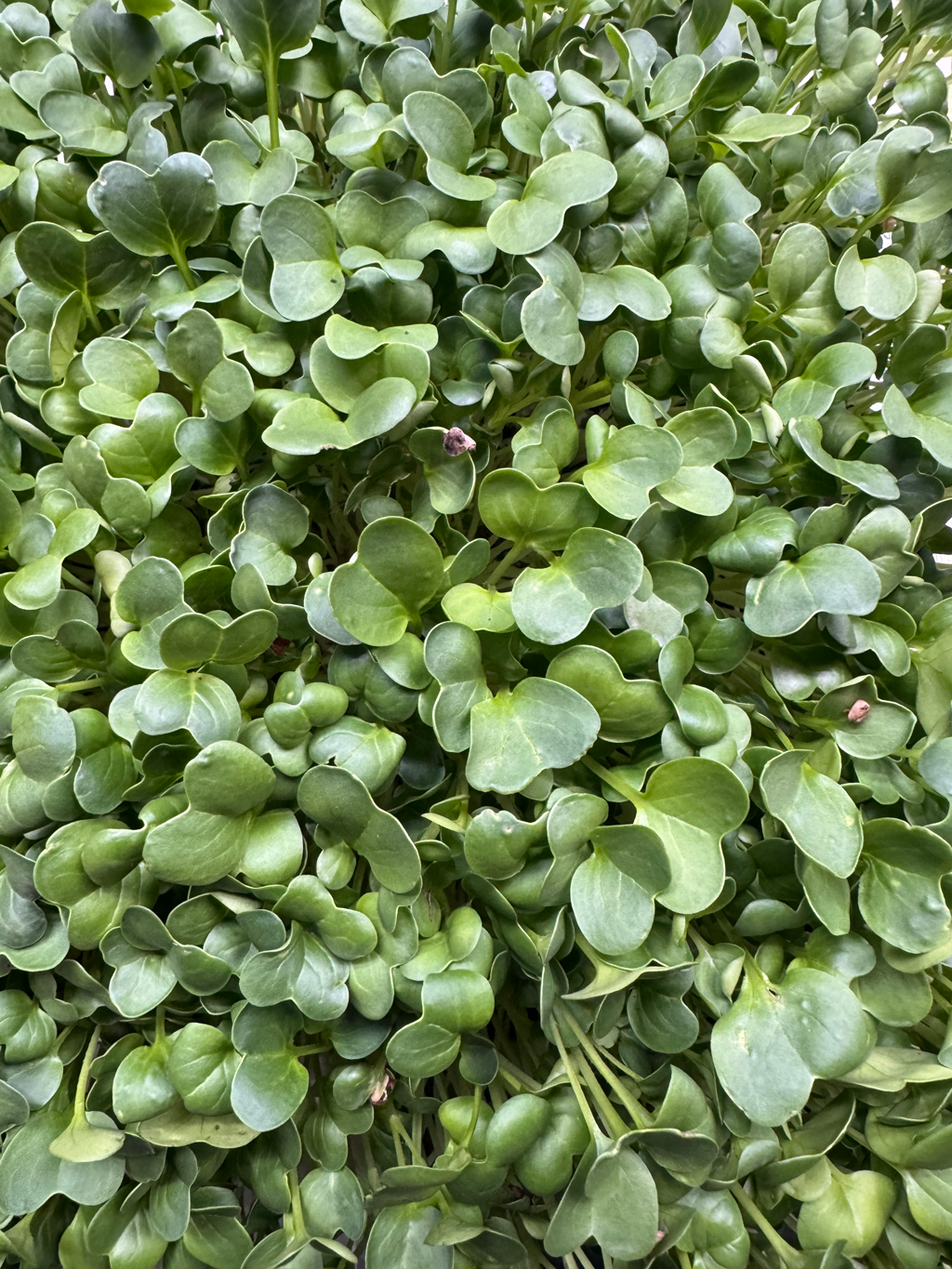
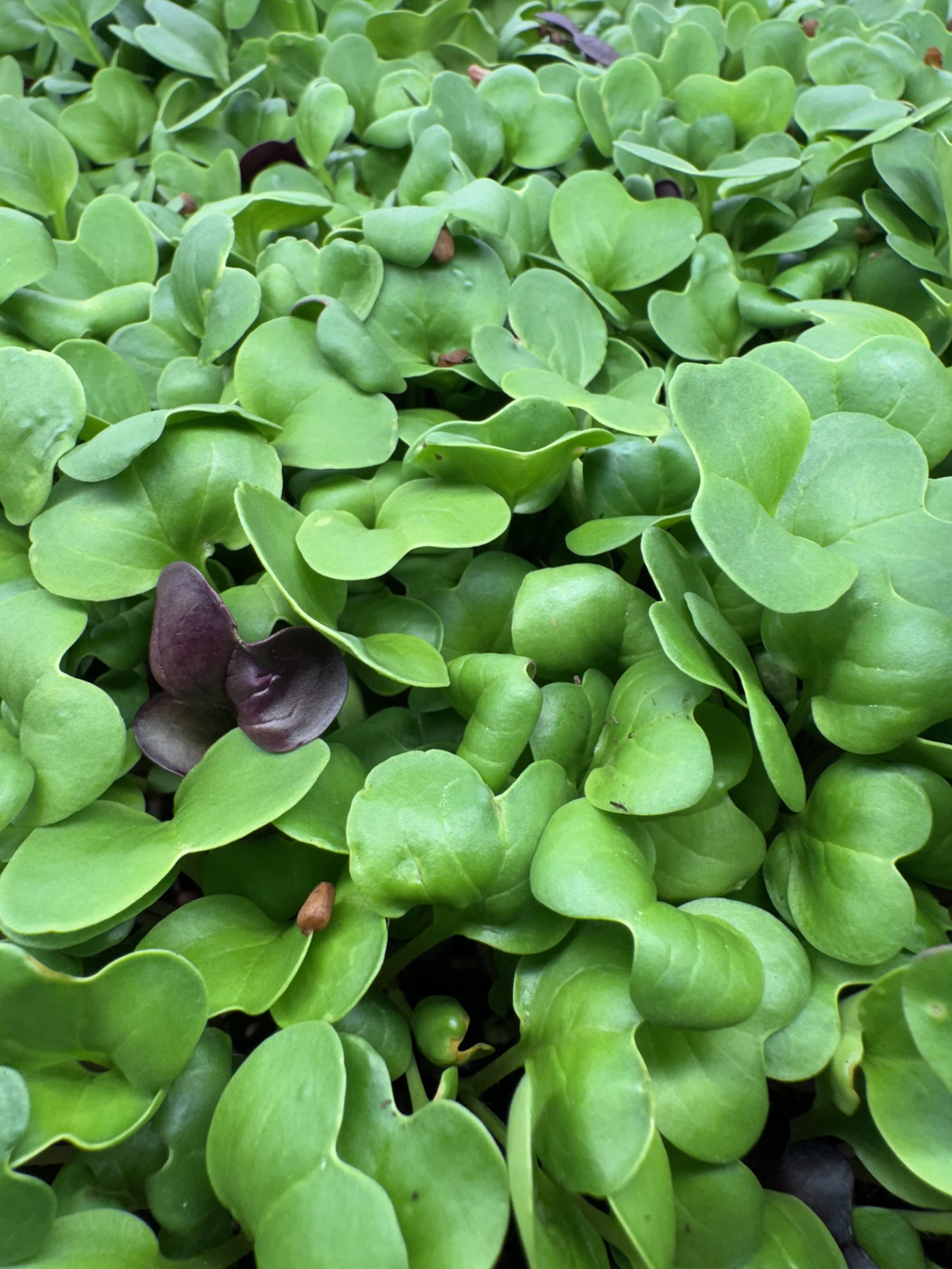
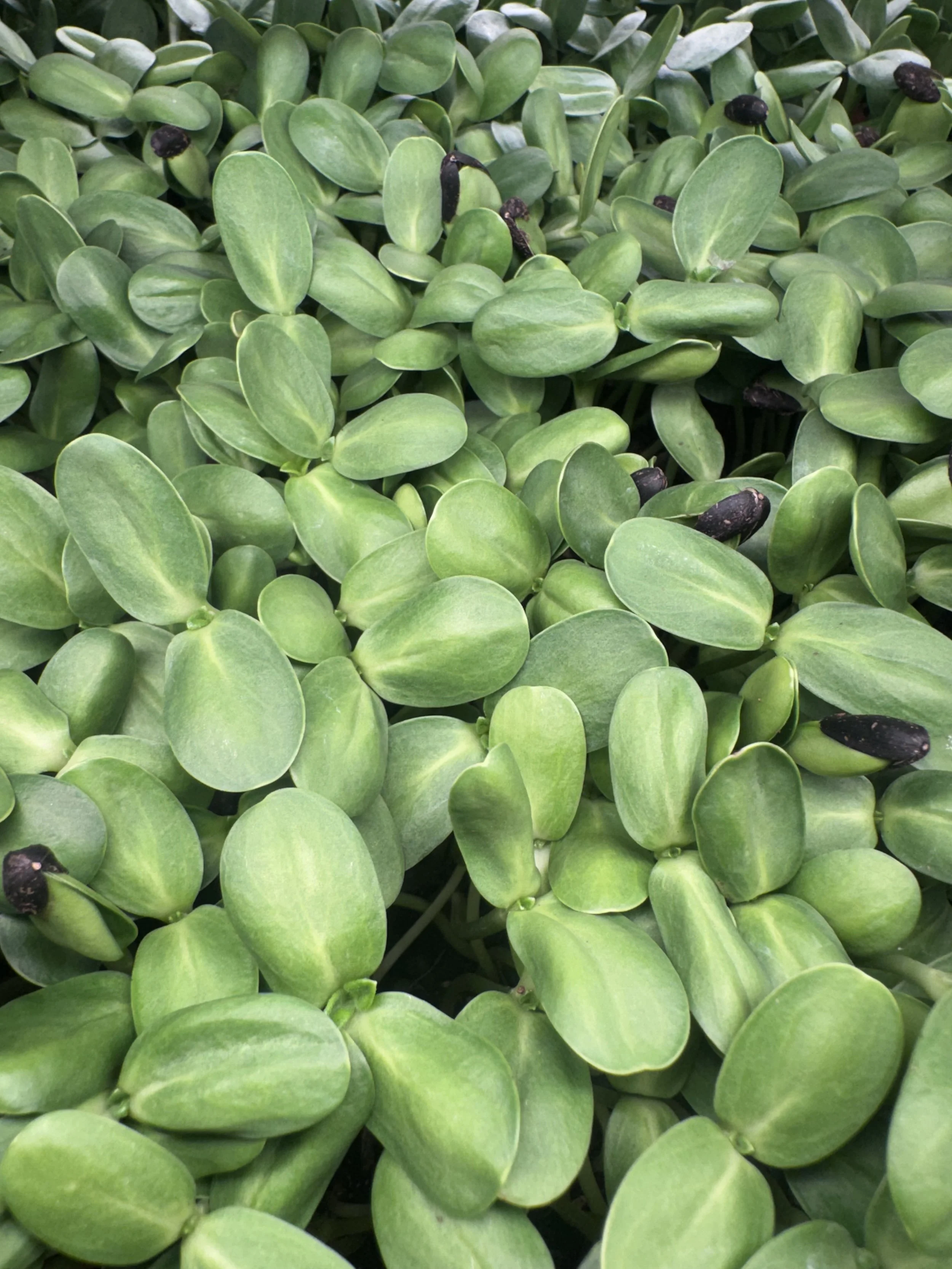
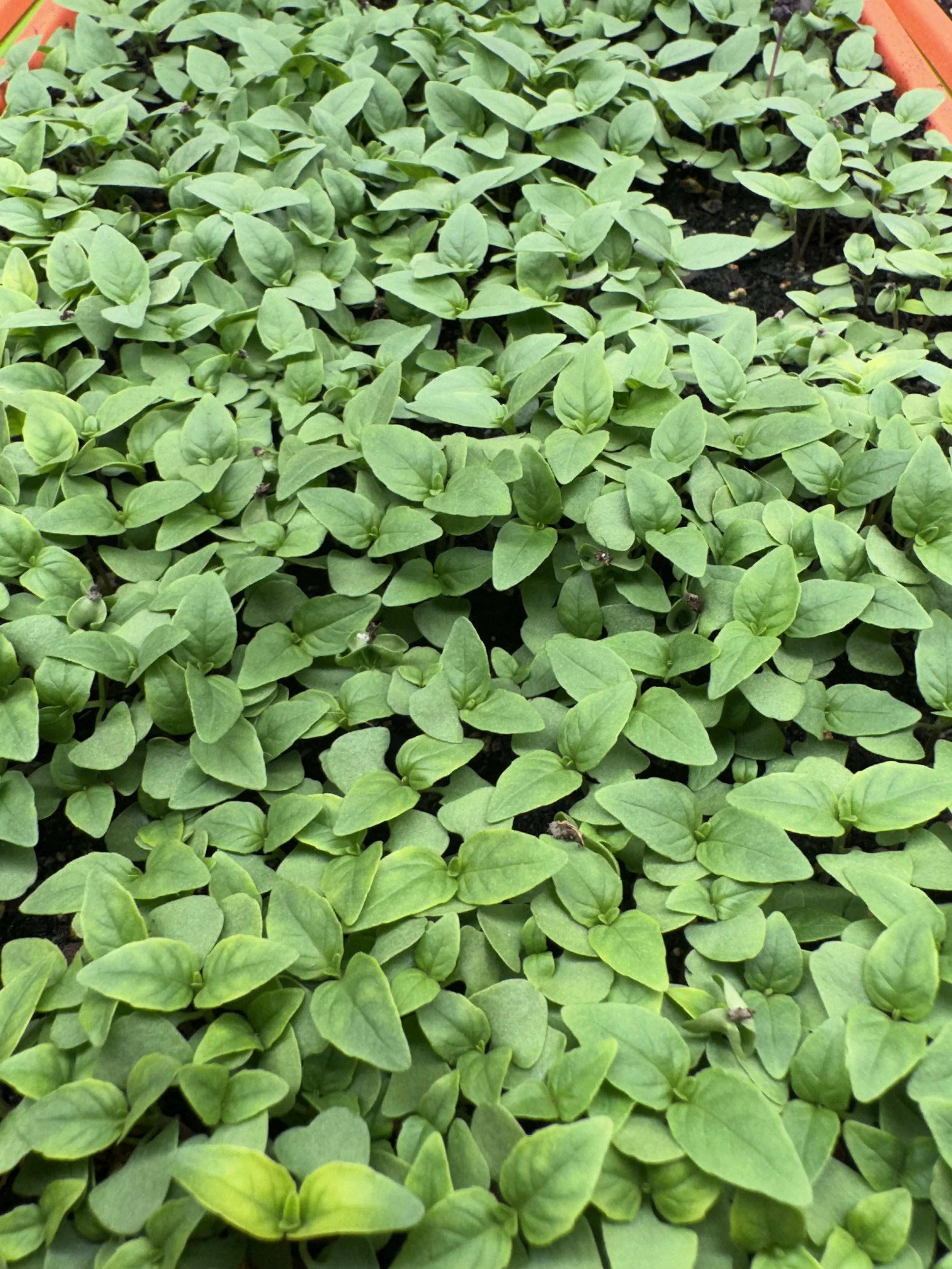
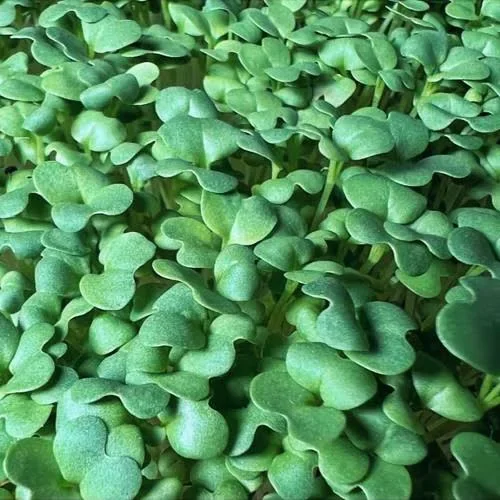
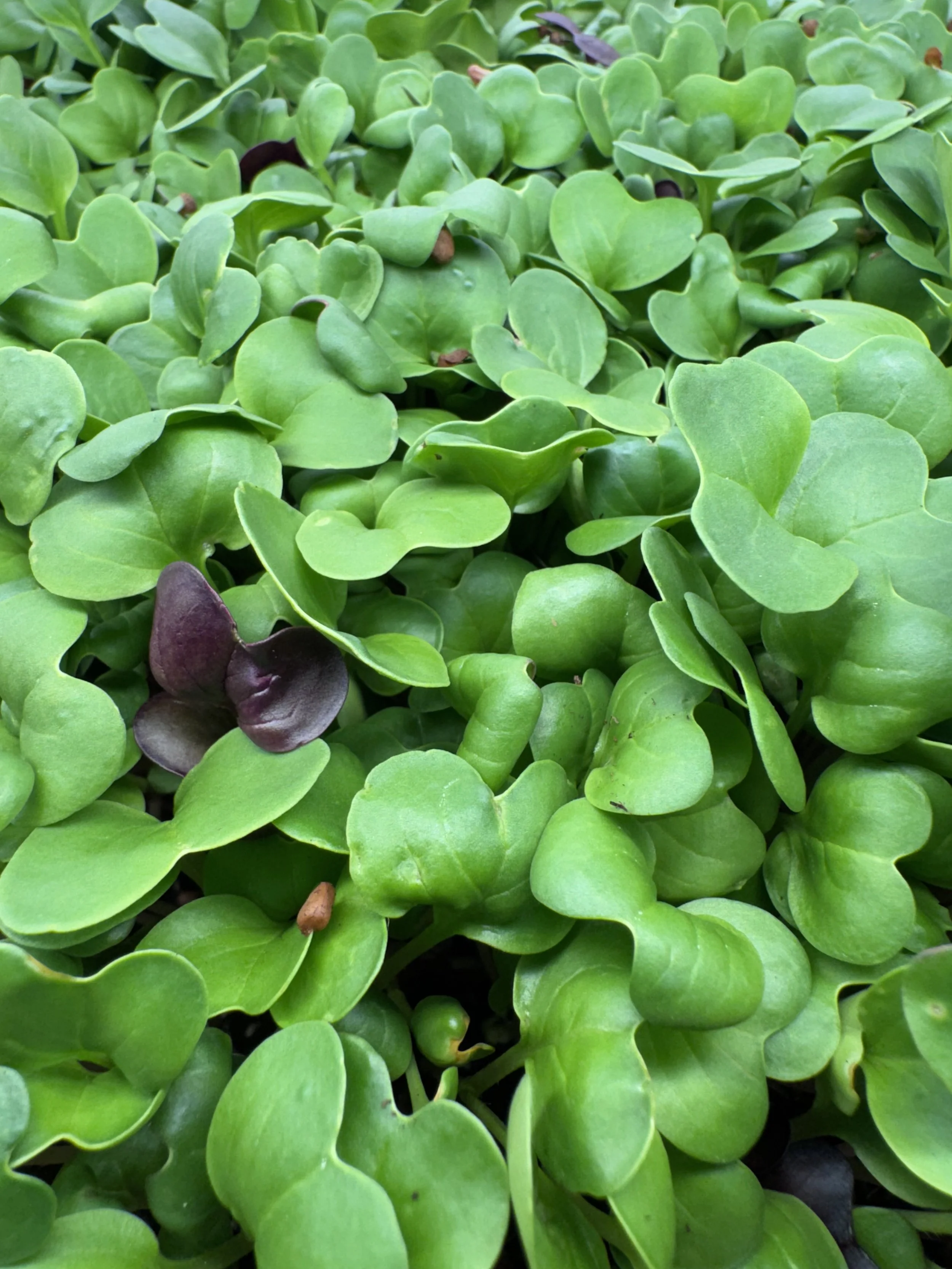
Our Radish Blend is made up of different radishes which offer incredible nutrition. Add it to your favorite dishes to give it both a little spice and a healthy punch!
Typical radish micros in this blend include Daikon Radish, China Rose Radish, and Red Rambo (or Red Volcano) Radish.
Suggested Uses:
Radish microgreens are popular for their vibrant pink stems, crunchy texture, and bold, peppery, radish-like flavor. They are used as a zesty addition to raw, cooked, or garnished dishes, including salads, sandwiches, tacos, and sushi. These microgreens are rich in nutrients, including vitamins A, C, E, K, and antioxidants, and support immune health, digestion, and detoxification.
Salads: Add a spicy crunch to mix greens, paired well with creamy dressings.
Sandwiches & Wraps: Provide a flavorful, crunchy alternative to lettuce.
Garnish: Enhance dishes with a vibrant pink color and peppery taste, such as on soups, avocado toast, and deviled eggs.
Asian Cuisine: Ideal topping for ramen, stir-fries, sushi, and sashimi.
Smoothies: A nutritious, spicy addition to green smoothies.
For Pets: *(always consult a vet before adding microgreens to your pet’s diet)
Bearded Dragons: Radish microgreens are safe and nutritious for bearded dragons in moderation, often enjoyed for their spicy flavor, similar to mustard greens. They are nutrient-dense but should be treated as a varied part of a salad, not a daily staple, to avoid potential digestive upset.
Cats: Radish microgreens are generally safe for cats to eat in small, moderate amounts and are not on toxic plant lists. They are safe, nutrient-dense treats that offer vitamins, antioxidants, and fiber to help with digestion and hairballs. However, some radish varieties can be spicy, which might cause mild gastrointestinal upset, so moderation is key.
Dogs: Radish microgreens are generally safe for dogs in small amounts. They are nutrient-dense, providing vitamins, antioxidants, and fiber that support immune health. However, because they have a pungent, spicy, or "zesty" flavor, they should be introduced gradually to ensure they do not cause stomach upset or digestive discomfort.
Guinea Pigs: Radish microgreens are generally safe for guinea pigs in moderation, offering a nutrient-dense snack rich in Vitamin C. Because they are nutrient-dense, they should only be fed occasionally to avoid excessive calcium intake.
Rabbits: Radish microgreens are safe for rabbits to eat as part of a varied, leafy diet, but they should be given in moderation as a treat or topper. These greens are nutritious and generally liked by rabbits, but their slight spice may cause digestive upset if fed in large amounts.
Nutrition:*not verified by FDA
Radish microgreens are nutrient-dense, peppery greens packed with vitamins A, C, E, K, and B-complex, alongside essential minerals like calcium, iron, magnesium, and potassium.
Typical Nutritional Profile (per 100g)
Vitamin C: ~25 mg (42% Daily Value)
Vitamin A: ~1600 IU (32% Daily Value)
Vitamin K: ~250 µg (313% Daily Value)
Minerals: Significant amounts of Calcium, Potassium, and Magnesium
Potential Health Benefits:*not verified by FDA
Radish microgreens promote immune health, reduce inflammation, support cardiovascular function, and aid in digestion. Their high sulforaphane content offers potential anti-cancer and detoxification benefits.
Immune System Boost: Extremely high in Vitamin C, which supports immune function, skin health, and collagen production.
High Antioxidant Content: They contain anthocyanins and sulforaphane (especially potent in radish) that fight free radicals, reduce oxidative stress, and may prevent cancer.
Cardiovascular and Metabolic Health: They act as a natural diuretic to help regulate blood pressure and can help manage blood sugar levels.
Bone and Vision Support: Rich in Vitamin K for bone health and Vitamin A for vision.
Detoxification and Digestion: They contain glucosinolates that support liver detoxification and aid digestion.
Weight Management: Low in calories and high in fiber, making them ideal for healthy, nutrient-dense diets.
Anti-inflammatory Properties: They help reduce chronic inflammation, which is linked to various diseases.
Our Radish Blend is made up of different radishes which offer incredible nutrition. Add it to your favorite dishes to give it both a little spice and a healthy punch!
Typical radish micros in this blend include Daikon Radish, China Rose Radish, and Red Rambo (or Red Volcano) Radish.
Suggested Uses:
Radish microgreens are popular for their vibrant pink stems, crunchy texture, and bold, peppery, radish-like flavor. They are used as a zesty addition to raw, cooked, or garnished dishes, including salads, sandwiches, tacos, and sushi. These microgreens are rich in nutrients, including vitamins A, C, E, K, and antioxidants, and support immune health, digestion, and detoxification.
Salads: Add a spicy crunch to mix greens, paired well with creamy dressings.
Sandwiches & Wraps: Provide a flavorful, crunchy alternative to lettuce.
Garnish: Enhance dishes with a vibrant pink color and peppery taste, such as on soups, avocado toast, and deviled eggs.
Asian Cuisine: Ideal topping for ramen, stir-fries, sushi, and sashimi.
Smoothies: A nutritious, spicy addition to green smoothies.
For Pets: *(always consult a vet before adding microgreens to your pet’s diet)
Bearded Dragons: Radish microgreens are safe and nutritious for bearded dragons in moderation, often enjoyed for their spicy flavor, similar to mustard greens. They are nutrient-dense but should be treated as a varied part of a salad, not a daily staple, to avoid potential digestive upset.
Cats: Radish microgreens are generally safe for cats to eat in small, moderate amounts and are not on toxic plant lists. They are safe, nutrient-dense treats that offer vitamins, antioxidants, and fiber to help with digestion and hairballs. However, some radish varieties can be spicy, which might cause mild gastrointestinal upset, so moderation is key.
Dogs: Radish microgreens are generally safe for dogs in small amounts. They are nutrient-dense, providing vitamins, antioxidants, and fiber that support immune health. However, because they have a pungent, spicy, or "zesty" flavor, they should be introduced gradually to ensure they do not cause stomach upset or digestive discomfort.
Guinea Pigs: Radish microgreens are generally safe for guinea pigs in moderation, offering a nutrient-dense snack rich in Vitamin C. Because they are nutrient-dense, they should only be fed occasionally to avoid excessive calcium intake.
Rabbits: Radish microgreens are safe for rabbits to eat as part of a varied, leafy diet, but they should be given in moderation as a treat or topper. These greens are nutritious and generally liked by rabbits, but their slight spice may cause digestive upset if fed in large amounts.
Nutrition:*not verified by FDA
Radish microgreens are nutrient-dense, peppery greens packed with vitamins A, C, E, K, and B-complex, alongside essential minerals like calcium, iron, magnesium, and potassium.
Typical Nutritional Profile (per 100g)
Vitamin C: ~25 mg (42% Daily Value)
Vitamin A: ~1600 IU (32% Daily Value)
Vitamin K: ~250 µg (313% Daily Value)
Minerals: Significant amounts of Calcium, Potassium, and Magnesium
Potential Health Benefits:*not verified by FDA
Radish microgreens promote immune health, reduce inflammation, support cardiovascular function, and aid in digestion. Their high sulforaphane content offers potential anti-cancer and detoxification benefits.
Immune System Boost: Extremely high in Vitamin C, which supports immune function, skin health, and collagen production.
High Antioxidant Content: They contain anthocyanins and sulforaphane (especially potent in radish) that fight free radicals, reduce oxidative stress, and may prevent cancer.
Cardiovascular and Metabolic Health: They act as a natural diuretic to help regulate blood pressure and can help manage blood sugar levels.
Bone and Vision Support: Rich in Vitamin K for bone health and Vitamin A for vision.
Detoxification and Digestion: They contain glucosinolates that support liver detoxification and aid digestion.
Weight Management: Low in calories and high in fiber, making them ideal for healthy, nutrient-dense diets.
Anti-inflammatory Properties: They help reduce chronic inflammation, which is linked to various diseases.