 Image 1 of 2
 Image 2 of 2
Disclaimer:Nutritional information and listed Health Benefits have not been evaluated by the Food and Drug Administration. This product is not intended to diagnose, treat, cure, or prevent any disease. The information on this website is for educational purposes only and not intended as medical advice.
History:
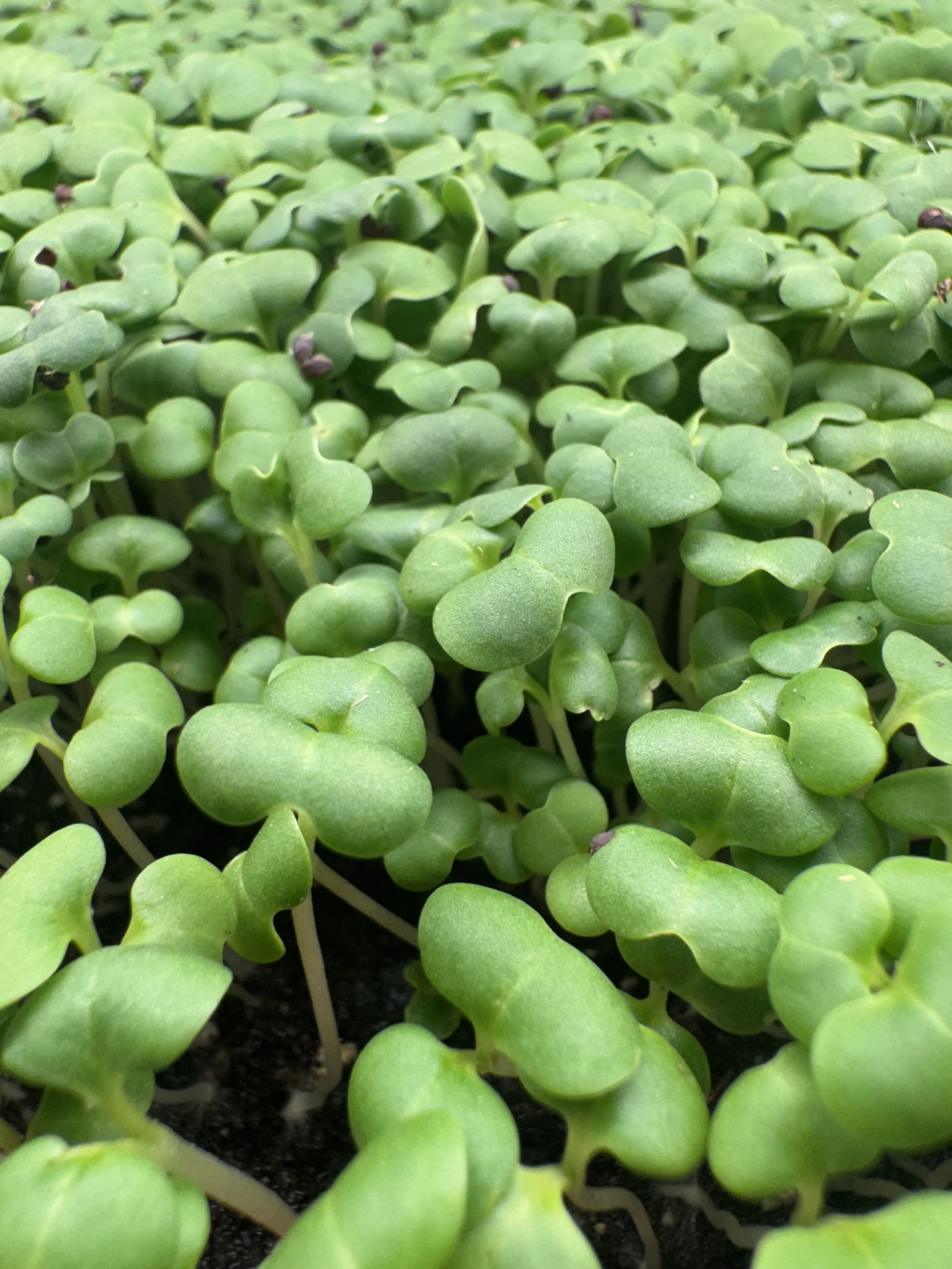
Broccoli has its roots in the Mediterranean, developed from wild cabbage by the Etruscans and Romans as early as the 6th century BCE. Originally cultivated in Southern Italy, it was known for its nutritional value and was introduced to England and America in the 18th century, with significant U.S. commercial popularity arriving only after 1920.
Flavor Profile:
fresh, mild, and slightly sweet flavor, often described as a delicate, grassy, or nutty version of broccoli, with a subtle peppery finish.
Suggested Uses:
Broccoli microgreens are best used raw to maximize their, mild, slightly nutty, and earthy flavor.
Add them as a fresh, crunchy topping for salads, sandwiches, wraps, and avocado toast. They also serve as a nutritious garnish on soups, pizzas, and stir-fries, or blended into smoothies.
Raw & Fresh: Top sandwiches, burgers, or wraps with a handful for crunch, acting as a more nutritious alternative to lettuce.
Salads & Bowls: Mix into salads or use as a base for grain bowls.
Breakfasts: Top avocado toast, scrambled eggs, omelets, or frittatas with raw greens.
Soups & Garnish: Add as a garnish to soups or pasta, preferably just before serving to maintain texture and nutrients.
Smoothies: Blend into fruit or green smoothies for a nutrient boost that doesn't alter the flavor significantly.
Snacks: Pair with hummus, put in sushi, or add to tuna salad.
For Pets: *(always consult a vet before adding microgreens to your pet’s diet)
Bearded Dragons: Broccoli microgreens are generally safe for bearded dragons to eat as a nutritious, nutrient-dense addition to their diet. However, they should be fed in moderation as part of a varied salad, rather than a staple food, due to their potential to interfere with calcium absorption.
Cats: Cats can safely eat broccoli microgreens in moderation. They are a nutrient-dense, non-toxic addition to a cat's diet, providing fiber, vitamins, and antioxidants that aid digestion. Broccoli microgreens are considered safe, but should only be given occasionally or in small amounts (around 5% of their diet) because cats are carnivores.
Dogs: Broccoli microgreens are not only safe for dogs but are considered a highly nutritious superfood for them. They are actually often better for dogs than mature broccoli because they are easier to digest and contain significantly higher concentrations of beneficial compounds.
Guinea Pigs: Broccoli microgreens are generally safe and nutritious for guinea pigs to eat in small, moderate amounts as part of a varied diet. They are rich in vitamins, especially Vitamin C, which is crucial for guinea pig health. However, they should be fed sparingly because they can cause gas or bloating.
Rabbits: Broccoli microgreens are generally safe and nutritious for rabbits, offering packed vitamins and minerals, though they should be fed in moderation. Like other cruciferous veggies, they may cause gas or digestive upset in some rabbits if overfed. Introduce them slowly, ensure they are part of a varied diet, and monitor for changes in stool.
Nutrition:*not verified by FDA
Broccoli microgreens are exceptionally nutrient-dense, containing up to 40 times more vitamins, minerals, and antioxidant compounds (like sulforaphane) than mature broccoli. Harvested 7–14 days after germination, they are rich in vitamins A, C, E, and K, along with potassium, calcium, and iron.
Key Nutritional Content *not verified by FDA
High Sulforaphane: Broccoli microgreens contain a massive concentration of sulforaphane compared to mature broccoli, which is linked to anti-cancer properties and reduced oxidative stress.
Vitamin Powerhouse: They are excellent sources of Vitamin C (approx. 70–117 mg/100g), Vitamin K (130 mcg/100g), and Vitamin A (beta-carotene).
Essential Minerals: They provide significant amounts of potassium (326 mg/100g), along with magnesium, phosphorus, iron, and zinc.
Low-Calorie Nutrition: A small serving (e.g., a few ounces) is very low in calories (<3 calories per serving) but packed with nutrients.
Nutritional Comparison (Per 100g, Approximate):*not verified by FDA
Vitamin C: 70–117 mg
Vitamin K: 130 mcg
Potassium: 326 mg
Calcium: 88 mg
Potential Health Benefits:*not verified by FDA
They are highly concentrated in antioxidants, vitamins A, C, and K, and minerals that promote cancer prevention, detoxification, heart health, improved immunity, and reduced inflammation.
Potent Cancer Prevention: They are an exceptionally high source of sulforaphane, a compound that helps detoxify harmful substances, protects cells from damage, and has been linked to reducing the growth of various cancers.
High Nutrient Concentration: They are rich in vitamins A, C, E, and K, as well as essential minerals like calcium, magnesium, and iron, providing a dense nutritional boost in small servings.
Heart and Metabolic Health: Regular consumption may help lower LDL cholesterol, reduce blood pressure, and improve cardiovascular health due to their high antioxidant levels.
Immune System Support: Packed with vitamins and phytonutrients, they help strengthen the immune system and fight off infections.
Improved Digestion and Gut Health: The fiber content aids in digestion and helps promote a healthy gut microbiome.
Reduced Inflammation and Aging: Sulforaphane and antioxidants combat oxidative stress, which may slow cellular aging and reduce chronic inflammation.
Disclaimer:Nutritional information and listed Health Benefits have not been evaluated by the Food and Drug Administration. This product is not intended to diagnose, treat, cure, or prevent any disease. The information on this website is for educational purposes only and not intended as medical advice.
History:
Broccoli has its roots in the Mediterranean, developed from wild cabbage by the Etruscans and Romans as early as the 6th century BCE. Originally cultivated in Southern Italy, it was known for its nutritional value and was introduced to England and America in the 18th century, with significant U.S. commercial popularity arriving only after 1920.
Flavor Profile:
fresh, mild, and slightly sweet flavor, often described as a delicate, grassy, or nutty version of broccoli, with a subtle peppery finish.
Suggested Uses:
Broccoli microgreens are best used raw to maximize their, mild, slightly nutty, and earthy flavor.
Add them as a fresh, crunchy topping for salads, sandwiches, wraps, and avocado toast. They also serve as a nutritious garnish on soups, pizzas, and stir-fries, or blended into smoothies.
Raw & Fresh: Top sandwiches, burgers, or wraps with a handful for crunch, acting as a more nutritious alternative to lettuce.
Salads & Bowls: Mix into salads or use as a base for grain bowls.
Breakfasts: Top avocado toast, scrambled eggs, omelets, or frittatas with raw greens.
Soups & Garnish: Add as a garnish to soups or pasta, preferably just before serving to maintain texture and nutrients.
Smoothies: Blend into fruit or green smoothies for a nutrient boost that doesn't alter the flavor significantly.
Snacks: Pair with hummus, put in sushi, or add to tuna salad.
For Pets: *(always consult a vet before adding microgreens to your pet’s diet)
Bearded Dragons: Broccoli microgreens are generally safe for bearded dragons to eat as a nutritious, nutrient-dense addition to their diet. However, they should be fed in moderation as part of a varied salad, rather than a staple food, due to their potential to interfere with calcium absorption.
Cats: Cats can safely eat broccoli microgreens in moderation. They are a nutrient-dense, non-toxic addition to a cat's diet, providing fiber, vitamins, and antioxidants that aid digestion. Broccoli microgreens are considered safe, but should only be given occasionally or in small amounts (around 5% of their diet) because cats are carnivores.
Dogs: Broccoli microgreens are not only safe for dogs but are considered a highly nutritious superfood for them. They are actually often better for dogs than mature broccoli because they are easier to digest and contain significantly higher concentrations of beneficial compounds.
Guinea Pigs: Broccoli microgreens are generally safe and nutritious for guinea pigs to eat in small, moderate amounts as part of a varied diet. They are rich in vitamins, especially Vitamin C, which is crucial for guinea pig health. However, they should be fed sparingly because they can cause gas or bloating.
Rabbits: Broccoli microgreens are generally safe and nutritious for rabbits, offering packed vitamins and minerals, though they should be fed in moderation. Like other cruciferous veggies, they may cause gas or digestive upset in some rabbits if overfed. Introduce them slowly, ensure they are part of a varied diet, and monitor for changes in stool.
Nutrition:*not verified by FDA
Broccoli microgreens are exceptionally nutrient-dense, containing up to 40 times more vitamins, minerals, and antioxidant compounds (like sulforaphane) than mature broccoli. Harvested 7–14 days after germination, they are rich in vitamins A, C, E, and K, along with potassium, calcium, and iron.
Key Nutritional Content *not verified by FDA
High Sulforaphane: Broccoli microgreens contain a massive concentration of sulforaphane compared to mature broccoli, which is linked to anti-cancer properties and reduced oxidative stress.
Vitamin Powerhouse: They are excellent sources of Vitamin C (approx. 70–117 mg/100g), Vitamin K (130 mcg/100g), and Vitamin A (beta-carotene).
Essential Minerals: They provide significant amounts of potassium (326 mg/100g), along with magnesium, phosphorus, iron, and zinc.
Low-Calorie Nutrition: A small serving (e.g., a few ounces) is very low in calories (<3 calories per serving) but packed with nutrients.
Nutritional Comparison (Per 100g, Approximate):*not verified by FDA
Vitamin C: 70–117 mg
Vitamin K: 130 mcg
Potassium: 326 mg
Calcium: 88 mg
Potential Health Benefits:*not verified by FDA
They are highly concentrated in antioxidants, vitamins A, C, and K, and minerals that promote cancer prevention, detoxification, heart health, improved immunity, and reduced inflammation.
Potent Cancer Prevention: They are an exceptionally high source of sulforaphane, a compound that helps detoxify harmful substances, protects cells from damage, and has been linked to reducing the growth of various cancers.
High Nutrient Concentration: They are rich in vitamins A, C, E, and K, as well as essential minerals like calcium, magnesium, and iron, providing a dense nutritional boost in small servings.
Heart and Metabolic Health: Regular consumption may help lower LDL cholesterol, reduce blood pressure, and improve cardiovascular health due to their high antioxidant levels.
Immune System Support: Packed with vitamins and phytonutrients, they help strengthen the immune system and fight off infections.
Improved Digestion and Gut Health: The fiber content aids in digestion and helps promote a healthy gut microbiome.
Reduced Inflammation and Aging: Sulforaphane and antioxidants combat oxidative stress, which may slow cellular aging and reduce chronic inflammation.